
Are Ventilated Seats Worth It? Test the Comfort, Not the Spec

Ventilated seats can feel like an easy luxury upgrade: a button, a little airflow and a more comfortable back on a hot day. But the feature is unusually dependent on climate, upholstery, seat design, fan strength, where the air moves and how much extra trim or package cost you must absorb to get it. That means the right question is not whether ventilated seats are good in the abstract. It is whether the exact system in the exact car improves enough of your real driving to justify the price and ownership trade-offs.
For WhatCarFitsMe, this is a fit decision rather than a badge decision. A strong system used through months of heat can become one of the most appreciated features in the cabin. A weak system bundled into a large trim jump can become an expensive button you barely notice. The practical test is climate exposure × usage frequency × implementation quality, reduced by the true trim tax and any compromises you accept elsewhere.
Table of Contents

Start With Your Heat Exposure, Not the Feature List
Ventilated seats earn their value through repeated use. Start with how many months of the year you regularly enter a hot cabin, how often the car sits in direct sun, whether your commute is long enough for seat heat and moisture to become annoying, and whether you drive in humid conditions where trapped perspiration matters as much as temperature. Someone in Miami or Phoenix has a very different use case from someone whose warm-weather exposure is a few weekends each year.
Also distinguish the driver from the household. If the feature is standard only on the front seats but your priority is passenger or second-row comfort, it may not solve the problem you are paying to solve. The best option is the one that improves the seats people actually occupy.
Ventilated and Actively Cooled Seats Are Not Always the Same
Automakers use terms such as ventilated, cooled and climate-controlled seats inconsistently. Many ventilated seats use fans to move cabin air through perforated upholstery. Some systems add active cooling or more complex thermal hardware. Do not assume the marketing label tells you how cold the seat will feel. What matters is the air movement, coverage and comfort produced by the exact seat.
This distinction explains why two cars with apparently similar specifications can feel completely different in a back-to-back test. The feature name is not a performance standard.
The WCFM Ventilated-Seat Value Test
Use four variables. First, exposure: how often heat and humidity make the seat uncomfortable. Second, implementation: how quickly and evenly the seat changes your comfort. Third, frequency: how many trips are long enough for the benefit to matter. Fourth, trim tax: the full incremental cost and compromises required to obtain the feature.
A useful feature-value decision is therefore not “ventilated seats cost $X.” It is “what must I buy to get the system I actually like?” If the seat requires a $4,000 trim jump filled with equipment you do not value, the relevant cost is not the fan hardware. If it is included in a package you already want, the incremental cost may be small.
Test the Seat on a Warm Day Whenever Possible
A showroom demonstration in a climate-controlled building is weak evidence. During the test drive, let the cabin and seat warm up, wear clothing similar to what you normally drive in and run the ventilation through every setting. Check whether you feel airflow through both the cushion and seatback, whether the effect reaches the areas that actually become uncomfortable, and whether the sensation remains useful after ten or fifteen minutes.
WCFM’s test-drive checklist is the right place to treat this like any other ergonomic feature: verify it under conditions that resemble your daily use instead of accepting the equipment list as proof.
System Quality Varies More Than the Checkbox Suggests
Fan strength, duct design, foam, perforation pattern and upholstery all influence how effective the system feels. Some seats create obvious airflow at the lower back and cushion. Others mainly reduce clamminess without ever feeling cold. Neither outcome is automatically bad, but the difference matters if you are paying specifically for cooling performance.
Listen as well as feel. A high fan setting that produces noticeable whine in a quiet cabin may bother you on long drives. Make sure the lowest useful setting is quiet enough for the way you drive.
Do Not Confuse Personal Cooling With Cabin Air Conditioning
Ventilated seats complement the HVAC system; they do not replace it. Their advantage is local: the body is pressed against a surface that can trap heat and moisture even after the cabin air begins to cool. Air movement at that contact area can improve comfort sooner and reduce the sticky feeling that leather or synthetic upholstery can create.
The National Renewable Energy Laboratory includes heated, cooled and ventilated seats among occupant-focused thermal-management strategies because local comfort can be improved without treating the entire cabin as the only control point.
For the research context, see NREL’s work on light-duty vehicle thermal management.
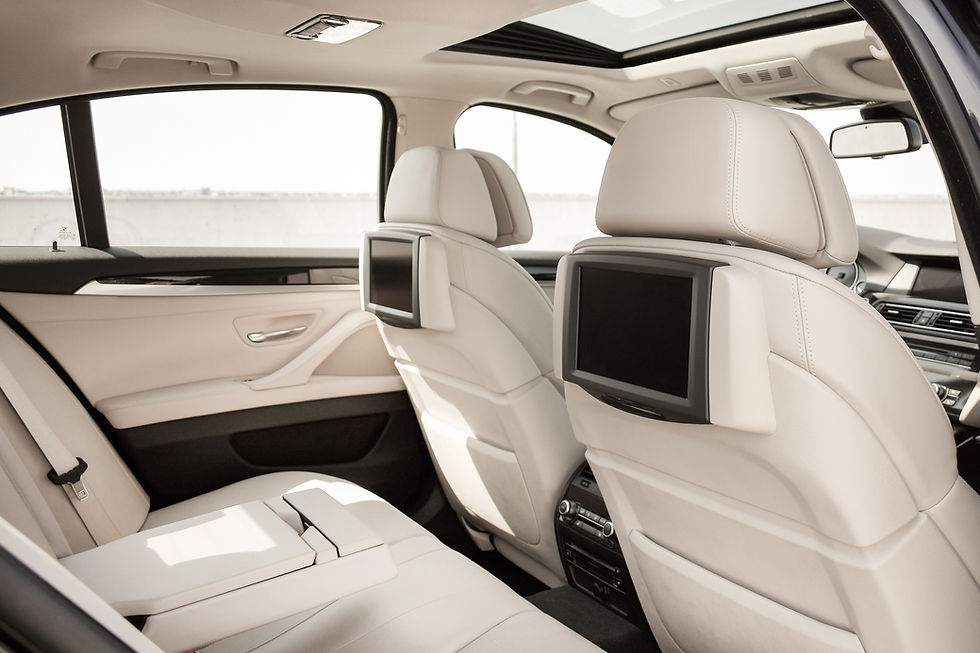
Upholstery Can Change the Benefit
Perforated leather or synthetic upholstery is common with seat ventilation because the airflow needs a path through the surface. If you otherwise prefer cloth, remember that breathable cloth can already feel less hot and sticky than an unventilated leather-like surface. A buyer should not upgrade to expensive upholstery merely to solve a comfort problem created by that upholstery.
Check the complete seat, not only the ventilation. Cushion firmness, bolstering, lumbar shape, thigh support and material texture affect every mile. A cooler seat that gives you pressure points is still the wrong seat.
Price the Trim Jump, Not the Standalone Feature
Before paying for the feature, use WCFM’s car trim-level framework to calculate the actual step from the trim you would otherwise buy to the least expensive configuration with ventilated seats.
Then list everything that changes with that jump: wheel size, tire cost, suspension tuning, panoramic roof, audio system, driver-assistance equipment, seat material and powertrain availability. A comfort upgrade can be undermined if the package forces bigger wheels, higher replacement costs or equipment you actively do not want.
Availability Varies by Model, Trim and Model Year
Current availability is broader than it once was, but ventilated or cooled seats are still frequently tied to options or upper trims, and the underlying technology differs by brand and model. That makes configuration-level verification more useful than a generic list of models that can be equipped with the feature.
Cars.com’s current overview of cars with cooled seats similarly emphasizes variation in system design, availability and the need to try the feature rather than assuming every implementation delivers the same experience.
Hot-Climate Drivers Have the Strongest Case
The value case strengthens when high cabin temperatures are routine rather than occasional. Outdoor parking, dark interiors, long commutes, business clothing and humid summers all increase the frequency with which seat ventilation can solve a real comfort problem. In that environment, a feature used twice a day for months can have more practical value than a more glamorous option used only occasionally.
The opposite is also true. If the car is garaged at home and work, remote climate preconditioning is effective, trips are short and summers mild, the same feature may rarely reach the threshold where you care.
Long Drives Can Change the Answer Even in a Moderate Climate
Annual temperature is not the only variable. Drivers who spend hours at a time in the car can value moisture management and contact comfort even when the outside temperature is not extreme. This is especially relevant for commuters, salespeople, road-trip households and anyone whose back remains pressed to the seat for long periods.
Think in hours of useful exposure, not simply days above a certain temperature. A two-hour highway trip can make seat comfort much more consequential than a ten-minute errand.
Used-Car Buyers Need to Test Every Fan Speed
On a used vehicle, verify that the system actually works rather than treating the option code as evidence. Run both front seats, cycle through each speed, listen for abnormal fan noise and compare left-to-right airflow. Weak output can reflect the design, but it can also reflect clogged passages, fan problems or seat modifications.
Also inspect perforated surfaces for damage and previous repairs. If a seat has been reupholstered, confirm that the material and construction still allow the system to function correctly.
Do Not Buy a Worse-Fit Car Just to Get Ventilated Seats
A feature should improve a good vehicle choice, not become the reason you accept the wrong vehicle. Do not move into a larger SUV, less efficient powertrain or unaffordable trim simply because the seat ventilation impressed you on a warm day. Re-run the whole-car fit: size, visibility, ergonomics, cargo, parking, reliability, fuel or energy cost and insurance.
If the feature is genuinely high priority, use WCFM’s search-cars-by-features approach to filter the shortlist first, then choose among vehicles that still satisfy the non-negotiables.
When Ventilated Seats Are More Likely to Be Worth It
They are stronger candidates when you live in a hot or humid climate, park outside frequently, drive long distances, prefer less-breathable upholstery, already want the trim that contains the feature, and can clearly feel a useful difference during a realistic test. The case is strongest when several of those conditions overlap.
They are weaker candidates when the feature forces a large trim jump, the system feels faint or noisy, your climate exposure is limited, cloth seats already meet your comfort needs, or the upgrade adds other ownership costs you would not otherwise choose.
The Decision Is About Repeated Comfort per Dollar
Ventilated seats are neither essential nor frivolous by definition. Their value comes from repeated comfort in the conditions you actually experience. That makes them a good example of the WCFM principle that useful specifications are personal: the same feature can be high-value for one driver and almost irrelevant for another.
Give the exact seat ten or fifteen minutes, price the complete configuration change, and compare the feature with the other upgrades that same money could buy. If the benefit is obvious, frequent and inexpensive relative to the trim you already want, it can be worth prioritizing. If you need to convince yourself you felt it, keep the money.

Remote Preconditioning Changes the Equation — It Does Not Eliminate It
Remote start or EV preconditioning can make a hot cabin far more tolerable before you open the door, so include it in the value calculation. If your normal routine already cools the cabin for ten minutes before every departure, the incremental benefit of seat ventilation may be smaller than it is for a driver who routinely enters a heat-soaked vehicle with no preconditioning. That is a reason to test the combined system, not to assume one feature makes the other redundant.
Seat-contact heat can persist even after the air around you becomes comfortable because your back and legs remain pressed against upholstery. For some drivers, local airflow is still noticeably valuable after the cabin has cooled; for others, strong preconditioning solves most of the discomfort. Use the way you actually start trips at home, work, airports and errands rather than the ideal routine you imagine you will follow.
Front-Seat Comfort Is Not the Same as Whole-Cabin Value
Check exactly which seating positions receive ventilation. Many configurations concentrate the feature in the front row, while a household may care just as much about a spouse, older passenger or second-row occupant. A premium package can look generous on the build sheet while leaving the seats that matter to your family unchanged. The value should be assigned only to the people and trips that actually receive the benefit.
This also matters when two vehicles price the feature differently. One may include effective front-seat ventilation on a mid-level trim; another may require a luxury package but add rear-seat ventilation as well. Compare usable comfort for your real passenger pattern, not simply whether both brochures contain the same words.
Decision Matrix
Situation | Fit | What to verify |
Hot/humid climate + outdoor parking | Strong candidate | Airflow coverage, warm-day comfort, trim cost |
Long drives + leather/synthetic seat | Often useful | Back/cushion airflow, fan noise, ergonomics |
Mild climate + short trips | Lower priority | Actual usage frequency and package premium |
Large trim jump only for this feature | Weak-to-mixed | Full upgrade cost and unwanted equipment |
Used car with ventilated seats | Verify carefully | All speeds, both seats, noise, upholstery condition |
Frequently Asked Questions
Are ventilated seats worth it?
They can be if you regularly drive in hot or humid conditions, the exact system works well, and the feature does not require an excessive trim jump. Judge the seat by repeated real-world comfort rather than by the specification alone.
What is the difference between ventilated and cooled seats?
Many ventilated seats use fans to move cabin air through perforated upholstery, while some actively cooled or climate-controlled systems use additional thermal hardware. Automaker terminology varies, so test the exact seat instead of relying on the label.
Do ventilated seats actually cool you?
They can improve comfort by moving air at the body-seat contact area and reducing trapped heat and moisture. The effect varies substantially by seat design, airflow, upholstery and cabin conditions, and some systems feel much stronger than others.
Are ventilated seats noisy?
Some systems are nearly unobtrusive while others produce noticeable fan noise on their highest setting. During a test drive, listen in a quiet cabin and confirm that the setting you would normally use is comfortable acoustically as well as thermally.
Should I upgrade to a higher trim just for ventilated seats?
Only after pricing the entire trim jump. If the upgrade also forces features, wheels or ownership costs you do not value, the true cost of ventilated seats is much higher than the hardware itself.
What should I test before buying a car with ventilated seats?
Test both the cushion and seatback, every fan speed, noise level, warm-weather effectiveness, upholstery comfort and whether the benefit remains noticeable after ten to fifteen minutes. On a used car, verify both front seats operate consistently.


