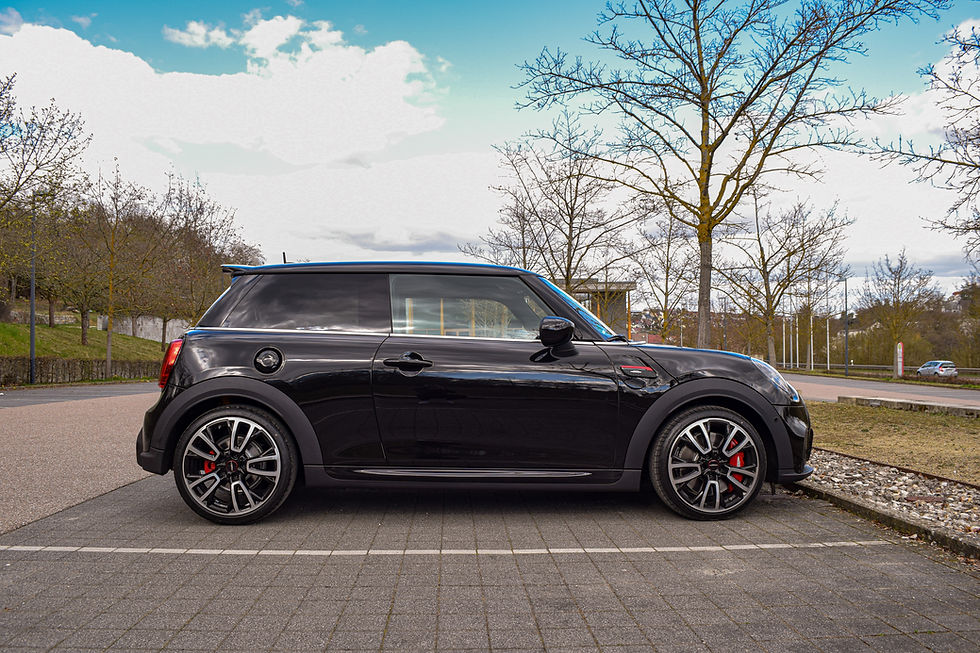
Automatic vs CVT vs DCT vs Manual: Which Fits You?

The transmission is one of the few parts of a car you experience almost every minute without thinking about it. It decides how calmly the car leaves a light, how much effort traffic demands, how the engine sounds under acceleration and, sometimes, how confident you feel keeping the car after the warranty ends.
That is why Automatic vs CVT vs DCT vs Manual is not really a contest between technologies. It is a question about the way you live with a car.
A commuter crawling through traffic needs something different from a driver who treats an empty Sunday road as therapy. A family keeping a vehicle for ten years may value smoothness, maintenance history and predictable ownership more than lightning-fast shifts. A buyer on a strict budget should care less about transmission mythology and more about whether the complete vehicle — powertrain, mileage, service record, generation and price — makes sense together.
At WhatCarFitsMe, we are not trying to find the transmission that wins on paper. We are trying to find the how to find the best car for you once the excitement of buying it has worn off.
Table of Contents

Automatic vs CVT vs DCT vs Manual Is a Lifestyle Question
Most comparisons begin mechanically: torque converter, belt or chain, clutch packs, gearsets. Useful, but the buying decision begins somewhere else.
Start with life friction.
How often are you in stop-start traffic? Do several people share the car? Do you keep cars to long-term durability at high mileage? Are your trips mostly urban, suburban or highway? Does the car need to feel effortless, engaging, economical or luxurious?
The same gearbox can feel brilliant in one life and irritating in another.
Old rules also age badly. The U.S. Department of Energy found that beginning with model year 2016, automatic-equipped versions of comparable vehicles had better average fuel economy than their manual equivalents. That does not make every automatic more efficient than every manual; it means the old shortcut that a manual automatically saves fuel is no longer dependable.
So ask a better question: what does this transmission do for this vehicle and this owner?
Traditional Automatic: The Low-Drama All-Rounder
A conventional automatic normally uses fixed gear ratios and, in many designs, a torque converter. Modern versions can carry many forward ratios, lock the converter under suitable conditions and use software to choose shifts according to speed, load and driver demand.
For many buyers, it is the easiest format to live with. It creeps naturally in traffic, handles hills intuitively and asks little from drivers sharing the same car. That matters more than it sounds. A transmission you barely notice on the school run, airport drive or long commute can be exactly what makes a car feel expensive in the best sense: calm, predictable and low effort.
EPA guidance on advanced transmissions and CVTs explains that modern transmission strategies can improve efficiency by giving the engine more opportunities to operate in favorable conditions and by reducing losses through features such as torque-converter lockup. The important ownership lesson is not that more gears are automatically better. Calibration still decides whether those gears feel intelligent or busy.
For mixed driving, families, luxury users and buyers who value effortlessness, a proven conventional automatic remains a very strong all-round path. If maximum mechanical involvement matters more than convenience, it may feel too detached.
CVT: Efficiency Without the Familiar Rhythm
A continuously variable transmission does not move through a normal staircase of fixed ratios. It can vary its effective ratio continuously, helping the engine operate closer to an efficient speed for the power being requested. EPA identifies CVTs as one of the transmission technologies used to reduce fuel consumption.
That benefit produces the behavior some drivers dislike. Press hard in a stepped automatic and you expect the engine to rev, shift, drop in speed and climb again. A CVT may move the engine to an efficient or power-producing speed and hold it there while vehicle speed rises. Some drivers experience that as smoothness; others hear it as disconnection.
This is a perfect example of why ownership fit matters more than internet consensus. If most of your miles are commuting, school runs and suburban errands, a well-calibrated CVT can make the car feel simple and economical. If discrete shifts are part of what makes driving satisfying to you, the same behavior may become an irritation you notice every day.
Do not treat every CVT as mechanically identical. Hybrid systems that are marketed with CVT terminology can work very differently from conventional belt- or chain-type CVTs. Reliability analysis therefore has to happen at the actual powertrain and generation level, not through the letters on the window sticker.

DCT: Fast, Direct and More Context-Dependent
A dual-clutch transmission is automatic for the driver but internally uses two clutch paths so the next ratio can be prepared before the current one is released. The result can be extremely quick changes and a more direct connection between engine and wheels than many traditional automatic designs.
At parking-lot speeds, a DCT can feel different because clutches must engage and disengage rather than relying on the fluid coupling familiar from many torque-converter automatics. Calibration, clutch design, cooling, vehicle weight and intended use all influence the result.
NHTSA's analysis of dual-clutch transmissions technical analysis has noted drivability and durability issues in some DCT applications as one factor behind relatively low adoption. That is not a verdict on every DCT. It is exactly why generation-specific research matters and why WhatCarFitsMe avoids turning an architecture into a blanket reliability label.
A performance-oriented driver may happily accept different low-speed manners for fast shifts on an open road. A city commuter may pay for an advantage that appears rarely while experiencing its compromises every weekday. The right answer depends on which miles dominate your ownership.
Manual: Buy It Because You Want the Ritual
A manual is now less an economy strategy than a deliberate choice about involvement.
You control the clutch. You choose the ratio. You decide when the engine climbs or settles. On the right road, that extra task can turn an ordinary journey into participation. For some drivers, that is not nostalgia; it is the point of owning the car.
But romance still needs accounting. In heavy traffic, the clutch pedal becomes hundreds of repetitions. If your partner or another household driver will not drive manual, the household has effectively bought a one-driver car. If the vehicle must cover childcare, commuting, airport runs and unexpected errands, that constraint deserves real weight.
Buy a manual because operating it is part of the enjoyment you genuinely want. Do not buy one because somebody says real drivers need one, or because an outdated rule says it will automatically be cheaper to run.
Match the Boring Miles First
This is where most spec-sheet comparisons fail.
Buyers often choose transmissions aspirationally. They picture the mountain road, not Tuesday at 5:40 p.m. They imagine the perfect downshift, not the parking garage. They judge a transmission at its best rather than in the conditions they experience most.
At WhatCarFitsMe, our rule is simple: match the boring miles first.
If most of your driving is commuting and errands, the car should succeed there before earning extra points for the occasional recreational drive. For a two-driver family, a traditional automatic may win because everybody can use it easily. For a high-mileage commuter, a CVT with good history may make more sense. For someone who genuinely seeks engagement, a DCT or manual can justify compromises that would be pointless for another buyer.
Comparison Matrix: Which Transmission Fits Your Life?
Buying path | Strongest advantage | Main compromise | Best environment | Fit logic |
Traditional automatic | Smooth, familiar and versatile | Calibration varies by vehicle | Mixed driving, families, luxury, long trips | Strong default when ease and broad usability matter |
CVT | Efficiency potential and seamless operation | Engine behavior under load can feel unfamiliar | Commuting and urban/suburban driving | Strong when running costs and calm daily driving lead |
DCT | Fast shifts and direct response | Low-speed behavior can be less natural in some applications | Performance use and open roads | Strong when engagement will genuinely be used |
Manual | Maximum driver involvement | Traffic effort, limited availability and shared-use constraints | Recreation and enthusiast ownership | Strong when shifting itself is part of the purchase goal |

Budget Fit Matters More Than Transmission Prestige
Transmission preference cannot be separated from budget.
At a tighter budget, insisting on one gearbox can push you toward older vehicles, higher mileage, weaker history or a less suitable segment. That is often a bad trade. The transmission you want should not force you to compromise the entire car you need.
If your money comfortably buys a well-maintained mainstream car with a CVT but only reaches an older premium DCT car with uncertain history, the more exciting transmission may bring a very different ownership-risk profile. Conversely, a buyer committed to a manual may be better served by choosing a simpler segment and keeping cash available for maintenance.
WhatCarFitsMe treats budget as a filter, not a wish. We look at what the money can buy responsibly, then compare transmission, age, mileage, segment and use inside that reality. This is also why the best answer can change as the budget changes: the available condition and history of the cars matter as much as the theoretical virtues of the gearbox.
Reliability: Judge the Application, Not the Acronym
Online advice loves simple villains: avoid CVTs, DCTs are fragile, manuals last forever, traditional automatics are safest. Those statements are too broad for a serious purchase.
Reliability depends on design maturity, calibration, cooling, maintenance, vehicle mass, engine torque and prior use. Two transmissions from the same broad family can deliver very different ownership experiences. The powertrain pairing matters, and so does where a specific vehicle sits in its development cycle.
Our conservative approach is to look beyond the acronym. When long-term predictability matters, we favor proven combinations over unnecessary early-generation uncertainty. We examine whether the car is an early year of a major redesign, whether the powertrain changed, whether service history is complete and whether the mileage makes sense for the vehicle category and intended ownership horizon.
For a what to check when buying a used car, the best transmission is often the one attached to the best individual vehicle. A well-maintained automatic beats a neglected manual. A properly serviced CVT can beat a mystery-history conventional automatic. A documented DCT in the right use case can be a better purchase than a supposedly safer architecture attached to a compromised car.
Test the Transmission You Will Actually Live With
A useful what to look for on a test drive should recreate your real life, not merely prove that the car accelerates.
Drive from cold if possible. Try low-speed maneuvering, gentle acceleration, one firm acceleration, a complete stop, a hill and steady cruising. Notice how the engine and transmission work together. Does the car creep naturally? Does it hesitate, surge, hunt between ratios or simply behave in a way you dislike?
Separate normal character from possible fault. A CVT holding engine speed during acceleration can be normal. A DCT feeling more clutch-like at very low speed can be characteristic. But abnormal noise, warning lights, severe harshness or delayed engagement deserve inspection, not rationalization.
Ask one question before you leave: would I still like this behavior after 500 ordinary mornings? That answer is more useful than asking which transmission a forum thinks is best.
Automatic vs CVT vs DCT vs Manual: The Better Decision Rule
Choose a traditional automatic when you want the transmission to disappear into the background and work well across many roles.
Choose a CVT when efficiency, seamless progress and everyday practicality matter more than the sensation of discrete shifts.
Choose a DCT when fast response and mechanical directness are central to why you want the car, and the specific application suits your driving.
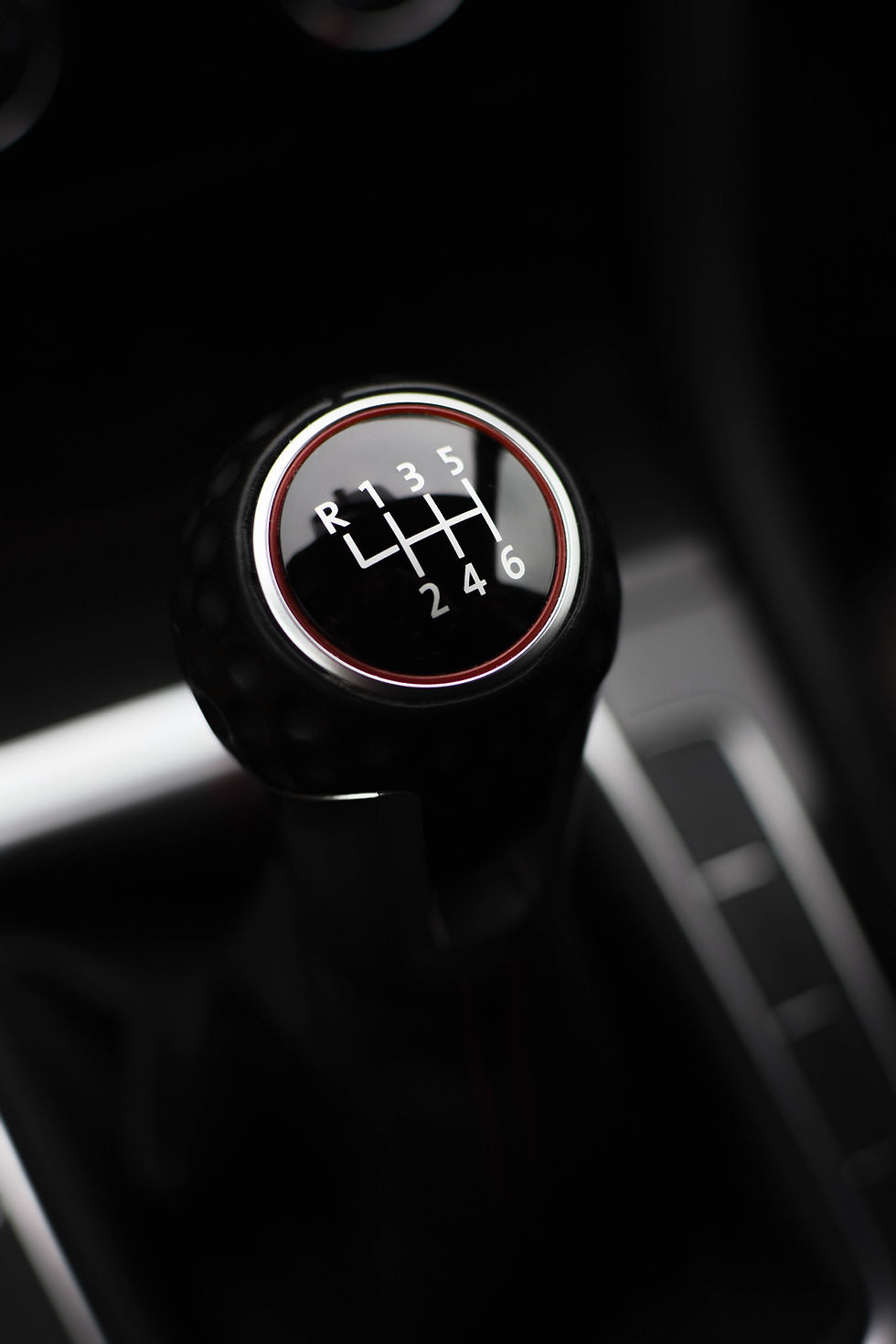
Choose a manual when shifting itself is part of the joy you are intentionally buying.
Then pressure-test the choice against budget, segment, mileage, service records, redesign timing, reliability history and everyone who will use the vehicle. Transmission type matters, but it is one variable inside a larger ownership system.
At WhatCarFitsMe, our role is to connect those variables: real budget, driving pattern, household needs, ownership horizon and priorities. We would rather match you with a slightly less exciting specification that works beautifully in your real life than a technically impressive choice that creates friction every day.
If Automatic vs CVT vs DCT vs Manual still feels like a technical debate, turn it into a personal one. Compare the vehicles that fit the way you actually drive, spend and live.
FAQ
Is a CVT better than a regular automatic transmission?
Neither is universally better. A CVT can suit efficiency-focused commuting because it continuously adjusts its effective ratio, while a traditional automatic may feel more familiar to drivers who prefer discrete gear changes. The better choice depends on the vehicle, calibration, driving pattern and ownership priorities.
Which is more reliable: CVT, DCT, automatic or manual?
Transmission architecture alone cannot determine reliability. Design maturity, maintenance history, cooling, calibration, vehicle application and prior use all matter. For a used vehicle, the condition and history of the individual car should carry more weight than broad stereotypes about transmission type.
Is a manual transmission more fuel efficient than an automatic?
Not necessarily. Modern automatic transmissions have largely eliminated the historical efficiency disadvantage. Buyers should compare the specific vehicles rather than assume a manual transmission will automatically deliver better fuel economy.
Is a DCT good for city driving?
It can be, but city use is not where every DCT shows its greatest advantage. Because a DCT uses clutches rather than the fluid coupling typical of many conventional automatics, very low-speed maneuvering can feel different. Buyers who spend substantial time in congestion should test the specific vehicle carefully.
Which transmission is best for high-mileage driving?
There is no single best architecture. For high-mileage ownership, prioritize a proven powertrain combination, complete maintenance records, appropriate servicing and a transmission whose behavior matches the type of driving you will actually do.
Should transmission type affect which used car I buy?
Yes, but transmission type should be one part of the decision rather than the decision itself. Consider it alongside price, mileage, service history, vehicle generation, redesign timing, engine pairing, intended use and expected ownership period.