
Best Car for Kayaks: Roof Load, Cargo and Real Usability

Updated: Sep 21
A kayak changes the way you look at a car. Suddenly, roof height matters more than horsepower. A beautifully trimmed cargo area matters less than whether wet paddles can lie flat. And the vehicle that looked adventure-ready in a showroom can become surprisingly inconvenient when you are standing beside it at dawn, trying to lift a long boat above your shoulders.
That is why finding the best car for kayaks is not really a search for the biggest SUV. It is a search for the least friction between you and the water.
At WhatCarFitsMe, we start with the owner: How many kayaks? How often? Who loads them? Where is the car parked? What else travels with you? How far is the drive? What can you comfortably afford to own for years?
The right vehicle is not the one that can theoretically carry the most outdoor gear. It is the one that makes your real trips easier without making every ordinary day more expensive, cumbersome or complicated.
Table of Contents

The Best Car for Kayaks Starts With Loading, Not Volume
Outdoor buyers are especially vulnerable to buying for the fantasy version of their life.
You picture the launch ramp, the campsite and the mountain road. A large SUV or truck begins to feel like the natural answer. Yet the decision should begin in the driveway, where the equipment must actually be loaded. Surfers face the same long-equipment problem; our guide to the best car for surfers applies the same logic to board length, roof carrying and avoiding an oversized daily driver.
Can you comfortably reach the crossbars? Can one person load the boat? Does the vehicle’s height force you to carry a stool? Will your garage become a problem once the boat is mounted? Can the hatch still open? Where will wet life jackets, dry bags, shoes and paddles go?
A lower wagon, hatchback or modest crossover can sometimes be a better kayak vehicle than a taller SUV. That same SUV vs wagon tradeoff is worth understanding because roof height and loading geometry can matter more than outright interior volume. The SUV may offer more interior room, but the lower car may make the hardest part of the trip—getting the kayak onto the roof—meaningfully easier.
Capability that is annoying to use is not full capability.
Roof Load Is a System, Not a Marketing Number
Roof-load conversations are often reduced to one number. In practice, safe capacity depends on the vehicle, its roof structure or rails, the crossbars and the carrier. The owner’s manual and the instructions for every part of the rack system are the starting point.
Never assume that visible roof rails automatically mean a particular kayak setup is approved. Factory rails, crossbars and aftermarket carriers can each have their own requirements and limits. The conservative rule is to verify the complete system and follow the lowest applicable limit rather than treating one headline capacity as universal.
Weight is only part of the problem. A kayak is long, exposed to airflow and capable of creating substantial leverage if poorly secured. NHTSA’s cargo-securement guidance advises drivers to tie large objects directly to the vehicle or trailer, avoid excessive loads and double-check cargo before travel.
This is not the glamorous part of buying an outdoor vehicle. It is the part that makes the glamorous part possible.

The Roof-Height Tax Can Matter More Than Ground Clearance
A tall SUV may win the adventure comparison on paper, yet lose when one person has to lift a kayak onto it after work.
Roof height matters for shorter drivers, older paddlers, anyone with limited shoulder or back strength, and people who routinely load alone. Assisted-loading racks, rollers or side-loading systems may solve the problem more elegantly than buying a larger vehicle.
Ground clearance should be treated with the same discipline. If the route to your launch regularly includes rough roads and potholes, extra clearance and more forgiving tires can matter. If the route is paved, paying for ruggedness you rarely use may simply add height, weight and cost.
Specifications gain value only when they interact with a human being. The best car is the one you can load without resenting the trip before it begins.
Interior Cargo: Think in Wet Zones and Awkward Shapes
Outdoor gear rarely behaves like standardized luggage. Paddles are long, PFDs bulky, shoes wet and coolers boxy.
So look beyond advertised cargo volume. A square opening, low load floor, split-folding seats, durable liners and small storage spaces for straps can matter more than a headline number. Families also need to account for child seats, dogs and luggage competing for the same space.
If kayaking often overlaps with overnight trips, use the same simultaneous-load thinking you would apply when choosing a car for camping: passengers, sleeping gear, food, wet equipment and the boats all need a workable place at the same time.
Real usability is not empty-space capacity. It is simultaneous-use capacity.
Do You Need AWD, or Are You Buying the Story?
Kayaking imagery makes AWD feel mandatory. Real life is more specific.
If your launches are paved and most driving is highway, front-wheel drive with appropriate tires may be enough. If you regularly face steep gravel ramps, snow-covered access roads or slippery surfaces, AWD becomes more valuable. The bigger question is whether that added capability justifies the vehicle around it; our guide to whether you really need an SUV applies the same frequency-over-fantasy logic to everyday ownership.
Tires still matter enormously, and ground clearance only matters when your routes demand it. WhatCarFitsMe treats AWD and ruggedized trims as use-case variables, not proof of outdoor seriousness.

The Outdoor-Gear Budget Has Two Parts
There is the car budget. Then there is the carrying-system budget.
Kayak ownership may require crossbars, mounts, carriers, tie-down equipment, locks, protective pads and sometimes a hitch or small trailer. Include those costs before deciding how much car you can afford.
This exposes a common psychological error. A buyer stretches for the adventure trim of a larger vehicle, then discovers that the rack equipment needed to make it useful still costs extra.
A less expensive vehicle with an excellent carrying system may be the better total package.
Your ownership budget should also include insurance, fuel or electricity, tires, maintenance, registration, financing and expected repairs. If you paddle twice a month but commute five days a week, everyday costs deserve more weight than occasional capability.
The smartest outdoor vehicle is the one that keeps the weekend affordable.
Mileage and Reliability Need Context, Not a Magic Cutoff
Used SUVs, crossovers and trucks can look attractive because depreciation brings more capability within reach. But purchase price and ownership price are different.
A higher-mileage mainstream crossover with a straightforward powertrain, documented maintenance and a strong inspection can be more rational than a lower-mileage premium SUV with greater complexity and expensive consumables. Low mileage, meanwhile, does not erase age or neglect.
WhatCarFitsMe does not use a universal mileage ceiling. We adjust mileage tolerance by vehicle category, complexity and expected use. At a broad brand-category level, simpler mainstream vehicles may justify considering higher-mileage examples when history and condition are strong. Older premium, performance-oriented or highly complex vehicles generally call for a larger repair reserve and more demanding service-history standards.
Annual mileage changes the calculation. Someone adding heavy highway mileage may sensibly start with lower mileage. A weekend owner adding modest mileage can shop a different part of the market.
For used vehicles, the FTC recommends an independent mechanical inspection and explains that a vehicle history report is not a substitute for that inspection. That is exactly the kind of distinction that protects buyers from treating a clean-looking report as a mechanical guarantee.
Reliability is not a logo. It is the intersection of engineering, age, mileage, maintenance, condition and financial tolerance.
Generation Maturity Matters for Long-Term Owners
A redesign can improve packaging, efficiency and safety, but it can also introduce new powertrains, electronics or software.
For buyers prioritizing long-term predictability, a later year of an established generation can be a sensible conservative choice instead of automatically selecting the first year of a redesign. This is not a rule that first-year vehicles are bad; it is a way to align the recommendation with the owner’s tolerance for uncertainty.
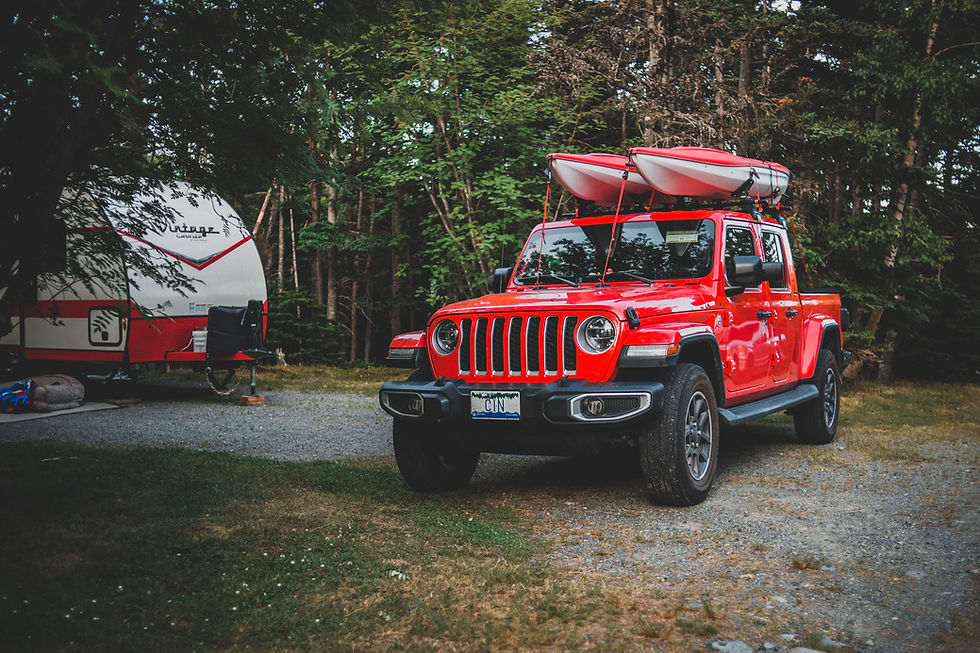
The Best Car for Kayaks May Be Smaller Than You Expect
If one or two kayaks travel on the roof, the cabin may need surprisingly little additional space.
A couple may be well served by a hatchback, wagon or compact crossover with the right roof system. A family carrying children, a dog and camping equipment may need a midsize crossover. A paddler transporting several boats, fishing gear or expedition equipment may genuinely benefit from a pickup, large SUV or trailer solution.
The hierarchy should follow frequency and load.
Do not buy a three-row SUV because you take two large trips each summer if a smaller vehicle handles ordinary life beautifully and the exceptional trips can be solved with better packing, a roof box, a small trailer or a rental.
This is the difference between ‘Can the vehicle do it?’ and ‘Should I own the vehicle because of it?’
The second question saves people money.
Comparison Matrix: Which Kayak-Carrying Path Fits?
Buying path | Best suited for | Principal advantage | Main compromise | Decision guidance |
|---|---|---|---|---|
Hatchback or wagon + roof rack | Solo paddlers, couples | Low roof; efficient daily use | Less enclosed cargo | Overlooked value choice |
Compact crossover + roof rack | Mixed use, small families | Balanced space and comfort | Higher roof than a car | Broadest ‘enough car’ solution |
Midsize SUV + roof rack | Families, dogs, camping | More simultaneous-use space | Cost, size, loading height | Worth it when space is regularly used |
Pickup + bed/roof system | Fishing kayaks, dirty gear | Separates wet cargo | Larger footprint; open-bed security | Strong specialist, weak default |
Smaller vehicle + light trailer | Multiple boats, difficult lifting | Easy loading; scalable capacity | Storage, hitch, reversing | Smart when roof loading is the constraint |
The matrix is intentionally about buying paths rather than top-five models. Models and incentives change. Your body, budget, parking space and paddling routine are the more durable facts.
Highway Reality: The Kayak Changes the Car You Bought
Roof cargo adds aerodynamic drag, wind noise and another reason to watch securement, speed and crosswinds. The U.S. Department of Energy’s fuel-saving guidance notes that a loaded roof rack can reduce fuel economy. The exact effect in real driving depends on the vehicle, speed, rack and cargo shape.
A high-mileage commuter may therefore value removable crossbars more than a weekend-only owner. If your kayak trips routinely involve long highway stretches, our guide to highway driving explains why noise, seating position, stability and everyday efficiency deserve as much attention as the rack itself.
Outdoor capability should be judged across the miles when the gear is not attached too.
Luxury Buyers Should Spend on Ease, Not Theater
Premium buyers can overpay for power, giant wheels and off-road appearance while overlooking what actually makes kayak ownership easier: an accessible roof, good cameras, durable cargo protection and clean mounting solutions.
Luxury should remove friction. If loading becomes a two-person job or the wheel-and-tire package makes rough access roads stressful, the expensive specification is working against the lifestyle.

Test-Drive With a Tape Measure and a Loading Plan
Measure the garage opening, roof height, cargo opening, paddle length, cooler and space occupied by child seats or dog crates. Verify rack compatibility before purchase.
On the road, notice stability, braking, visibility, ride quality and maneuverability. If a trailer is part of the plan, confirm the manufacturer’s towing guidance and hitch requirements.
Then rehearse the trip: Where do wet items go? Can the hatch open? Can passengers stay comfortable? Can you reach the roof and unload alone after dark?
The best test drive includes the least glamorous version of the hobby.
WhatCarFitsMe Matches the Car to the Adventure You Actually Have
The automotive market is excellent at selling aspiration.
WhatCarFitsMe adds proportion.
We look at budget, annual mileage, family structure, parking, commute, road conditions, maintenance tolerance, reliability expectations, cargo needs, comfort and how often the exceptional use case really occurs.
For kayakers, we do not automatically escalate from crossover to SUV to truck because each step adds capability. We ask whether each step adds useful capability.
Sometimes the right answer is more vehicle. Sometimes it is a better rack. Sometimes it is a trailer. Sometimes it is choosing a lower roof because the owner loads alone. Sometimes it is avoiding a premium trim so there is room in the budget for good tires, a quality carrier and future maintenance.
Good vehicle matching should not feel like a sales pitch. It should feel like uncertainty becoming smaller.
Frequently Asked Questions
What is the best car for kayaks?
The best car for kayaks is the smallest vehicle that can safely support the required rack system, comfortably carry passengers and additional gear, and remain easy for the owner to load. For many buyers, that may be a wagon, hatchback or compact crossover rather than a large SUV. Roof compatibility, loading height, cargo layout and the driver’s normal routine matter more than body style alone.
Do I need an SUV to carry a kayak?
No. Many cars, hatchbacks, wagons and crossovers can carry kayaks when the vehicle manufacturer and rack manufacturer approve the setup. A lower-roof vehicle can actually be easier to load than a tall SUV. Always confirm roof-load limits, mounting compatibility and carrier requirements for the specific vehicle.
Is a roof rack or trailer better for carrying kayaks?
A roof rack is usually simpler for one or two kayaks and requires less storage at home. A light trailer can be more convenient for multiple boats, heavier kayaks or owners who find overhead lifting difficult. The best solution depends on loading ability, vehicle compatibility, storage space, trip frequency and total budget.
Does carrying a kayak on the roof affect fuel economy?
Yes. Rooftop cargo increases aerodynamic drag, which can reduce fuel economy, particularly during higher-speed driving. The size and shape of the kayak, vehicle design, rack configuration and speed all influence the effect. Removing unnecessary rack components between trips can make sense for high-mileage drivers.
Is AWD necessary for kayaking and outdoor trips?
Not necessarily. AWD becomes useful when access routes regularly involve snow, loose gravel, steep grades, mud or slippery surfaces. Drivers using mostly paved roads and maintained launches may not need it. Appropriate tires, ground clearance and the actual conditions you encounter should guide the decision.
What should I check before buying a used vehicle for outdoor gear?
Review maintenance records, vehicle history, age, mileage, overall condition and the complexity of the powertrain and equipment. Confirm that the roof or hitch system you plan to use is compatible with the vehicle, check for open recalls, and arrange an independent pre-purchase inspection. Do not assume low mileage or a strong brand reputation makes an individual used vehicle automatically safe or reliable.
Your Car Should Make You Want to Go
There is a final emotional test.
When the weather turns perfect and you unexpectedly have three free hours, does your vehicle make paddling feel easy? Or do you imagine the lifting, rearranging, strapping, parking and unloading—and decide it is too much effort?
That is real usability.
The best car for kayaks should not merely transport the boat safely. It should lower the resistance between intention and action while still behaving like the right car on Monday morning.
You do not need a massive SUV to prove the outdoors matter to you. You need enough roof capability, cargo flexibility, road confidence and financial breathing room to keep doing the thing the vehicle is supposed to support.
Ready to find the best car for kayaks for your real life? Tell WhatCarFitsMe how you drive, what you carry, how often you paddle, what you can comfortably spend and which ownership compromises you refuse to make. We will help you compare realistic options—not the biggest vehicles, but the ones that fit.


