
Best Car for Sales Reps: When Your Car Is Part of the Job

Updated: Sep 21
The best car for sales reps is rarely the one that feels most impressive in a dealership. It is the one that still feels right at 5:40 p.m., after three client meetings, 140 miles, two calls, a rushed lunch, and another hour of highway before home.
That matters because many sales professionals do not simply own a car. They work through it. The vehicle becomes a mobile office, storage space, waiting room, first impression, and recovery zone between appointments.
That changes the buying equation.
A large SUV may project confidence while quietly punishing you through fuel, tires, depreciation, parking friction, and purchase price. A bargain used car can look financially disciplined until an unpredictable repair cancels a day of meetings. A highly efficient car can still be wrong if the seat, cabin noise, cargo access, or ride leaves you depleted.
At WhatCarFitsMe, we believe the right answer starts with the job you actually do—not the identity you think the car should project.
The best sales car is not a trophy. It is infrastructure.
Table of Contents

The Best Car for Sales Reps Is a Business Tool First
Sales creates an understandable psychological trap: your vehicle can feel like part of your credibility.
If you sell to executives, affluent homeowners, physicians, or corporate buyers, you may worry that arriving in the “wrong” car weakens your image. At the other extreme, some representatives avoid anything too expensive because they fear looking flashy or disconnected from the customer.
Both instincts contain some truth. Neither should control the purchase.
Choose around what materially improves the working day: supportive seats, predictable reliability, low cabin fatigue, sensible running costs, useful cargo space, easy parking, good visibility, phone integration, and enough refinement to make long hours tolerable.
A salesperson should look successful. The car does not need to make the argument for you.
Start With Annual Mileage, Not the Monthly Payment
Dealership math encourages buyers to think monthly. High-mileage work demands that you think annually.
A salesperson driving 8,000 business miles per year and one driving 25,000 may have the same income and like the same compact luxury SUV. Yet the economics are completely different.
At higher mileage, every weakness gets amplified. Fuel consumption repeats thousands of times. Tires arrive sooner. Service intervals compress. Depreciation accumulates faster. Seat discomfort becomes a daily problem.
AAA’s 2025 Your Driving Costs study estimated average new-vehicle ownership and operating costs at $11,577 per year, with depreciation averaging $4,334 annually—the largest ownership cost in the study. Those figures are not a prediction for your specific vehicle, but they expose how incomplete the monthly-payment view really is. AAA: Your Driving Costs
For July through December 2026, the IRS standard business mileage rate is 76 cents per mile. That is a tax and reimbursement benchmark, not a claim that every driver spends 76 cents on every mile, but it reinforces the same reality: business mileage carries material economic weight. IRS standard mileage rates
If you drive modestly, emotional preferences can carry more weight. If you drive heavily, efficiency, durability, depreciation, maintenance accessibility, and comfort deserve much more authority. The same principle applies when choosing a car for a demanding commute: the route changes what “fit” actually means.
Comfort Is Not a Luxury When You Sell After You Drive
Car buyers often evaluate comfort while sitting still. Salespeople should evaluate it after two hours.
A seat can feel soft in a showroom yet provide poor thigh support on the interstate. Large wheels can look excellent while allowing more road shock into the cabin. A sporty suspension can make a test drive engaging and a 300-mile territory exhausting.
The better question is not, “Is this car comfortable?” It is, “Does this car preserve my energy?”
That includes seat geometry, lumbar support, steering position, visibility, wind and tire noise, ride quality, climate control, adaptive cruise capability where available, and how naturally the infotainment system handles calls and navigation.
Reliability Means Protecting the Calendar
For a commuter, a mechanical problem is an inconvenience. For a field salesperson, it can become lost revenue.
A missed morning appointment may disrupt an entire territory day. A tow can strand samples or presentation materials. A repair appointment consumes hours that were supposed to produce business.
Reliability should therefore be treated as schedule protection.
We prefer mature mechanical packages and proven production years when a vehicle is going to absorb serious mileage. Consumer Reports has repeatedly cautioned that first-year redesigns can be less reliable than later years in the same generation. Consumer Reports on redesigned-model reliability
That principle fits WhatCarFitsMe’s broader philosophy: novelty should earn its place.
Professional Image Is More Subtle Than “Luxury or Not?”
The best car for sales reps should fit the customer environment without turning image into financial theater.
This is where generic “best cars for salespeople” lists fail. They rank vehicles before ranking requirements.
WhatCarFitsMe reverses the process. We start with how you use the vehicle, what the budget can safely support, expected mileage, client environment, cargo needs, parking conditions, and tolerance for ownership uncertainty. Then the right vehicle category starts to emerge.

Sedan, Hybrid, Crossover or Premium Car?
There is no universally correct body style. Each path makes a different compromise.
A midsize sedan remains one of the most rational high-mileage tools when cargo and ground clearance are not priorities. It can offer excellent highway stability, strong fuel economy, and substantial value compared with similarly equipped SUVs.
A compact crossover is often the flexibility choice: easier entry, useful cargo access, and a seating height many drivers prefer without automatically moving into the bulk of a large SUV.
A premium sedan or compact premium crossover can make sense where presentation genuinely matters and the buyer can absorb higher depreciation, insurance, tires, maintenance, and financing without stressing the rest of the household budget.
A large SUV or truck should generally be justified by real cargo, passenger, terrain, towing, or customer-site requirements. Buying one mainly because it feels important is one of the easiest ways for a high-mileage salesperson to overbuy.
The goal is not minimalism. It is proportionality.
Comparison: Sales-Rep Buying Paths
Buying path | Best suited for | Principal advantage | Main compromise | Decision guidance |
|---|---|---|---|---|
Efficient midsize sedan | Heavy highway mileage | Comfort + efficiency | Less cargo flexibility | Rational benchmark |
Hybrid sedan/crossover | Urban + suburban territory | Lower fuel use in stop-start driving | Higher purchase complexity | Strong when the route supports it |
Compact crossover | Mixed work/life use | Cargo access + versatility | Usually pricier to run than a sedan | Excellent balance |
Premium sedan/crossover | Image-sensitive client work | Refinement + presentation | Depreciation and ownership cost | Buy only when comfortably affordable |
Larger SUV/truck | Equipment, rough sites, passengers | Capability | Fuel, tires, parking, price | Needs a real job reason |
Your Commission Check Is Not Your Car Budget
Variable income creates a special buying risk.
A strong quarter can make an expensive vehicle feel ordinary. The payment seems easy because the buyer mentally annualizes recent commissions. Then a territory changes, quotas move, a major account disappears, or the market slows. The vehicle remains.
Salespeople should budget from a conservative income baseline, not from their best recent month. If you are uncertain where that baseline should sit, start by working through how much car you can realistically afford before comparing trims or badges.
The healthiest purchase usually sits well below the affordability ceiling and close to the rational requirement. That leaves room for tires, repairs, insurance increases, a weak commission month, or an earlier-than-expected replacement.
Premium is fine. Fragile finances are not.
Used Can Be Smarter—If the Remaining Life Fits Your Mileage
Used vehicles can be excellent sales cars because someone else has already absorbed part of the early depreciation. But high-mileage professionals should think in remaining useful miles, not simply vehicle age.
Imagine buying a five-year-old car with 70,000 miles because the price looks attractive. If you drive 25,000 miles annually, it can cross 120,000 miles within two years. That does not automatically make it a bad purchase. It does mean upcoming maintenance, wear items, warranty status, resale value, and downtime risk deserve more attention. This is why understanding what used-car mileage really means matters more than chasing an arbitrary odometer threshold.
Likewise, low mileage is not automatically reassuring. Maintenance history, usage pattern, storage, mechanical maturity, and complexity all help determine whether the apparent bargain is actually a good fit.
A mainstream car with a mature drivetrain may present a different long-term ownership profile from a highly complex premium model with sophisticated suspension, oversized wheels, and expensive electronics.
Mileage expectations should be more conservative as complexity rises. A mainstream, mature-platform vehicle may tolerate high annual mileage with lower financial risk than a low-volume premium or performance vehicle, where specialized parts, tires, electronics, and labor can make aging more expensive. That is a category-level expectation, not a guarantee about any brand.
The Small Mechanical Details That Become Big at 25,000 Miles
Look at the tires.
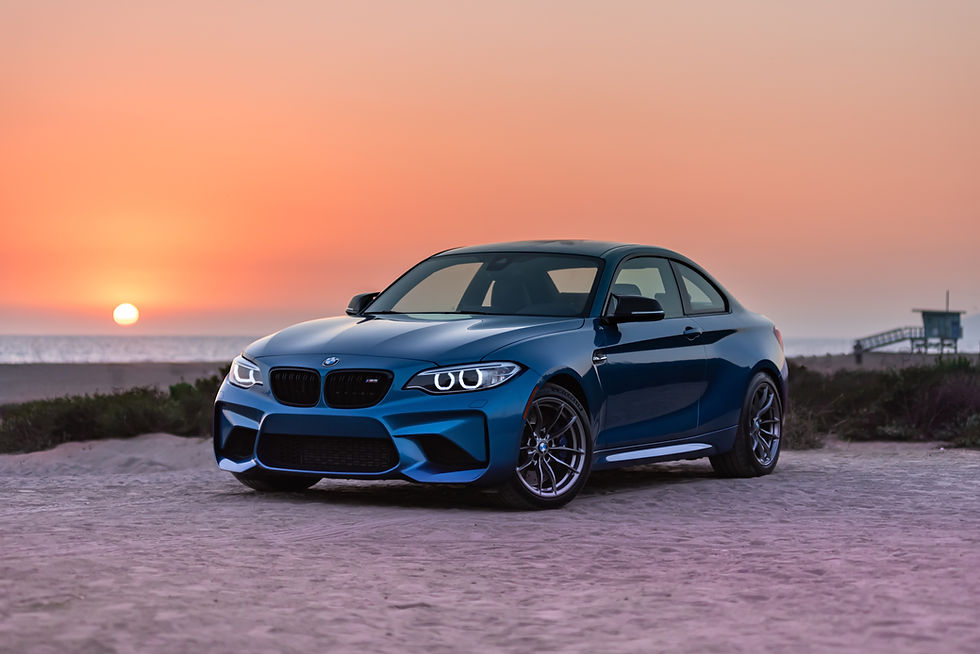
Large wheels and low-profile performance tires can improve appearance and steering response, but replacements may cost more, ride quality can suffer, and pothole vulnerability can increase. At serious annual mileage, tire life is not a footnote.
The same logic applies to brakes, required fuel grade, oil capacity, service intervals, and access to qualified repair facilities across your territory.
You do not need to become a mechanic. You need to understand whether the vehicle’s operating requirements fit the way you intend to use it.
Separate Personal Reward From Professional Requirement
There is nothing wrong with loving cars. There is nothing wrong with buying something beautiful, fast, prestigious, or emotionally satisfying.
The problem begins when we disguise desire as necessity.
“I need it for clients” can become a convenient justification for buying substantially more vehicle than the role requires. “I drive a lot, so I deserve something premium” may be emotionally valid but financially unrelated to the business case.
If a $38,000 vehicle fulfills the job beautifully and you choose a $55,000 one because you genuinely love it, that can be completely legitimate if your finances support it. But the extra $17,000 should be understood as preference, not disguised as professional necessity.
Test the Car Like a Sales Rep, Not a Tourist
Recreate your working day.
Connect your phone. Start navigation. Make a hands-free call. Put your laptop bag, samples, coat, cases, or presentation equipment where they will actually go. Enter and exit repeatedly. Park in a tight space. Drive broken pavement. Spend meaningful time at highway speed.
Notice whether the seat remains supportive after the initial softness wears off. Check whether road noise makes calls tiring. Test lane-change visibility. Look at the shape of the cargo opening, not only the cargo-volume number.
Then examine service history, warranty position, maintenance requirements, insurance cost, tire replacement cost, and expected depreciation.
The car must pass two tests: the human test and the financial test. Passing only one is not enough.
WhatCarFitsMe Looks for the Car That Still Makes Sense on a Bad Month
Most recommendation systems are naturally drawn toward specifications. We are more interested in consequences.
What happens if you drive 5,000 more miles than expected? If commissions soften? If you keep the car six years instead of three? If your territory includes bad roads? If children occupy the rear seats on weekends? If you begin carrying clients?
The right match should survive realistic changes.
Our job is not to remove emotion. It is to stop emotion from hiding the trade-offs.

The Best Car for Sales Reps Should Make the Job Easier
When your car is part of your job, the ideal vehicle becomes almost invisible.
It starts every morning. It holds what you need. It does not punish you at the pump. The seat does not become an enemy after lunch. You can take a call without fighting cabin noise. You arrive composed rather than exhausted. You can park without planning a military maneuver. Maintenance does not repeatedly interrupt your calendar. The payment still feels reasonable when the quarter is less spectacular.
Not the largest screen. Not the most aggressive wheel package. Not the badge that makes the strongest impression in your driveway.
The best professional car creates confidence through consistency.
Because the smartest work car is not the one that tells people you are successful. It is the one that helps you stay successful.
Frequently Asked Questions
What is the best car for sales reps who drive a lot?
For high-mileage sales reps, the strongest choices are usually vehicles that combine supportive long-distance seating, good fuel economy, proven reliability, reasonable tire and maintenance costs, and manageable depreciation. A midsize sedan, hybrid, or efficient compact crossover will often make more financial sense than a large SUV or high-performance premium vehicle.
Should a sales rep drive a luxury car?
Only when the client environment and personal budget genuinely justify it. A premium vehicle can support presentation in some industries, but cleanliness, punctuality, professionalism, and consistency generally matter more than the badge. Luxury becomes a poor business decision when its depreciation, insurance, financing, or maintenance costs create financial pressure.
Is a sedan or SUV better for a salesperson?
A sedan often makes more sense for heavy highway mileage because of efficiency, ride quality, and lower ownership costs. A compact SUV or crossover may be better when the salesperson regularly carries samples, equipment, family members, or needs easier entry and cargo access. The right answer depends on the actual territory and workload.
Is buying a used car smart for a high-mileage sales job?
It can be. A well-maintained two- or three-year-old vehicle with a proven drivetrain may avoid some early depreciation while still offering substantial useful life. Buyers driving 20,000 to 30,000 miles annually should pay particular attention to current mileage, service history, upcoming maintenance, warranty coverage, and expected resale value.
How much should a salesperson spend on a work car?
The appropriate amount should be based on conservative, sustainable income rather than a strong commission month or the maximum financing available. The vehicle should perform the job comfortably and reliably while leaving room for insurance, maintenance, tires, savings, and periods of weaker variable income.
What should sales reps look for during a test drive?
Test the vehicle as if you were working: spend meaningful time at highway speed, connect your phone, make a hands-free call, check seat support, assess road noise, load your normal work equipment, evaluate visibility, and practice parking. Comfort after two hours matters far more than first impressions after ten minutes.


