
Buy a Demo Car? Low Mileage, Lower Price, Hidden Trade-Offs

A demo car can make a careful buyer move faster than usual. It looks new, the odometer may show only a few thousand miles, and the dealer presents it as the sweet spot between new-car confidence and used-car pricing. Once you like the trim, color and cabin, the discount can feel like permission to stop analyzing.
That is precisely why the right question is not simply whether you should buy a demo car. The better question is: what are you receiving in exchange for the discount?
A demonstrator is not automatically a bargain, and it is not automatically a bad idea. In the United States, the Federal Trade Commission’s guidance for buying from a dealer includes demonstrators within vehicles covered by its Used Car Rule and describes them as new cars that have not been owned, leased or used as rentals but have been driven by dealer staff. That distinction is useful, but it does not tell you whether the specific car in front of you is good value.
At WhatCarFitsMe, we separate the vehicle from the deal. Price, warranty, condition, ownership costs, reliability, mileage and ownership horizon still matter after the showroom excitement disappears. A strong demo purchase is one whose discount fairly compensates you for early-life use and uncertainty while the vehicle still fits your real life.
Table of Contents

What a Demo Car Really Is — and Why the Label Is Not Enough
“Demo car” sounds like a condition grade. It is not. It describes how a vehicle was used before retail sale, and that use can vary. One demonstrator may have spent its life on short customer test drives. Another may have been assigned to dealership management. Similar odometer readings can therefore represent very different histories.
Mileage is only one form of wear. A car that covered 4,000 steady highway miles may have experienced a gentler life than one with 1,500 miles of cold starts, parking maneuvers, curb contact, repeated short trips and unfamiliar drivers. The odometer tells you how far the car traveled. It does not tell you how those miles happened.
Ask how the car was used, when it entered service, whether it was ever titled or registered, whether body, glass or wheel repairs were performed, and what factory coverage remains. Then verify what can be verified. A polished answer is not documentation.
Demo cars sit close enough to “new” to trigger new-car emotions and close enough to “used” to justify a bargain story. Resist both labels and evaluate the actual vehicle.
If You Buy a Demo Car, Price the Lost Newness
The common mistake is comparing a demo’s asking price with MSRP and treating the gap as savings. MSRP is not necessarily the price you would pay for a comparable untouched new vehicle today.
The useful comparison is demo out-the-door price versus realistic new-car out-the-door price. Account for manufacturer incentives, dealer discounts, financing offers, model-year changes and exact equipment. If the equivalent new car is already being discounted heavily, the apparent demo bargain can shrink quickly.
A discount that lowers the price from “uncomfortable” to “technically possible” is not automatically good financial fit. If the purchase still compresses cash flow, insurance, maintenance reserves or emergency savings, the demo label has solved the wrong problem. Our guide to how much car you can afford makes the same distinction: affordability should leave the rest of your financial life intact.
The discount is compensation for value you are giving up: untouched condition, control over early use, potentially more warranty time and certainty about how the vehicle was treated from mile one. For a long-term owner, modest demo mileage may matter little if the price is genuinely attractive. For a luxury buyer who trades frequently, cosmetic condition and remaining factory coverage may matter much more.
The Warranty Clock Can Matter More Than the Odometer
A demo with 3,000 miles can look almost new while occupying a different warranty position from an untouched vehicle.
Do not accept “it still has the factory warranty” as a complete answer. Ask for the exact in-service or warranty-start date for that VIN, the mileage limit, the remaining comprehensive and powertrain coverage, and whether complimentary maintenance or roadside benefits have already started. Confirm important details in manufacturer or dealer documentation.
Think in remaining protection, not original protection. If two cars cost nearly the same but one gives you materially more warranty time and untouched condition, the cheaper demo may not offer stronger value. If the discount is meaningful and you intend to own the car well beyond factory coverage, consumed warranty time may matter less.
Low Mileage Does Not Mean Zero Wear
Inspect a demonstrator with the mindset of a used car, even when it presents like a new one.
Start with wheel faces, tire sidewalls, bumpers, door edges, seat bolsters, steering wheel, cargo sill, touchscreen surfaces, windshield and lower front fascia. Look at paint consistency and panel alignment in good light. Ask whether wheels were refinished or bodywork was performed.
Check that the tires match, inspect tread and look for uneven wear; brakes can also reveal use that mileage alone does not explain. None of this proves abuse. It simply helps you price the car you are actually buying.
If the vehicle has accumulated meaningful use, work through a used-car inspection checklist and consider an independent mechanical inspection. The FTC advises consumers that a vehicle-history report is not a substitute for an independent inspection. A low odometer should not become permission to skip diligence.
A Vehicle History Report Is a Filter, Not a Verdict
A clean-looking demo still deserves a VIN-based history check. The National Motor Vehicle Title Information System can provide consumers with title information, reported odometer data, brand history and certain total-loss or salvage information through approved providers. But no database captures every scrape, wheel repair, cosmetic repaint or unreported incident. Documentation and physical inspection work together.
Also run the VIN through NHTSA’s recall lookup. A VIN search can identify unrepaired safety recalls that apply to the specific vehicle. A nearly new car is not exempt from recalls because it has barely been driven.
The strongest purchase file combines dealer disclosures, warranty documents, VIN history, recall status, service records and an inspection when appropriate. Confidence comes from convergence, not one reassuring report.
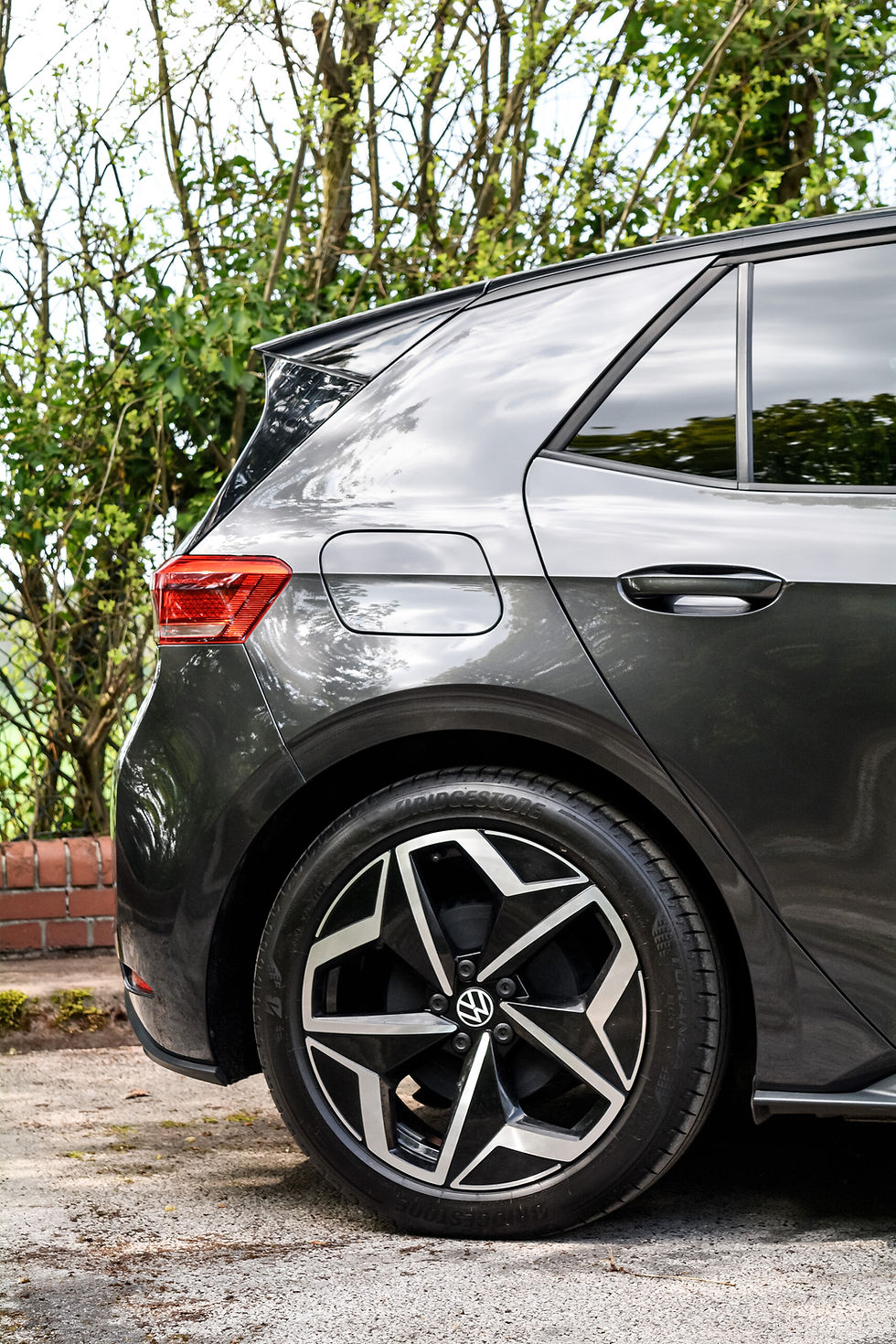
Reliability Still Starts With the Vehicle, Not the Deal
A discount can make a mediocre fit feel rational. If a vehicle is already at the edge of your budget, has running costs that make you uncomfortable, comes from a segment that does not fit daily use, or belongs to a generation you would otherwise avoid, “demo pricing” should not reverse the underlying conclusion.
A lower price does not redesign the car.
We prefer evaluating reliability at the powertrain, generation and use-case level rather than assuming an entire brand is uniformly dependable or problematic. A mature generation with a well-understood drivetrain can be a more conservative choice than the first model year of a major redesign containing many newly introduced systems. That does not make first-year cars universally bad; it means uncertainty can be higher when more hardware and software are new.
For a demo, evaluate two things separately: the vehicle’s inherent suitability and this specific car’s early-life history. Families, high-mileage commuters and luxury buyers may value different compromises. Choose the right vehicle first; then decide whether the demo is the right way to buy it.
Demo Car Mileage Needs Context
There is no universal mileage threshold that intelligently tells you when a demo has “too many” miles.
The useful variables are age, use pattern, price reduction, remaining warranty, physical condition and your expected annual mileage. What used-car mileage really means applies here too: mileage becomes informative only when you connect it to age, maintenance, usage and your ownership horizon.
For a high-mileage commuter, a few thousand demo miles may fade quickly into the ownership curve. For a low-mileage household planning to resell in three years, the same miles can matter more. Performance-car buyers should consider tire and brake wear; EV buyers should confirm charging equipment, software status and battery-warranty terms.
Mileage should be interpreted, not worshipped.
Buy a Demo Car Only After It Beats Real Alternatives
Remove the word “demo” and compare the vehicle against what the same money could buy.
Could your budget buy a brand-new lower trim with full warranty and no prior use? A one- or two-year-old certified pre-owned vehicle with structured reconditioning or additional coverage? A late-model used vehicle that costs meaningfully less? A mainstream model that better fits your budget than a discounted premium demo?
Certified pre-owned versus used vehicles represent a different trade-off among purchase price, prior use, inspection standards and warranty protection. A demo should compete against those alternatives on total value, not simply against its own window sticker.
Also ask whether a “cheap” alternative remains cheap after financing, insurance, maintenance and resale. When a cheap used car is not actually cheap, the purchase price usually hid costs elsewhere. A demo can create the same illusion.
A vehicle can be well priced and still be wrong because the buyer optimized the wrong variable. WhatCarFitsMe compares needs before inventory: passengers, cargo, commute, parking, annual mileage, ownership horizon, financing comfort, maintenance tolerance and even cabin feel or driving character.
The best deal is the one you still understand six months later.

Comparison Matrix: Demo vs. the Real Alternatives
Buying path | Principal advantage | Main compromise | Best suited for |
Dealer demo | Near-new vehicle with potential price savings | Prior use, wear and possibly reduced warranty time | Buyers who want near-new condition at a meaningful verified discount |
Brand-new vehicle | Maximum control from mile one and clearest warranty position | Usually the highest entry price | Buyers prioritizing pristine condition and maximum factory coverage |
Certified pre-owned | Structured program standards and program-specific coverage | Prior ownership or use and varying certification terms | Buyers who value reconditioning and added warranty structure |
Late-model used | Potentially strongest purchase-price value | More history, inspection and warranty uncertainty | Budget-focused buyers comfortable with deeper due diligence |
The Demo-Car Decision Test We Would Use
Before saying yes, answer six questions.
Would you choose this exact vehicle if it were not discounted? If not, the price is steering the decision more than the fit.
Is the demo meaningfully cheaper than an equivalent new vehicle at a realistic transaction price? Compare out-the-door numbers, not MSRP.
Can you document its use and remaining warranty? Get the in-service date, warranty balance, mileage and relevant records.
Does the physical condition match the story? Inspect tires, wheels, bodywork, glass, interior and mechanical condition.
Does the VIN history support the car? Check available title and odometer information plus unrepaired recalls.
Would ownership still feel comfortable if you forgot the discount tomorrow? Insurance, fuel or charging, tires, maintenance, financing and depreciation continue long after purchase day.
If an answer stays vague, slow the transaction down.
When You Should Walk Away
Walk away when the discount is mostly an illusion, warranty status cannot be documented, prior use remains unclear, inspection reveals repairs or wear not reflected in the price, or an equivalent new vehicle costs only modestly more after incentives.
Also walk away when you are rationalizing the wrong vehicle because it is “too good a deal to miss.” That pattern belongs among the broader car-buying mistakes worth recognizing before you sign. A large SUV does not become easy to park, a performance car cheap to run, a luxury car budget-friendly or an EV convenient without workable charging simply because the discount is excellent.
The more emotionally satisfying the deal feels, the more useful the boring questions become: Will it fit? Can I comfortably own it? What protection remains? What am I accepting that an untouched alternative would not require?
Fit comes first. The deal comes second.

So, Should You Buy a Demo Car?
Yes — when the economics are real, documentation is complete, condition is strong and the vehicle itself already fits your life.
No — when the discount is doing the emotional work the car cannot do on its own.
The smartest demo purchase often feels surprisingly unexciting. You know the comparable new price, warranty start date, VIN history, mileage, condition and recall status. You also know what similar used or certified vehicles cost and that this model, size and powertrain suit you.
At that point, the demo is no longer a tempting exception. It is simply one buying path that survived the evidence.
That is how WhatCarFitsMe approaches vehicle decisions. We start with real life — budget, driving patterns, family needs, comfort, ownership horizon and tolerance for risk — then narrow the market toward vehicles that still make sense after the excitement wears off.
If you are deciding whether to buy a demo car, compare it with the alternatives your budget and lifestyle support. The goal is not the cheapest version of today’s desire. It is the car you will still be glad you chose after the deal itself is forgotten.
Frequently Asked Questions
What is a demo car?
A demo car, or demonstrator, is a vehicle a dealership has used before retail sale, commonly for customer demonstrations or dealership-related driving. Mileage may be low, but title, history and warranty position should still be verified.
Is it smart to buy a demo car?
It can be when the out-the-door discount adequately compensates for mileage, previous use, condition and any warranty already consumed—and the vehicle is one you would choose without the discount.
How much cheaper should a demo car be?
There is no responsible universal percentage. Compare the demo’s out-the-door price with an equivalent new vehicle after current incentives, then judge the saving against mileage, condition and remaining warranty.
Does a demo car still have a full factory warranty?
Not necessarily. Verify the exact warranty-start or in-service date for the VIN, mileage limits and remaining coverage with dealer and manufacturer documentation before buying.
How many miles are too many on a demo car?
There is no single cutoff. Judge mileage alongside age, use pattern, discount, remaining warranty, physical condition and the mileage you expect to add.
Should I have a demo car independently inspected?
If the vehicle has accumulated meaningful use, an independent inspection can be valuable even when it looks nearly new. A history report does not replace a physical and mechanical inspection.
Before the discount makes the decision for you, compare the demo with vehicles that fit the way you actually drive, spend and live.


