Car Buying Due Diligence: Know Before You Deal

Updated: Sep 28
Buying a car is rarely a purely rational decision.
You may begin with a budget, a list of requirements, and a promise to remain objective. Then you see the right color. You sit in a cabin that feels more refined than expected. The salesperson frames the opportunity as unusually scarce. The monthly payment appears manageable. Suddenly, a vehicle you discovered forty minutes ago begins to feel as though it belongs in your driveway.
That emotional connection is not inherently wrong. A car should make you feel something. The danger begins when excitement is allowed to answer questions that only evidence can resolve.
Car buying due diligence is the disciplined process of separating the vehicle you want to believe you are buying from the vehicle, financial commitment, and ownership experience you are actually accepting.
It is not limited to checking an accident report. It means investigating the car, reviewing the documentation, understanding the financing, testing the seller’s claims, estimating future ownership demands, and confirming that the vehicle genuinely fits your life.
At WhatCarFitsMe, we believe the smartest deal is not necessarily the car with the lowest price, the cleanest photographs, or the most impressive badge. It is the car that continues to make sense after the emotion settles, the paperwork is signed, and ordinary ownership begins.
Table of Contents

Due Diligence Is a Reality Audit, Not a Checklist
Most car-buying advice treats due diligence as a collection of isolated tasks:
Run the vehicle identification number.
Review the service records.
Inspect the tires.
Take a test drive.
Negotiate the price.
Those steps matter, but they can create false confidence when they are performed without a larger decision framework. A buyer may complete every conventional check and still purchase the wrong vehicle.
Why? Because a mechanically sound car can still be financially uncomfortable. A fairly priced vehicle can still be unsuitable for the buyer’s routine. A clean history report can still accompany neglected maintenance. A prestigious model can still become emotionally exhausting to own.
Good due diligence asks three distinct questions:
Is this specific vehicle honest?
Is this particular deal financially sound?
Is this type of vehicle appropriate for the buyer?
A purchase should survive all three tests.
Many buyers concentrate almost entirely on the first. They want to know whether the car has been damaged, whether the mileage is credible, and whether the engine sounds healthy. Those are essential questions, especially when buying used. But they do not reveal whether the buyer is stretching beyond a realistic budget, underestimating insurance, accepting the wrong body style, or choosing a maintenance profile that conflicts with their tolerance for unpredictability.
Car buying due diligence must therefore evaluate not only the machine, but also the match.
Why Intelligent Buyers Still Make Poor Car Decisions
Bad purchases are not always caused by ignorance. They are often caused by perfectly normal human psychology.
The buyer begins defending the car too early
Once someone has invested hours researching a listing, traveling to a dealership, communicating with a seller, or imagining the car at home, walking away begins to feel like losing progress.
The buyer stops evaluating the car and starts defending the time already invested in it.
Small concerns are then reinterpreted:
The missing service record becomes “probably nothing.”
The worn tire becomes “easy to replace.”
The unexplained warning light becomes “likely a sensor.”
The uncomfortable payment becomes “manageable after a few adjustments.”
The impractical rear seat becomes “something we can work around.”
Each compromise may appear minor in isolation. Together, they can describe a vehicle the buyer would never have selected from a neutral starting point.
Scarcity creates artificial urgency
Statements such as “another customer is interested,” “this price is only available today,” or “we rarely get one this clean” may be true. They may also be sales pressure.
Even genuine scarcity does not make a poor fit more suitable.
A rare opportunity to buy the wrong car remains the wrong opportunity.
The monthly payment hides the purchase
A monthly payment is psychologically easier to process than a total financial commitment. It converts a large purchase into a smaller recurring number, allowing buyers to focus on affordability today rather than cost over time.
The Consumer Financial Protection Bureau advises buyers to consider more than the vehicle price or monthly payment. Interest, annual percentage rate, taxes, fees, optional products, insurance, maintenance, and the full loan term can materially change the overall cost.
A vehicle is not affordable merely because a lender can construct a payment that fits the buyer’s preferred monthly range.
The badge influences the interpretation of evidence
Prestige can make risk feel sophisticated.
A buyer may view high maintenance costs as the admission price to a desirable brand, overlook weak practicality because the interior feels special, or rationalize a complicated ownership history because the price seems to unlock a category that would otherwise be inaccessible.
Sometimes that tradeoff is intentional and completely valid. Luxury buyers are allowed to prioritize craftsmanship, performance, design, and status. But the compromise should be consciously chosen—not discovered after the purchase.
The Five Layers of Car Buying Due Diligence
A serious evaluation should move through five layers. Skipping one can distort the entire decision.
1. Confirm the Vehicle’s Identity
Before assessing condition, confirm exactly what the vehicle is.
Match the vehicle identification number across the dashboard, driver-side door area, title, registration-related documents, history report, service invoices, and sales paperwork. Inconsistencies require an explanation before any deposit or signature.
Verify:
Model year
Trim level
Engine or powertrain
Drivetrain
Factory equipment
Current mileage
Title status
Number of keys
Warranty status
Seller identity and legal authority to sell
This sounds elementary, but listings can contain incorrect trim names, copied equipment descriptions, mistaken drivetrain information, and features that appear present but are not factory-original.
A vehicle should be valued according to what it is—not what the advertisement suggests it might be.
For a new car, confirm that the window sticker, build specification, and purchase agreement describe the same configuration. For a used vehicle, be especially cautious with aftermarket modifications, replacement wheels, altered suspension systems, performance tuning, non-original lighting, or electronic accessories. Modifications can affect comfort, reliability, insurance treatment, resale appeal, and warranty coverage.
The objective is not to reject every modified car. It is to eliminate ambiguity.

2. Reconstruct the Car’s Previous Life
Mileage tells you how far a vehicle has traveled. It does not tell you how that distance was accumulated or how the car was treated along the way.
A 70,000-mile vehicle with consistent maintenance, long-distance use, a careful owner, and complete documentation may be more reassuring than a 35,000-mile example that spent long periods unused, moved through several owners, or received irregular care.
Consider the car’s story:
Was it privately owned, leased, rented, commercially operated, or part of a fleet?
Did it live in a climate associated with road salt, extreme heat, flooding, or prolonged sun exposure?
Did the mileage increase consistently?
Were major services completed at sensible intervals?
Are there unexplained ownership gaps?
Was the vehicle repeatedly offered for sale?
Does the physical wear correspond with the reported mileage?
Do the records form a coherent timeline?
An approved National Motor Vehicle Title Information System report can help identify title brands, salvage or total-loss history, and other key indicators. The U.S. Department of Justice describes NMVTIS reports as intentionally concise and useful for warning consumers about potentially unsafe title, total-loss, or salvage histories.
However, no history report should be treated as a complete biography.
The Federal Trade Commission explicitly states that a vehicle history report is not a substitute for an independent inspection because hidden damage may not appear in the report.
The report is one witness. The paperwork, inspection, seller, and vehicle itself are others. Good due diligence compares their stories.
3. Establish the Car’s Present Condition
A polished vehicle can photograph beautifully while concealing deferred maintenance, previous repairs, worn components, fluid leaks, uneven tire wear, electronic issues, or evidence of hurried preparation.
The purpose of an inspection is not to prove that a used car is perfect. Used cars are not perfect. The purpose is to understand the condition well enough to price the risk honestly.
Begin before the engine starts
When possible, inspect the vehicle when it is cold. A pre-warmed engine can conceal symptoms that are easier to detect during a cold start.
Before driving, examine:
Panel alignment and variations in paint finish
Glass markings and windshield condition
Tire brand, age, tread depth, and wear pattern
Wheel damage
Fluid levels and visible leaks
Corrosion in structural and underbody areas
Interior wear relative to mileage
Seat, climate, window, camera, lighting, and infotainment functions
Warning lights during startup
Signs of water intrusion or persistent odor
Condition of the spare tire or inflation equipment
Charging equipment for a plug-in vehicle
Keys, manuals, and accessories promised in the sale
One mismatched tire may look like a small issue. Four inexpensive tires on a performance-oriented or premium vehicle may reveal that previous ownership prioritized short-term savings. A recently cleared warning light may return only after several drive cycles. Fresh undercoating may be legitimate protection—or may require closer inspection of what lies beneath it.
Individual details do not always prove neglect. They tell you where to ask better questions.
Drive the car as you would actually use it
A short loop around a dealership is not enough.
The test drive should include conditions relevant to the buyer’s routine: rough pavement, highway speed, parking maneuvers, stop-and-go traffic, inclines, braking, turning, and low-speed operation.
Evaluate more than obvious mechanical behavior:
Can you enter and exit comfortably?
Is visibility acceptable in rain or darkness?
Does the seat remain supportive after more than five minutes?
Is road noise tolerable at highway speed?
Can you place a child seat without frustration?
Does cargo fit without dismantling your routine?
Is the turning circle manageable where you park?
Are the controls intuitive enough for daily use?
Does the ride quality suit the roads you actually travel?
This is where conventional due diligence and vehicle-fit analysis must meet.
A car can pass mechanically and fail personally.
Insist on an independent inspection
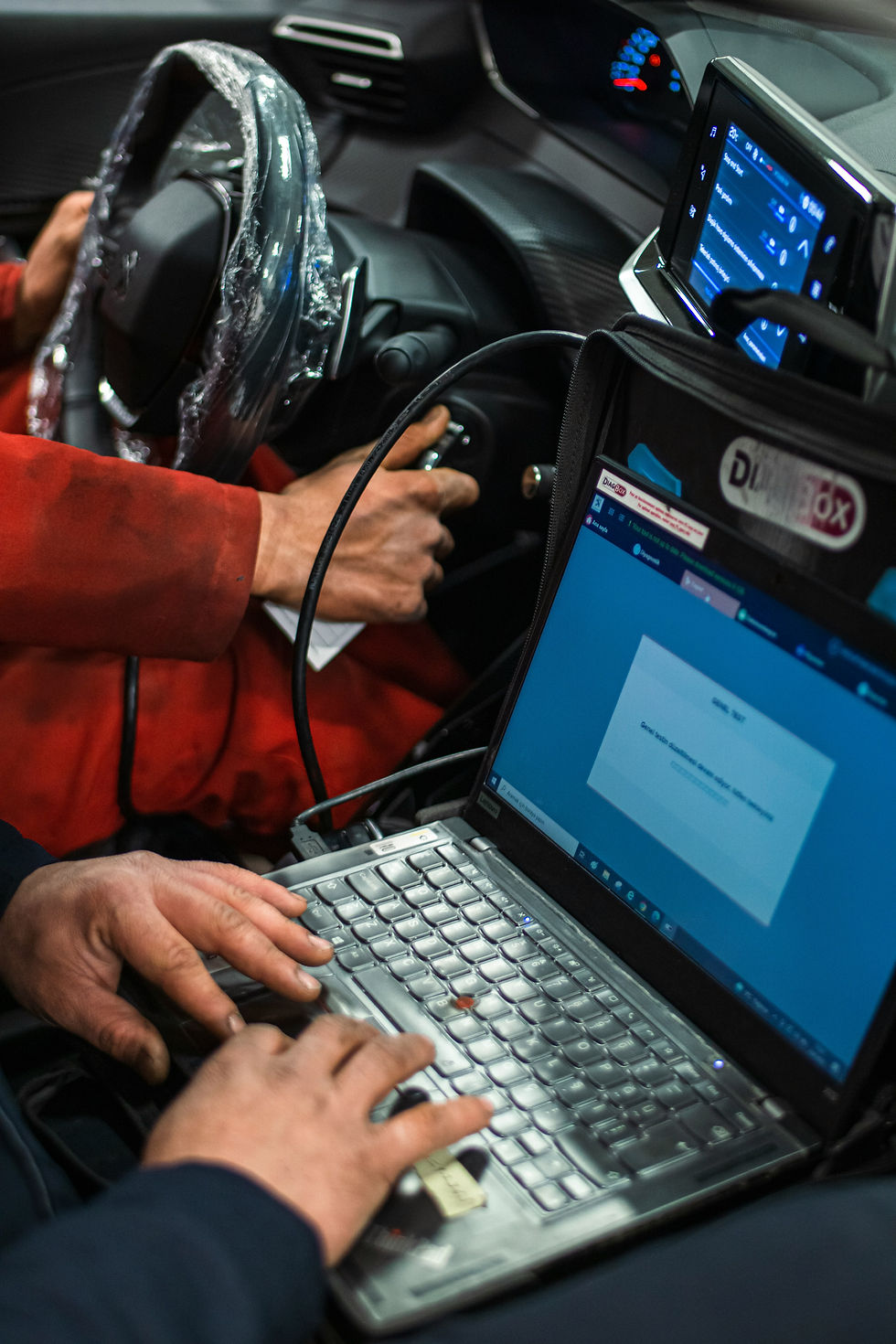
A pre-purchase inspection should be conducted by a qualified professional working for the buyer, not merely by the party selling the car.
The FTC recommends considering an inspection by an independent mechanic even when a dealer has already inspected or “certified” the vehicle.
The inspection should ideally assess:
Structural and collision evidence
Engine and transmission behavior
Cooling system
Brakes
Steering and suspension
Tires and alignment clues
Leaks
Battery and charging condition
Diagnostic fault codes
Emissions-related concerns
Underbody condition
Electronic systems
Evidence of modifications
Near-term maintenance requirements
For an electric vehicle, the assessment should also consider battery-health information when accessible, charging behavior, thermal-management warnings, charging hardware, and the remaining battery warranty.
An inspection is not valuable only when it discovers a catastrophic problem. It can also identify ordinary expenses that affect the fair deal: tires due soon, worn brakes, weak battery performance, overdue fluids, alignment problems, or nonfunctional equipment.
Those items may not justify rejecting the car. They may justify renegotiating the price—or entering ownership with an accurate first-year budget.
4. Investigate Safety, Documentation, and Seller Claims
Before purchase, run the VIN through the National Highway Traffic Safety Administration’s recall lookup. NHTSA’s tool identifies open safety recalls associated with a specific VIN, and recall remedies are generally completed without charge through the manufacturer’s dealer network.
An open recall does not automatically make a vehicle unacceptable. The nature of the recall, availability of a remedy, urgency of the warning, and seller’s willingness to resolve it all matter.
The important point is that the buyer should know.
For dealer-sold used vehicles, review the FTC Buyers Guide displayed on the car. The Guide indicates whether the vehicle is being sold with a warranty or “as is” and reminds consumers to obtain a history report, check for recalls, and ask about an independent inspection. The FTC also cautions that spoken promises can be difficult to enforce.
Therefore:
Put every promise in writing.
Confirm what the warranty covers.
Identify deductibles and exclusions.
Clarify whether coverage is from the manufacturer, dealer, or third party.
Verify the return or exchange policy.
Confirm whether a deposit is refundable.
Review add-ons individually.
Ensure the final contract matches the negotiated terms.
Never rely on “we will take care of that later” without written documentation.
Due diligence becomes especially important when a vehicle is sold remotely. Photographs can omit damage, videos can avoid suspicious sounds, and delivery can create psychological pressure to accept a vehicle because reversing the transaction feels difficult.
Request specific, current evidence rather than generic reassurance: a cold-start video, close-up images, underbody photographs, tire date codes, instrument-panel footage, service invoices, and an independent inspection.

5. Audit the Deal, Not Just the Car
A good car can be attached to a poor deal.
Before negotiating, separate the transaction into distinct components:
Vehicle selling price
Trade-in value
Financing
Taxes and government charges
Dealer or documentation fees
Optional protection products
Accessories
Service contracts
Delivery charges
When those components are blended into one monthly payment, it becomes difficult to see where value is being gained or lost.
The CFPB notes that interest rate, add-ons, and other financing terms may be negotiable and that comparing offers can save consumers hundreds or thousands of dollars.
Focus on:
Out-the-door price
Amount financed
Annual percentage rate
Loan term
Total interest
Total sale price
Prepayment terms
Add-on costs
Trade-in equity or negative equity
Cash required at signing
A longer loan can lower the monthly payment while increasing total interest and extending the period during which the buyer may owe more than the vehicle is worth. In the CFPB’s illustrative example of a $20,000 loan at 4.75%, extending the term from 36 to 72 months reduced the payment but increased total interest from $1,498 to $3,024.
The exact numbers in a real transaction will differ. The principle will not: a comfortable payment can conceal an expensive structure.
The Overlooked Question: Can Your Life Absorb This Car?
The most sophisticated inspection cannot determine whether the vehicle belongs in your life.
That requires a separate fit analysis.
For a family
A family may focus on safety ratings and cargo volume, yet underestimate the daily friction created by a narrow rear opening, limited third-row access, insufficient stroller space, or a cabin that becomes uncomfortable when every seat is occupied.
The correct vehicle is not the one that technically accommodates the family. It is the one that reduces repeated strain.
Due diligence should recreate the routine:
Install the child seat.
Load the stroller.
Seat the adults who will actually travel.
Check rear climate performance.
Test access in a realistic parking space.
Confirm cargo capacity with all required seats in use.
For a long-distance commuter
A commuter may be attracted to power, styling, and technology but should place greater weight on seat comfort, highway noise, efficiency, driver-assistance behavior, tire replacement costs, and the vehicle’s ability to absorb mileage without making every additional mile feel financially punitive.
High annual mileage changes the logic of the purchase. Depreciation accumulates quickly, warranties are consumed sooner, maintenance intervals arrive faster, and fuel or charging convenience becomes more consequential.
The commuter does not simply need a reliable car. The commuter needs a vehicle whose entire cost structure tolerates use.
For a luxury buyer
The luxury buyer should distinguish between the ability to acquire the vehicle and the willingness to maintain its intended standard.
A heavily depreciated premium vehicle can make extraordinary engineering accessible at an appealing purchase price. Yet its tires, brakes, suspension, electronics, insurance, and specialist labor do not necessarily depreciate in proportion to the badge on the hood.
This does not make the purchase irrational. It makes the reserve budget part of the specification.
A luxury vehicle is a good fit when the buyer values the experience enough to accept the ownership profile without resentment.
For a budget-conscious buyer
The lowest advertised price is not always the most economical path.
A cheaper vehicle with limited records, immediate maintenance needs, weak resale appeal, or an uncertain history may cost more than a slightly more expensive example with transparent ownership, consistent care, and fewer near-term requirements.
Budget buyers benefit from conservative reasoning:
Prioritize condition over cosmetic perfection.
Favor documented care over unusually low mileage.
Avoid paying for features that create cost without daily value.
Preserve a post-purchase repair reserve.
Consider insurance before committing.
Do not use every available dollar as the down payment.
The objective is not to buy the most car possible. It is to buy enough car without creating financial fragility.
Comparison Matrix: Which Buying Path Fits the Risk?
Buying path | Principal advantage | Principal compromise | Due-diligence priority | Best suited to |
New vehicle | Full history clarity, current warranty, easy configuration comparison | Higher initial price and early depreciation | Deal structure, options, insurance, lifestyle fit | Buyers prioritizing predictability and long ownership |
Manufacturer-certified used vehicle | Inspection process and added warranty support may reduce uncertainty | Higher price than comparable non-certified inventory; coverage varies | Certification terms, exclusions, prior history, independent verification | Buyers seeking a balance of value and reassurance |
Conventional dealer-used vehicle | Broad selection, financing convenience, trade-in simplicity | Quality and preparation standards vary significantly | Buyers Guide, history, inspection, fees, written promises | Buyers willing to compare carefully and negotiate |
Private-party used vehicle | Potentially lower price and direct access to the prior owner | Fewer consumer protections and more administrative responsibility | Title, identity, lien status, records, inspection, payment security | Experienced buyers comfortable managing the process |
WhatCarFitsMe-guided shortlist | Begins with budget, use case, ownership tolerance, and realistic vehicle categories | Does not replace inspection of the specific vehicle | Match first, then validate the exact car and deal | Buyers who want to avoid wasting time on unsuitable options |
WhatCarFitsMe does not attempt to replace the mechanic, history provider, insurer, lender, or legal documentation involved in a transaction.
Our role begins earlier.
We help reduce the risk of performing excellent due diligence on a vehicle that should never have reached the buyer’s shortlist.

Mileage Is Evidence, Not a Verdict
Mileage is one of the most emotionally powerful numbers in automotive retail. Buyers often interpret low mileage as safety and high mileage as danger.
Reality is more nuanced.
Mileage must be read alongside:
Age
Service consistency
Type of use
Number of owners
Climate
Storage
Mechanical complexity
Brand and segment expectations
Remaining warranty
Purchase price
Planned annual use
Intended ownership period
Very low mileage can be attractive, but prolonged inactivity may bring its own concerns, including aged tires, weakened batteries, stale fluids, dried seals, brake corrosion, or maintenance neglected because the vehicle “was hardly driven.”
Higher mileage is not automatically reassuring either. The point is not to reverse the stereotype and claim that high mileage is better. The point is to replace mileage anxiety with mileage interpretation.
At WhatCarFitsMe, mileage expectations should vary by category.
A straightforward mainstream commuter with strong records may remain sensible at mileage that would be less comfortable on a highly complex luxury vehicle purchased by someone with no repair reserve. A newer premium vehicle with moderate mileage and meaningful warranty coverage may suit one buyer, while an older, simpler model may better fit another.
The number only becomes useful when placed inside the ownership plan.
Reliability Is Not a Promise; It Is a Risk Range
Buyers frequently ask for “the most reliable car” as though reliability were a permanent characteristic stamped onto every example of a model.
Reliability is better understood as a range of probabilities influenced by design maturity, maintenance, manufacturing variation, age, mileage, environment, use, and prior care.
This is why WhatCarFitsMe applies conservative logic when matching vehicles:
Favor established powertrains when predictability is a priority.
Treat major redesigns and first-generation technology with additional caution.
Adjust expectations for high-complexity luxury and performance categories.
Consider whether specialist service is locally available.
Account for the buyer’s annual mileage.
Distinguish tolerable inconvenience from financially disruptive failure.
Avoid recommending vehicles that require optimism to fit the budget.
No advisor can guarantee that a particular car will never fail. A trustworthy advisor can identify when the buyer’s expectations and the vehicle’s risk profile are poorly aligned.
That distinction is central to honest automotive guidance.
Red Flags That Should Slow the Transaction
No single warning sign proves that a car is bad. Multiple inconsistencies should change the burden of proof.
Slow down when:
The seller resists an independent inspection.
The VIN is withheld.
The title is unavailable or does not match the seller.
Service history is described as complete but cannot be produced.
The vehicle is warm before an arranged cold inspection.
Warning lights fail to illuminate during startup.
The mileage and interior wear seem inconsistent.
Tires differ substantially in brand, age, or condition.
Recent repairs are described vaguely.
The seller pressures you to avoid reviewing documents.
Advertised terms differ from the purchase agreement.
Add-ons appear without clear authorization.
A deposit is requested before essential information is supplied.
The seller minimizes a branded title or structural repair.
The price is unusually low without a credible explanation.
Promised repairs are not written into the deal.
A seller’s reaction to reasonable due diligence is itself information.
Transparent sellers may not have every answer immediately, but they generally understand why a serious buyer asks. Resistance, deflection, contradiction, or urgency should not be ignored merely because the car is desirable.
Build a First-Year Ownership Forecast Before Negotiating
Most buyers negotiate the purchase price without estimating the first twelve months after purchase.
That is a mistake.
Before cutting a deal, create a conservative ownership forecast containing:
Down payment
Taxes and transaction fees
Monthly loan cost
Insurance
Registration
Fuel or electricity
Parking and tolls
Routine maintenance
Immediate wear items
Tires
Expected repairs
Inspection-related recommendations
Accessories genuinely required
Emergency reserve
This forecast does not need to predict every dollar. Its value lies in revealing whether the vehicle remains comfortable when ordinary ownership costs are added.
Suppose two vehicles cost the same to buy. One requires premium tires, higher insurance, specialized service, and several overdue maintenance items. The other has fewer features but lower operating costs, stronger documentation, and no immediate needs.
Their purchase prices are equal. Their financial realities are not.
The better car is the one whose compromises align with the buyer’s priorities—not automatically the cheaper, newer, faster, or more prestigious option.
Negotiate From Evidence, Not Anxiety
Due diligence creates negotiating clarity.
Without evidence, buyers tend to negotiate emotionally. They request a discount because they feel the price is high, or they accept the price because they fear losing the car.
With evidence, negotiation becomes specific:
Comparable vehicles support a different market value.
The inspection identifies near-term maintenance.
The tires require replacement.
A promised feature is missing.
The warranty is narrower than advertised.
The history reduces resale appeal.
The financing offer is less competitive.
Documentation fees or add-ons increase the real price.
Not every issue should be converted into a demand. A used car’s price should already reflect normal age and wear. The purpose is not to punish a seller for every imperfection. It is to determine whether the agreed price accurately represents condition, history, equipment, and risk.
You should also define your walk-away conditions before negotiation.
For example:
No independent inspection, no purchase.
Structural damage, no purchase.
Payment above a fixed total-cost threshold, no purchase.
Missing title documentation, no purchase.
Insurance beyond the ownership budget, no purchase.
Required repairs exceeding the reserve, no purchase.
Predefined limits protect you from rewriting your standards while emotionally engaged.
Why the Right Shortlist Makes Due Diligence More Powerful
Traditional car search often starts with listings. Buyers browse what is available, become attached to a particular vehicle, and only later ask whether it makes sense.
WhatCarFitsMe reverses that sequence.
We begin with the ownership reality:
What can the buyer comfortably spend?
How many miles will be driven?
Who and what must the vehicle carry?
Where will it be parked?
How long will it be kept?
How much unpredictability can the buyer tolerate?
Which compromises matter least?
Is the buyer seeking transportation, emotional reward, status, performance, or a mixture?
How important are warranty coverage and service access?
Would a simpler vehicle create a better overall life?
From there, we identify realistic categories and vehicle paths. Only then should individual listings be evaluated.
This approach reduces two common risks.
First, it prevents the buyer from using due diligence merely to justify a predetermined desire.
Second, it prevents unnecessary research on vehicles that were never financially, mechanically, or practically aligned with the buyer.
The result is not a fantasy recommendation. It is a shortlist designed to survive contact with real life.
The Decision Is Not “Buy or Reject”
Due diligence does not always end with a binary conclusion.
There are four legitimate outcomes:
Buy as presented
The condition, history, deal, and fit are sufficiently strong. Minor imperfections are understood and reasonably reflected in the price.
Buy after renegotiation
The vehicle remains suitable, but inspection findings, documentation, market comparisons, or financing terms justify a revised agreement.
Continue investigating
Important information is incomplete but potentially obtainable. The buyer should pause rather than assume.
Walk away
The risk, uncertainty, financial structure, or lifestyle mismatch exceeds the value of the opportunity.
Walking away is not a failed transaction. It is one of the most valuable outcomes due diligence can produce.
The time and inspection cost invested may feel lost, but they are often the price of avoiding years of frustration.
A Final Car Buying Due Diligence Framework
Before signing, confirm that you can answer each of these questions clearly.
The car
Do I know exactly what configuration I am buying?
Does the VIN match every relevant document?
Is the history coherent?
Has the car been independently inspected?
Do I understand existing defects and upcoming maintenance?
Have I checked for open recalls?
Are the mileage and condition consistent?
The deal
Do I know the out-the-door price?
Do I understand every fee and add-on?
Have I compared financing independently?
Do I know the APR, term, total interest, and total sale price?
Is every promise in writing?
Is the warranty clear?
Can I walk away without jeopardizing my finances?
The ownership experience
Does the vehicle fit my real routine?
Can I afford insurance, maintenance, fuel, tires, and repairs?
Is the expected reliability appropriate for my tolerance?
Does the mileage make sense for my intended ownership?
Am I accepting the segment’s compromises consciously?
Would I still choose this car without the sales pressure?
Will I feel comfortable owning it—not merely proud of buying it?
Any answer that depends on “probably” deserves more investigation.
Clarity Is the Most Valuable Option
The best car deals do not always feel dramatic.
They often feel calm.
The history makes sense. The inspection findings are understandable. The price is supported. The financing is transparent. The vehicle fits the buyer’s life without requiring elaborate justification. The remaining compromises are visible and willingly accepted.
That calm is not a lack of excitement. It is what excitement feels like when it is supported by evidence.
A car purchase should not demand blind faith in the seller, the badge, the history report, the lender, or your own optimism. It should be the result of several independent pieces of information pointing toward the same conclusion.
At WhatCarFitsMe, our purpose is to help you reach that point before the deal controls the decision.
Start your car buying due diligence with a vehicle shortlist built around your real budget, lifestyle, mileage, reliability expectations, and ownership priorities. Try WhatCarFitsMe and compare the options that fit your life—not merely the listings competing for your attention.
Frequently Asked Questions
What does car buying due diligence include?
Car buying due diligence includes confirming the vehicle’s identity, reviewing its title and history, checking maintenance records, obtaining an independent inspection, looking for open recalls, evaluating the seller’s claims, analyzing financing and fees, estimating ownership costs, and verifying that the vehicle fits your budget and lifestyle.
Is a vehicle history report enough before buying a used car?
No. A vehicle history report is useful, but it may not contain every accident, repair, maintenance issue, or form of hidden damage. The Federal Trade Commission recommends obtaining an independent inspection because a history report is not a substitute for physically evaluating the vehicle.
Should I get a pre-purchase inspection from an independent mechanic?
Yes. An independent pre-purchase inspection can identify collision evidence, mechanical concerns, worn components, electronic faults, leaks, and upcoming maintenance. It can help you reject a poor vehicle, negotiate a more accurate price, or prepare a realistic first-year repair budget.
How do I know whether a car truly fits my budget?
Look beyond the monthly payment. Calculate the out-the-door price, interest, insurance, registration, fuel or electricity, maintenance, tires, parking, expected repairs, and an emergency reserve. A car fits your budget only when its overall ownership cost remains comfortable.
Is a low-mileage used car always the better choice?
No. Low mileage can be desirable, but maintenance history, age, storage, usage pattern, condition, and mechanical complexity also matter. A well-maintained higher-mileage vehicle may be a better purchase than a neglected low-mileage example.
When should I walk away from a car deal?
Consider walking away when the seller refuses an independent inspection, documentation is inconsistent, the title is unclear, structural damage is found, the financing exceeds your limit, significant claims cannot be verified, or the vehicle does not fit your real ownership needs.