
How to Wash Your Car Properly: Start With the Finish, Not the Dirt
- M
- Aug 14
- 17 min read
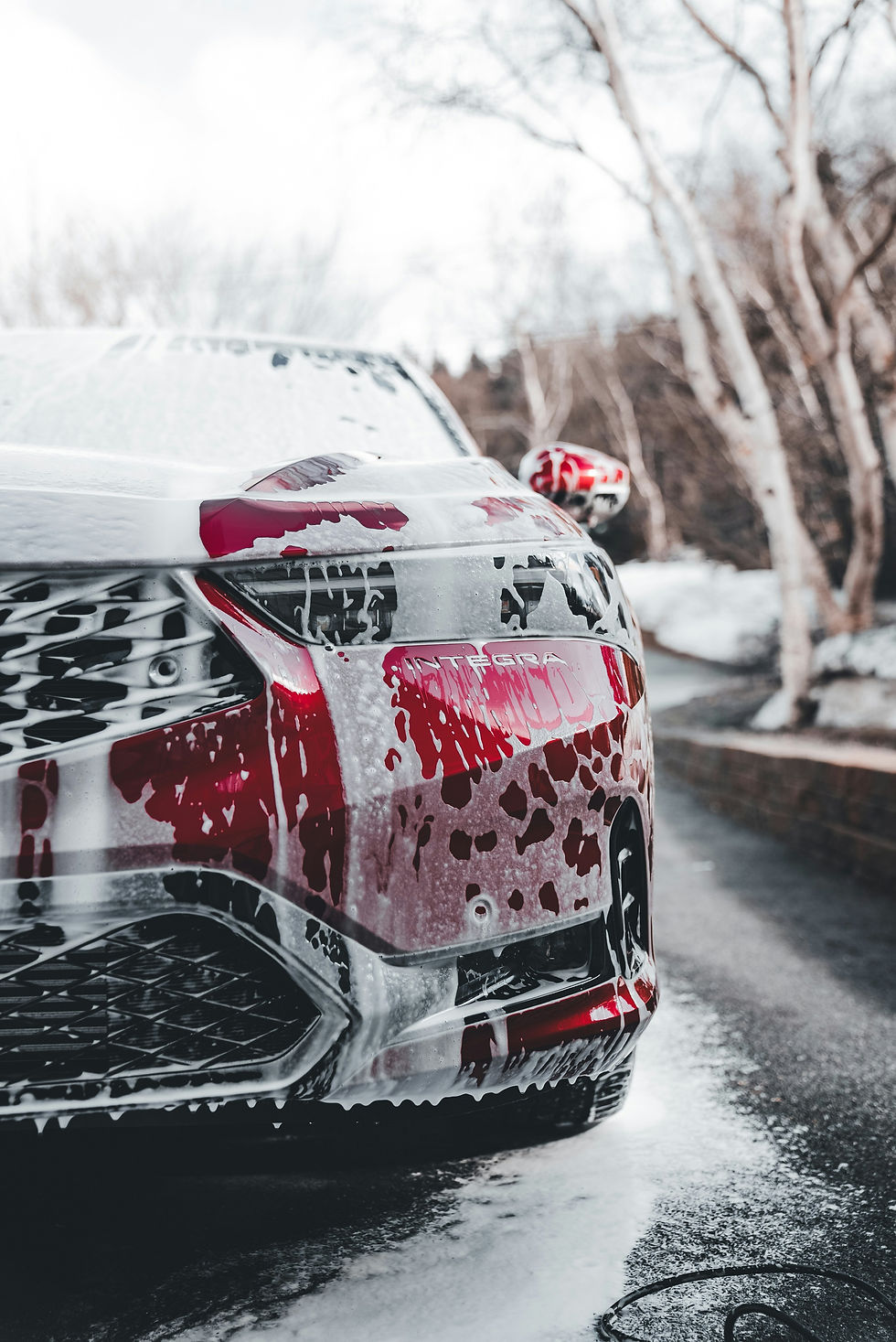
There is something surprisingly revealing about learning how to wash your car properly.
At first, it seems like a maintenance question. Which soap should you use? Should you wash from the roof downward? Is an automatic car wash good enough? Do expensive cars require expensive detailing?
But beneath those practical questions is another one that matters enormously when choosing a vehicle:
How much car are you genuinely willing to take care of?
The answer is not always the same as how much car you can afford.
A black luxury SUV can look magnificent under showroom lights and become a weekly source of frustration once dust, pollen, fingerprints, road salt and water spots become part of real ownership. A rugged pickup can seem carefree until its size makes washing, parking and protecting it more difficult. A modest commuter sedan may receive less attention on Instagram but prove remarkably easy to keep clean, maintain and enjoy.
This is why WhatCarFitsMe looks beyond horsepower, screens, badges and monthly payments. The best vehicle match should fit the way you actually live—including the unglamorous parts.
Because buying a car is an event.
Caring for one is a routine.
And routines usually tell us more about compatibility than excitement does.
Table of Contents

How to Wash Your Car Properly: Start With the Finish, Not the Dirt
The objective of washing a vehicle is deceptively simple: remove contamination without unnecessarily damaging the surfaces beneath it.
That distinction matters.
Many owners assume that because automotive paint looks hard, it should tolerate aggressive cleaning. Modern vehicle finishes are durable, but dirt trapped between a towel, sponge or wash mitt and the paint can act as an abrasive. Poor technique may gradually introduce fine scratches and swirl marks that become particularly visible under bright lighting and on darker paint colors.
Consumer Reports recommends using soap specifically formulated for automobiles, washing out of direct sunlight, working from the roof downward, using minimal pressure, rinsing sections as you progress, and drying rather than allowing the vehicle simply to air-dry.
A sensible basic process is therefore:
Let the vehicle and paint cool before washing.
Rinse away loose contamination first.
Use automotive-specific wash soap rather than household detergent.
Work from cleaner upper surfaces toward dirtier lower areas.
Use a clean, soft wash mitt or similar paint-safe material.
Apply minimal pressure rather than trying to scrub contamination away.
Rinse thoroughly before products dry on the surface.
Dry using clean microfiber or another appropriate automotive drying material.
Clean wheels and especially dirty areas separately where practical.
Inspect the vehicle while you work.
None of this requires turning your garage into a detailing studio.
That is important.
Proper vehicle care should be sustainable. A routine you perform reasonably well for five years is more
valuable than an elaborate 14-step process you abandon after three weekends.
That principle—sustainable beats theoretically perfect—also happens to be one of the most useful principles in choosing a car.
Why Washing a Car Is Really an Ownership Question
People tend to evaluate vehicles in concentrated moments.
They configure one online.
They watch reviews.
They visit the dealership.
They take a 20-minute test drive.
During those moments, almost every emotional signal favors the more exciting vehicle.
Larger wheels look better.
Dark metallic paint looks richer.
The three-row SUV feels more substantial.
The performance model feels special.
The premium interior makes the standard version suddenly seem ordinary.
Then ordinary life starts.
The car sits beneath a tree.
Children climb into the back after soccer.
Coffee lands near the center console.
Winter salt coats the rocker panels.
Brake dust accumulates on intricate wheels.
A dog shakes mud across the cargo area.
The beautiful black paint that looked spectacular at delivery shows dust seemingly hours after being washed.
None of these things makes the vehicle bad.
They simply illustrate the difference between product desirability and ownership compatibility.
WhatCarFitsMe exists largely in that difference.
We are interested in what happens after the salesperson hands you the keys.
The Right Way to Wash Your Car Depends on the Car You Own
There is no meaningful way to discuss how to wash your car without acknowledging that different vehicles create very different care burdens.
A compact commuter
A smaller sedan or hatchback may be relatively easy to wash at home. The roof is accessible. There is less sheet metal. Smaller wheels may be quicker to clean. Parking it away from sprinklers or trees may also be easier.
The owner may spend less time and money keeping it presentable.
A three-row SUV
Now increase nearly every physical dimension.
There is more roof.
More glass.
More bodywork.
Larger wheels.
More interior volume.
More seats.
More places for children, passengers and cargo to leave evidence of their presence.
The SUV may still be absolutely right for a family of five. But someone buying one primarily because they enjoy the commanding driving position should recognize that additional size carries ownership consequences that extend beyond fuel consumption.
A luxury vehicle
Luxury ownership adds another psychological dimension.
Owners may become more sensitive to cosmetic imperfections because the vehicle represents a larger financial and emotional commitment. Premium wheels, intricate exterior trim, soft interior materials and elaborate finishes can also make careless cleaning less desirable.
The question becomes not simply:
Can I maintain this vehicle?
It becomes:
Will I remain comfortable with what it costs—in money or personal effort—to keep this vehicle at the standard I expect?
A truck or adventure vehicle
Some owners genuinely like a vehicle that looks used.
Mud does not create anxiety. Small imperfections become part of its story.
That can make ownership psychologically liberating.
Others buy the rugged image but still expect showroom presentation every Saturday morning. In that case, a physically large vehicle with exposed running boards, substantial wheels and considerable surface area may create more work than anticipated.
There is no universally superior choice.
There is only the choice that fits the person who must live with it.

Car-Washing Personality Is More Important Than It Sounds
Imagine four buyers.
Buyer A washes a car by hand every Sunday morning and genuinely enjoys doing it.
Buyer B will pay a professional detailer because preserving the vehicle matters but personal time matters more.
Buyer C wants to drive through a convenient car wash occasionally and think about the vehicle as little as possible.
Buyer D enthusiastically promises to maintain everything meticulously but historically has difficulty keeping even routine service appointments.
Those four people should not necessarily buy the same kind of car—even if income, commute and family size are identical.
This is where conventional vehicle recommendations can fail.
Specifications describe the machine.
Ownership patterns describe the human being.
At WhatCarFitsMe, the human being should win.
A Realistic Car-Care Fit Matrix
Ownership profile | Most realistic vehicle direction | Car-care burden | Main compromise | WhatCarFitsMe logic |
Busy commuter seeking low friction | Mainstream sedan, hatchback or compact crossover | Low–moderate | Less visual drama or space | Prioritize ease, predictable ownership and manageable dimensions |
Family with children and frequent cargo | Practical crossover, midsize SUV or minivan | Moderate–high | More interior and exterior area to maintain | Space can justify the additional care burden when genuinely used |
Appearance-conscious luxury buyer | Premium sedan/SUV with realistic detailing budget | High | Higher cosmetic expectations and ownership expense | Luxury works when care costs and owner expectations are aligned |
Outdoor/adventure user | Truck, rugged SUV or practical crossover | Moderate–high | Size, cleaning complexity, possible fuel penalty | Choose capability only when lifestyle repeatedly uses it |
Budget-focused used-car buyer | Proven mainstream used vehicle in good condition | Low–moderate | Fewer prestige features | Condition, maintenance history and reliability matter more than perfection |
The point of this matrix is not that commuters should never own luxury cars or that families must own SUVs.
It is that vehicle fit should survive contact with everyday life.
That is the standard that matters.
How Often Should You Wash Your Car?
There is no scientifically correct universal schedule because exposure varies enormously.
A garaged vehicle driven occasionally in a mild climate has different requirements from a daily driver exposed to road salt, coastal air, bird droppings, insects, tree sap, construction dust or heavy winter grime.
Instead of following an arbitrary calendar, pay attention to contamination and environment.
Wash sooner when the vehicle has accumulated material you do not want remaining on its surfaces. Clean especially dirty areas rather than waiting indefinitely for an ideal detailing day.
Frequent washing also creates something useful that many owners overlook: inspection time.
Consumer Reports notes that hand washing provides an opportunity to notice issues such as surface rust or loose trim before they potentially develop further.
That is a useful ownership habit.
While washing, look at:
tire condition
wheel damage
windshield chips
paint chips
loose exterior trim
unusual corrosion
damaged wiper blades
fluid or oil spots beneath the vehicle
lighting
weather seals
A wash should not become a mechanical inspection theater where every mark causes panic. But spending time around the vehicle can help an attentive owner recognize changes earlier.
Care creates familiarity.
Familiarity can create better ownership decisions.
The Environmental Side of How to Wash Your Car
Where the wash water goes matters too.
The U.S. Environmental Protection Agency warns that roadside storm drains can lead directly to streams and rivers and notes specifically that washing a vehicle on pavement can send wash water and pollutants toward storm drains.
That does not mean everyone must stop washing cars at home.
It means owners should think beyond the driveway.
Local regulations vary, so check municipal requirements. Where possible, avoid allowing soapy runoff and vehicle contaminants to enter storm drains. Professional facilities may also be preferable in locations where water use and wastewater management are important concerns.
This illustrates another WhatCarFitsMe principle:
Ownership does not happen in isolation.
Your home matters.
Your parking arrangement matters.
Your climate matters.
Your access to charging matters if you own an EV.
Your garage dimensions matter if you buy a large SUV.
And yes—your ability to reasonably clean and store the vehicle matters too.
A recommendation that ignores those realities is not really personalized.

Dark Paint, Large Wheels and Other Beautiful Decisions
Vehicle configuration deserves more attention than it usually receives.
Two examples of the same car can produce surprisingly different ownership experiences.
Dark exterior colors
Black and very dark paint can look extraordinary when clean.
They may also reveal dust, water spotting and fine surface imperfections more readily under certain lighting. If appearance matters enormously to you, that may lead to more frequent washing or professional detailing.
For some owners, that is enjoyable.
For others, it becomes a low-level source of irritation.
A lighter or less visually unforgiving color may therefore be a better lifestyle choice—not because it is inherently superior, but because the owner will remain happier when the vehicle is imperfect.
Large, intricate wheels
Wheel design influences more than styling.
Intricate spokes can require more time to clean. Larger wheels commonly accompany lower-profile tires, potentially changing ride comfort and replacement costs depending on the vehicle.
We would never advise against an attractive wheel simply because cleaning it takes longer.
We would advise against pretending that aesthetics have no ownership consequences.
Light interiors
Cream, white and other pale interiors can produce a beautiful sense of spaciousness.
Now imagine your actual passengers.
Children.
Pets.
Denim.
Coffee.
Airport luggage.
Sports equipment.
If you remain comfortable with additional cleaning, proceed confidently.
If the thought already makes you nervous, your future self is trying to tell you something.
Listen.
Your Car Budget Should Include the Version of Ownership You Expect
The purchase payment is not the cost of the car.
This remains one of the most important financial concepts in vehicle selection.
AAA's 2025 Your Driving Costs analysis estimated the average cost of owning and operating a new vehicle at $11,577 per year, based on its study methodology, which assumes five years of ownership and 15,000 miles driven annually. AAA calculates ownership across categories including depreciation, financing, fuel, insurance, fees and maintenance.
Depreciation alone averaged $4,334 annually in AAA's 2025 analysis.
Those are averages—not predictions for your specific vehicle—but the framework matters enormously.
A realistic budget should account for:
purchase price or payment
insurance
fuel or electricity
maintenance
tires
repairs
registration and applicable taxes
parking
detailing or washing
depreciation
financing costs where applicable
Car washing obviously will not normally dominate this equation.
But the philosophy behind it should.
When shoppers stretch every available dollar to obtain the highest trim or most prestigious segment possible, they leave less flexibility for the ongoing costs of actually owning it.
A vehicle that consumes the entire automotive budget before the first tire is replaced may be too much vehicle.
Never Confuse Affordability With Compatibility
Suppose two buyers can technically afford a $60,000 SUV.
The first has substantial financial flexibility, garages the vehicle, drives 7,000 miles annually and happily pays for professional detailing.
The second finances aggressively, parks outdoors beneath trees, drives 20,000 miles annually, has three children and already dislikes spending money on vehicle maintenance.
Same purchase price.
Completely different ownership reality.
Traditional affordability questions tend to ask:
Can this person make the payment?
Better vehicle matching asks:
What happens after they make the payment?
That distinction protects buyers from one of the most common forms of automotive regret: purchasing for the person they imagine themselves becoming.
The careful enthusiast.
The weekend adventurer.
The person who needs seven seats.
The person who will keep the car pristine.
The person who will suddenly start performing every service exactly on schedule.
Sometimes we do become those people.
Often, we remain ourselves.
Your current habits deserve more weight than your aspirational ones.
Mileage Changes What “Good Ownership” Looks Like
A 5,000-mile-per-year garage-kept vehicle and a 25,000-mile-per-year commuter should not be evaluated under identical assumptions.
Higher-mileage drivers compress ownership.
Tires are consumed faster.
Maintenance milestones arrive sooner.
Cosmetic exposure increases.
Depreciation may behave differently.
Fuel economy becomes financially more significant.
Comfort becomes more important because the owner spends more hours behind the wheel.
Reliability and service convenience become increasingly valuable.
That can shift the ideal recommendation away from the vehicle that wins the showroom comparison.
For a high-mileage commuter, a slightly less exciting vehicle with proven engineering, reasonable consumables, efficient operation and accessible service may deliver dramatically better real-world satisfaction.
For a low-mileage luxury buyer, emotional appeal may reasonably receive more weight because operating costs have less opportunity to compound.
Mileage is therefore not merely a number entered into a calculator.
It changes the meaning of the purchase.
Reliability Matters More When Maintenance Already Feels Like Work
A buyer who views washing the car as an annoying obligation may also have limited appetite for unusually demanding ownership.
That does not make the buyer irresponsible.
It simply means simplicity deserves additional weight.
At WhatCarFitsMe, reliability should never be reduced to an unsupported statement such as “Brand X lasts forever.”
Vehicle reliability is more nuanced.
Model year matters.
Powertrain matters.
Maintenance history matters.
Previous ownership matters on a used vehicle.
A newly redesigned vehicle may introduce engineering changes that do not yet have the same depth of long-term evidence as a mature platform.
Usage matters.
Climate matters.
For used vehicles, condition can overwhelm brand reputation.
That is why a conservative recommendation should favor evidence over folklore.
Where credible, model-year-specific information exists, it can inform the recommendation. Where evidence is incomplete, uncertainty should be stated rather than replaced with confidence.
The objective is not to predict the future.
It is to reduce avoidable risk.
The First-Year Redesign Question
New generations of vehicles are tempting.
Fresh styling.
New technology.
More efficient powertrains.
Improved interiors.
They also provide less accumulated real-world ownership evidence simply because they have not existed for as long.
That does not make the first model year of every redesign unreliable.
Avoid that simplistic conclusion.
But a conservative buyer who values predictability more than novelty may reasonably prefer a later model year after a redesigned vehicle has accumulated greater service history and owner experience.
An enthusiast willing to accept more uncertainty in exchange for the newest design may make the opposite decision.
Both can be rational.
The correct choice depends on the buyer's tolerance for uncertainty.
Again, we return to fit.
When a Professional Car Wash Makes More Sense
Not everyone should hand-wash a vehicle.
Time has value.
So does convenience.
Someone working long hours, living in an apartment, parking in a city or lacking appropriate wash space may be far better served by professional cleaning.
Others may enjoy hand washing because it becomes part of vehicle ownership itself.
Neither person is a better owner.
The mistake is choosing a car that requires a level of cosmetic care you are unwilling to provide—or pay someone else to provide—then resenting the vehicle for behaving exactly as expected.
This can be especially relevant with luxury or enthusiast vehicles.
If your enjoyment depends on keeping the finish at an exceptionally high standard, professional detailing should not feel like an unexpected expense. It belongs in the lifestyle decision you made when purchasing the car.
Families Should Optimize for Recoverability, Not Perfection
Parents often ask what interior is easiest to keep clean.
That is useful.
But a better concept is recoverability.
Can the vehicle return to an acceptable condition after real family use without unreasonable effort?
Look for practical details:
durable seating surfaces
accessible second-row areas
removable or easy-to-clean floor protection
cargo areas that tolerate strollers and sports gear
door openings that make child-seat access realistic
storage that prevents loose items from constantly becoming clutter
exterior dimensions that remain manageable at home
A three-row SUV with beautiful materials but awkward access may be less family-friendly than a supposedly less prestigious alternative.
A minivan may not satisfy every buyer emotionally, but for certain families its doors, floor height, interior access and packaging can solve problems that specifications alone fail to capture.
That is what segment compromise means.
You rarely choose between “good” and “bad.”
You choose which inconvenience you would rather live with.
Luxury Buyers Should Define What Luxury Means Before Shopping
Luxury is often treated as a price category.
It is more useful to think of it as an expectation category.
For one buyer, luxury means craftsmanship and beautiful materials.
For another, silence.
For another, effortless acceleration.
For another, dealer treatment.
For another, never having to think about the car.
Those definitions can conflict.
The technologically elaborate flagship may deliver tremendous sophistication while creating more features and systems for an owner to understand.
The performance-oriented model may look magnificent on large wheels but ride more firmly than the buyer expects.
The darkest paint and lightest interior combination may create exactly the visual drama desired while requiring more cosmetic attention.
Premium ownership becomes satisfying when expectations are deliberate.
It becomes frustrating when a logo is expected to solve every compromise.
No vehicle does that.
Budget Buyers Should Care More About Condition Than Shine
Used-car buyers face the opposite psychological trap.
A beautifully detailed car can feel mechanically healthy because cleanliness creates a halo effect.
Do not confuse the two.
A glossy finish is pleasant.
A thorough maintenance history is more valuable.
When shopping used, evaluate the condition of the vehicle as a complete system:
maintenance documentation
tire condition
brakes
warning lights
fluid leaks
accident history where available
evidence of corrosion
unusual noises
service needs approaching by mileage
independent pre-purchase inspection where appropriate
Cosmetic imperfection may sometimes create value if the underlying vehicle has been cared for properly and the flaws do not bother you.
Conversely, immaculate presentation does not erase neglected mechanical maintenance.
The smartest used-car buyer sees beyond the wash.
How to Wash Your Car Without Turning Ownership Into a Hobby
For most owners, simplicity wins.
You do not need dozens of chemicals.
You do not need to obsess over microscopic imperfections.
You do not need your family crossover prepared for a concours lawn.
Use appropriate automotive products.
Remove contamination without aggressive friction.
Work methodically.
Dry the vehicle.
Pay attention to the wheels, glass and areas where dirt accumulates.
Keep the interior reasonably clean.
Inspect what you can see.
Address meaningful issues.
Then drive the car.
This is an automotive advisory site, not a shrine to possessions.
A vehicle exists to support your life.
Protecting it makes sense.
Serving it does not.
The Best Car Is the One Whose Compromises You Can Live With
Every vehicle imposes a tax.
Sometimes financial.
Sometimes practical.
Sometimes emotional.
A sports car may tax cargo capacity.
A large SUV may tax fuel consumption and maneuverability.
A luxury vehicle may tax the budget.
An older used car may require tolerance for cosmetic wear or additional repairs.
An EV may require charging behavior that fits your housing and routine.
A pickup may create parking compromises.
A beautifully finished black car may tax your tolerance for dust.
The mistake is searching for a vehicle without compromises.
The intelligent objective is to identify which compromises barely bother you.
That is far more achievable.
And far more useful.
What Car Fits Me? Start With Your Actual Tuesday
Vehicle shopping naturally gravitates toward extraordinary moments.
Road trips.
Vacations.
Snowstorms.
Furniture purchases.
Family visits.
Weekend adventures.
Those situations matter.
But the majority of ownership usually consists of ordinary days.
Tuesday morning.
School drop-off.
The commute.
Groceries.
Parking.
Charging or fueling.
Cleaning.
Maintenance.
Traffic.
A vehicle should first be excellent at your ordinary life.
Then ask it to handle the exceptional moments.
This is one reason WhatCarFitsMe approaches recommendations through routine, ownership patterns, practical constraints and realistic purchase behavior rather than simply ranking vehicles from best to worst.
Because “best” without context is mostly marketing.
Best for you is a decision.
A Better Question Than “What Car Should I Buy?”
Ask yourself:
What vehicle can I comfortably buy, operate, maintain, clean, park, insure and still enjoy three years after the excitement of purchasing it has disappeared?
That question removes much of the noise.
It exposes unnecessary size.
It challenges prestige purchases made for external validation.
It reveals whether your mileage justifies efficiency.
It forces you to account for family realities.
It turns maintenance from an afterthought into part of ownership.
And it leaves room for emotion.
That last point matters.
WhatCarFitsMe is not arguing that car buying should become a spreadsheet exercise.
Cars can be deeply personal.
They can represent independence, achievement, parenthood, adventure or simply the pleasure of driving something you love.
Emotion belongs in the decision.
It simply should not be the only voice in the room.
Care for the Car That Actually Fits Your Life
Learning how to wash your car is useful because good ownership is made of small, repeated actions.
Wash it appropriately.
Maintain it according to its requirements.
Pay attention when something changes.
Spend where spending prevents bigger problems.
Accept normal wear.
And remember that the objective was never to preserve a machine in permanent showroom condition.
It was to choose a machine that makes your life better.
That same thinking should begin before you buy.
At WhatCarFitsMe, we help you look beyond the badge, horsepower figure and seductive monthly payment to understand what kind of vehicle actually fits your budget, mileage, priorities, household and real-world ownership habits.
If you are learning how to wash your car because you care about owning well, take the same care when choosing what comes next. Try WhatCarFitsMe and compare the vehicles and ownership paths that genuinely fit the way you live.
FAQs
1. What is the best way to wash your car without scratching it?
Rinse loose dirt first, use an automotive-specific wash product and a clean, soft wash mitt, work with minimal pressure from the upper sections downward, rinse thoroughly and dry with an appropriate clean microfiber towel or automotive drying material. Washing in the shade or on a cool surface also helps prevent soap and water from drying prematurely. Consumer Reports recommends similar practices for minimizing potential finish damage.
2. How often should you wash your car?
There is no universal interval. Frequency should depend on climate, parking conditions and contamination. Vehicles exposed to road salt, bird droppings, insects, tree sap, heavy dust or other contaminants may need attention sooner than lightly used, garaged vehicles.
3. Can I use dish soap to wash my car?
Automotive-specific wash products are the safer default. Consumer Reports recommends soap designed specifically for automotive use because it is formulated to clean vehicle finishes appropriately without unnecessarily stripping protective wax.
4. Is hand washing better than an automatic car wash?
Neither method is automatically right for every owner. Careful hand washing allows greater control and provides an opportunity to inspect the vehicle closely. Professional or automated washing can offer valuable convenience when time, space or local runoff considerations make home washing impractical. The quality and method of the particular wash matter.
5. Does washing your car help maintain its value?
Washing cannot prevent depreciation, which AAA identifies as a major component of vehicle ownership cost, but appropriate cosmetic care can help preserve the condition of painted, exterior and interior surfaces. Vehicle value ultimately depends on many variables including age, mileage, condition, market demand, maintenance history and accident history.
6. Does the type of car I own affect how difficult it is to keep clean?
Absolutely. Vehicle size, exterior color, wheel design, interior materials, passenger count, parking environment and intended use can substantially change the amount of time or money required to maintain the appearance you expect. That is why WhatCarFitsMe treats maintenance behavior as part of overall vehicle fit.


