
Parking Your Car Outside in Winter: What Really Matters

Parking your car outside in winter changes your relationship with it.
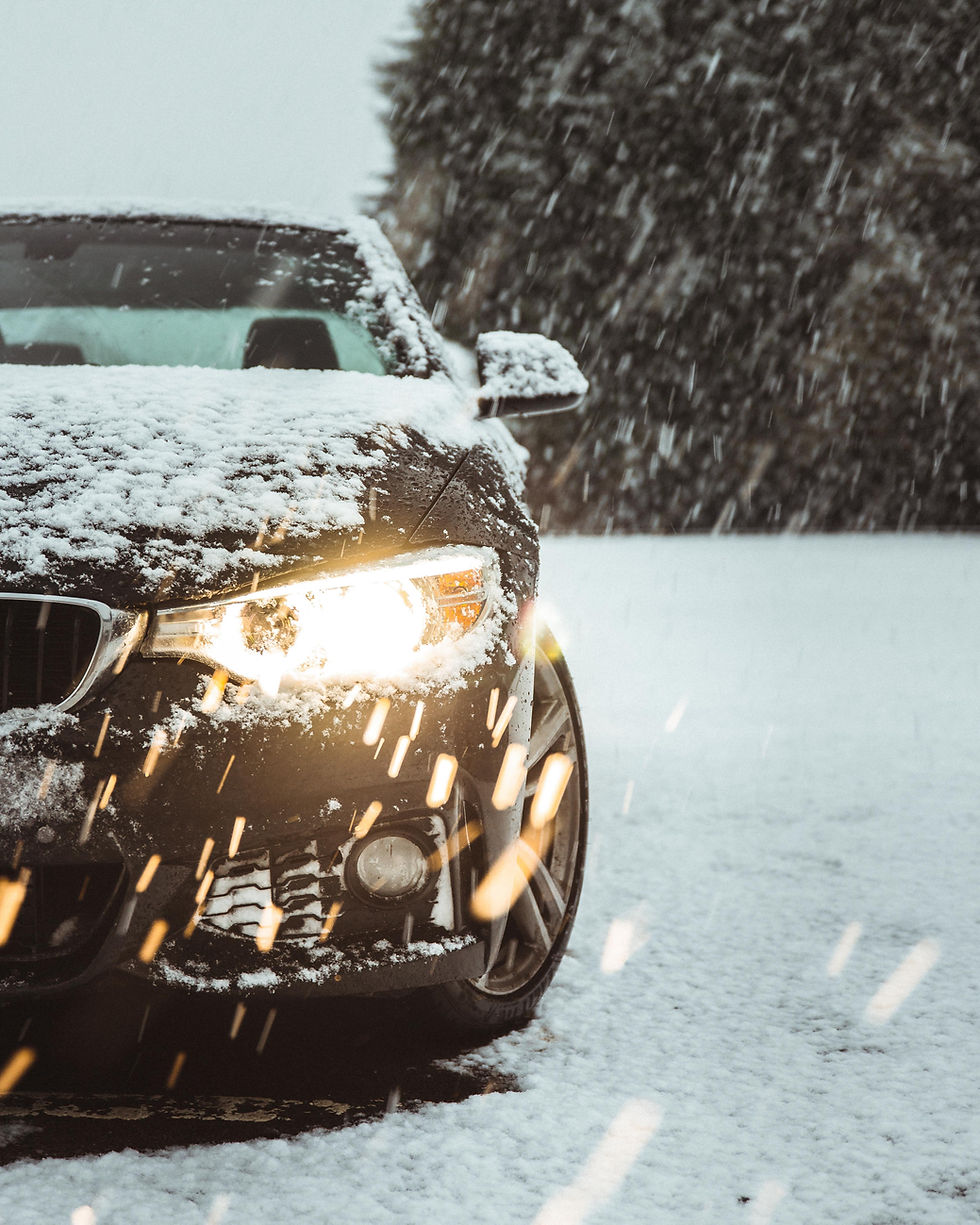
A vehicle that spends every night behind a garage door experiences winter differently from one that wakes beneath frozen rain, wind-driven snow, road residue, and a windshield sealed under ice. The first begins its morning protected. The second must repeatedly overcome the environment before it even moves.
That does not mean an outdoor car is destined to become unreliable. It means the owner must be more realistic.
When parking your car outside in winter is part of your daily life, the right strategy is not simply to buy a stronger ice scraper or let the engine idle longer. You need to understand what cold exposure asks of the battery, tires, paint, seals, fluids, wipers, heating system, powertrain, and—perhaps most importantly—your patience.
You also need to ask a question that conventional buying guides rarely address:
Is this vehicle genuinely suited to sleeping outside where I live?
At WhatCarFitsMe, we believe a car should be evaluated within the conditions in which it will actually be owned. Your driveway, street-parking arrangement, daily mileage, winter climate, charging access, maintenance budget, and tolerance for inconvenience can matter more than horsepower, screen size, or the prestige attached to the badge.
Winter does not create every weakness. It often reveals the weaknesses that were already there.
Table of Contents
Your Parking Situation Is Part of Your Vehicle Profile
Most car-buying conversations begin with familiar questions:
How many passengers do you carry?How much cargo space do you need?What is your budget?Do you prefer an SUV, sedan, hybrid, or electric vehicle?
Those questions matter, but they are incomplete.
A vehicle match should also account for where the car spends its nights. A protected garage, an open driveway, a shaded apartment lot, and curbside parking on a salted urban street represent very different ownership environments.
A car parked outdoors may face:
More frequent cold starts
Greater accumulation of snow and ice
Repeated freeze-and-thaw cycles
Faster loss of tire pressure as temperatures fall
Increased exposure to moisture and corrosive road treatments
More stress on an aging 12-volt battery
Longer preparation time before morning departures
Greater dependence on effective defrosting, heating, wipers, and remote climate functions
This is why outdoor parking should influence what you buy, how much you pay, and how much financial room you retain after the purchase.
The mistake is not parking outdoors. Millions of people do it successfully.
The mistake is buying as though your car will live under ideal conditions.
What Parking Your Car Outside in Winter Does to a Vehicle
Cold weather affects nearly every vehicle, although the symptoms differ by powertrain, age, condition, mileage, design, and driving pattern.
The battery has less margin for weakness
A marginal battery may behave acceptably during mild weather and fail during the first serious cold snap. AAA reports that a conventional car battery can lose about 35% of its strength at 32°F and roughly 60% at 0°F. At the same time, a cold engine may require more starting current.
This distinction is important: winter may not be the original cause of the battery’s deterioration. Heat, age, charging-system problems, corrosion, short journeys, or extended inactivity may have already reduced its capacity. Cold weather merely removes the remaining margin.
For an outdoor-parked vehicle, battery condition is therefore not a minor maintenance detail. It is part of reliability planning.
A buyer considering a used car should ask:
How old is the battery?
Does the engine crank slowly?
Are the terminals clean?
Has the charging system been tested?
Does the vehicle sit unused for several days?
Will most trips be long enough to replenish the charge consumed during startup?
Does the car rely heavily on powered accessories, heated seats, blowers, cameras, or remote-start cycles?
A clean inspection report should not distract you from a simple truth: an older battery and repeated short winter trips are an unfavorable combination.
Tire pressure changes with temperature
Cold weather does not automatically mean a tire is leaking. Air pressure naturally falls as temperature declines. The U.S. Tire Manufacturers Association notes that tire pressure may change by approximately one to two pounds per square inch for every 10°F change in temperature.
That is why the tire-pressure warning light often appears on the first genuinely cold morning of the season.
It should not be ignored.
Pressure should be checked when the tires are cold and adjusted according to the vehicle manufacturer’s recommended pressure, normally listed on the driver-side doorjamb label—not according to the maximum pressure molded into the tire.
NHTSA recommends inspecting tire tread and sidewalls, checking for cuts, cracks, bulges, punctures, and uneven wear, and ensuring tread depth is at least 2/32 of an inch. That figure is a minimum legal-style threshold, not necessarily a strong winter-performance target. A tire can still have measurable tread and provide disappointing grip in slush or snow.
For winter ownership, remaining tread quality and tire type matter more than the reassuring fact that the tire has not yet reached its absolute minimum.
Fuel economy becomes less flattering
Winter makes vehicles work harder.
The U.S. Department of Energy reports that, in city driving, a conventional gasoline vehicle’s fuel economy can be roughly 15% lower at 20°F than at 77°F. Short journeys can produce an even more noticeable penalty because the vehicle spends a larger percentage of each trip warming toward an efficient operating temperature.
The reasons include:
Longer warm-up periods
Denser air and increased aerodynamic resistance
Lower tire pressure
Winter fuel formulations
Greater use of cabin heating and defrosting
Increased drivetrain friction
Idling
Reduced efficiency during short trips
Snow or slush increasing rolling resistance
This should influence your budget calculations. A buyer who can only just afford a vehicle’s expected fuel consumption in summer has not created enough ownership margin for winter.
Road salt raises the cost of neglect
Salt and other deicing chemicals help make roads usable, but they are not kind to vehicles. The Environmental Protection Agency notes that road salt has corrosive effects and can damage cars, trucks, roads, bridges, and other property.
The most vulnerable areas are not always the surfaces you see.
Road spray reaches:
Suspension components
Brake hardware
Fasteners
Exhaust components
Subframes
Wheel wells
Rocker panels
Seams and drainage areas
Areas where paint or protective coatings have already been damaged
A glossy hood can make a used car appear beautifully preserved while the underside tells a different story.
For drivers in salt-heavy regions, underbody condition should influence a purchase decision far more than cosmetic perfection inside the cabin.
Ice creates secondary damage through rushed behavior
Many winter problems are not caused directly by temperature. They are caused by the owner’s response to it.
Examples include:
Pulling frozen windshield wipers away too aggressively
Using hot water on frozen glass
Operating wipers across bonded ice
Scraping painted surfaces
Driving before windows are fully cleared
Leaving packed snow on the roof
Forcing frozen door handles
Using a metal object to remove ice
Allowing snow to block cameras, lamps, sensors, or exhaust outlets
A winter-ready ownership routine is partly mechanical and partly behavioral. A robust vehicle can still be damaged by hurried preparation.
The Outdoor-Parking Test: Five Questions Before You Buy
A vehicle’s suitability for outdoor winter life can be assessed through five practical questions.
1. Will it start reliably after the coldest night?
This depends on more than age.
A well-maintained, higher-mileage car with a healthy battery, correct oil specification, strong charging system, and consistent longer trips may be more dependable than a lower-mileage vehicle that has spent months completing only brief journeys.
Mileage is evidence of use—not a diagnosis.
When comparing used vehicles, consider mileage alongside:
Maintenance history
Battery age
Starting behavior
Fluid condition
Frequency of use
Storage history
Evidence of corrosion
Warning lights
Charging-system health
Whether the vehicle has sat unused
An outdoor winter car needs reserve capacity. Buying the cheapest example available and postponing every maintenance item is usually false economy.
2. Can you comfortably clear and enter it?
Vehicle size affects winter convenience.
A tall SUV may offer useful ground clearance and an elevated driving position, but its roof can be difficult to clear safely. A low sedan may be easier to brush off but more vulnerable to deep plowed snow around the curb. A vehicle with frameless windows or intricate retractable handles may require more patience during icing conditions than a simpler design.
The best answer depends on where you park.
For example:
Urban curbside driver: maneuverability, strong defrosting, protected wheels, moderate exterior dimensions, and easy entry may matter most.
Suburban driveway owner: all-weather capability, remote climate preparation, and space for winter equipment may carry more value.
Rural commuter: ground clearance, suitable tires, range, visibility, and recovery equipment may become priorities.
Luxury buyer: heated features are valuable, but large wheels, low-profile tires, complex door mechanisms, and expensive exposed trim may raise winter costs.
Family buyer: rapid cabin heating, easy child-seat access, rear defrosting, washable surfaces, and predictable traction can matter more than visual drama.
This is where lifestyle-fit alignment becomes more useful than segment stereotypes.
3. Does the vehicle depend on infrastructure you do not have?
This is especially important for electric vehicles.
An EV can work extremely well in winter, but suitability depends heavily on charging access, daily distance, preconditioning capability, and the owner’s willingness to plan around reduced cold-weather efficiency.
The Department of Energy recommends preconditioning an EV’s battery and cabin while it remains connected to charging. This allows grid electricity to perform some of the warming work before the trip begins, preserving more battery energy for driving.
That benefit becomes harder to use when the car is parked several blocks from home without reliable charging.
The question is therefore not, “Are EVs good in winter?”
The better question is:
Is an EV compatible with your winter parking and charging reality?
For a driver with a home charger, predictable commuting, and a vehicle that supports scheduled preconditioning, the answer may be yes.
For a street parker who relies on busy public chargers, routinely returns home with a low state of charge, and drives long unplanned routes, the ownership experience may require compromises that glossy marketing does not emphasize.
The same principle applies to plug-in hybrids. Their value depends on whether they are actually charged. Without convenient charging, you may carry the cost and weight of two propulsion systems while using the electric benefit less often than anticipated.
4. Can your budget absorb winter consumables?
Winter exposes under-budgeting.
The purchase price is only the entry cost. An outdoor-parked vehicle may also require room for:
A strong replacement battery
Winter-capable tires or a second wheel-and-tire set
Seasonal tire installation and storage
Windshield-washer fluid rated for low temperatures
Replacement wiper blades
Paint-chip correction
Underbody washing
Rubber-seal care
Emergency equipment
Periodic alignment checks
Wheel repair from winter potholes
Increased fuel or electricity consumption
Unexpected towing or roadside assistance
A $22,000 car that leaves $3,000 of financial breathing room may be a more intelligent purchase than a $25,000 car that consumes the entire budget.
At WhatCarFitsMe, we favor this conservative logic because vehicle satisfaction is rarely created by buying the maximum amount of car a lender will approve. It is created by buying a car you can continue to maintain without anxiety.
5. Will the vehicle still suit your behavior in February?
Purchase psychology is often seasonal.
A buyer test-drives a car on a bright afternoon. The cabin is clean. The pavement is dry. The battery is warm. The door handles work perfectly. The panoramic roof makes the interior feel expensive.
None of that simulates a dark weekday morning when the car is covered in frozen precipitation and the driver is already late.
Before buying, mentally test the vehicle against the least glamorous version of ownership:
Can you reach and clear the roof?
Will the wheel-and-tire package tolerate potholes?
Is the cargo area suitable for wet equipment?
Are the controls usable with gloves?
Does the climate system respond quickly?
Does the backup camera remain useful when dirty?
Are essential features buried in a slow touchscreen?
Can you afford winter tires in this size?
Does the vehicle require premium fuel?
Can you charge it where it sleeps?
Would a damaged wheel or sensor create a painful bill?
A good match survives this test.

Comparison Matrix: Which Buying Path Fits Outdoor Winter Parking?
Buying path | Winter strengths | Winter compromises | Best suited to | WhatCarFitsMe perspective |
Simple gasoline sedan with winter-capable tires | Lower purchase cost, easy roof access, efficient on longer drives, commonly available parts | Lower ground clearance, traction depends heavily on tires, cabin may warm more slowly than expected on very short trips | Budget-conscious commuters, urban drivers, moderate-snow regions | Often underrated. A well-maintained front-wheel-drive sedan on appropriate tires can be more rational than an expensive neglected SUV |
Compact or midsize AWD crossover | Useful clearance, easier entry, flexible cargo space, widely available AWD | Higher purchase and fuel costs, AWD does not improve braking, larger tires may cost more | Families, suburban owners, mixed-road commuters | A balanced choice when space and access are genuinely needed—not simply because “SUV equals winter” |
Conventional hybrid | Strong city efficiency, reduced fuel use, practical for stop-and-go commuting | Cold weather may reduce fuel economy more noticeably; cabin heat and short trips affect results | High-mileage commuters without dependable charging | Compelling when mileage is sufficient to recover the price premium and the vehicle has a strong maintenance history |
Electric vehicle with dependable home charging | Scheduled preconditioning, immediate cabin heat in many vehicles, quiet operation, no cold engine start | Reduced winter range, potential slower charging, heavy dependence on reliable charging access | Predictable commuters with private charging and adequate range margin | Excellent for the right infrastructure. A poor fit when the parking arrangement makes routine charging uncertain |
Older premium AWD vehicle | Comfort, traction features, strong heating, refined cabin, prestige | Expensive tires, batteries, sensors, suspension parts, wheels, and deferred maintenance; complexity may increase cold-weather risk | Buyers with substantial maintenance reserves | Buy condition and history, not badge value. A low purchase price can disguise a high winter ownership cost |
The matrix reveals an important principle: no powertrain or body style wins automatically.
A modest car with excellent tires, a healthy battery, and consistent maintenance can be more trustworthy than a prestigious AWD vehicle with old rubber, neglected fluids, and no financial room for repairs.
Parking Your Car Outside in Winter: The Essential Routine
A sustainable routine should protect the car without turning every snowfall into a ceremony.
Before winter begins
Arrange a preventive inspection before the first major freeze.
Ask for attention to:
Battery health and charging output
Tire tread, condition, age, and pressure
Correct engine-coolant protection
Windshield-washer system
Wiper condition
Exterior lighting
Brakes
Heating and defrosting
Door, trunk, and hood seals
Fluid leaks
Underbody corrosion
Manufacturer-required maintenance
NHTSA specifically recommends preparing tires, batteries, cooling systems, windshield equipment, and other essential systems before winter travel.
This is also the time to correct paint chips. Small exposed areas can become more vulnerable after repeated contact with moisture and road residue.
Before snow or freezing rain
Raise the wiper arms only when the vehicle design and owner’s manual permit it. On some vehicles, the wipers must first be placed into a service position. Forcing hidden or recessed arms can damage them.
Make sure:
The fuel tank is not nearly empty
The EV has adequate charge
Low-temperature washer fluid is installed
The snow brush and scraper are inside the home, not trapped in the frozen car
The battery booster is charged
Gloves and a flashlight are accessible
Scheduled preconditioning or remote climate settings are correctly configured
A windshield cover may reduce morning ice removal, although it should be securely fitted and used according to its instructions.
A full-car cover is more complicated. On a daily-use outdoor car, it may trap dirt against the paint, become difficult to remove when frozen, or damage the finish if it moves in strong wind. It makes more sense for certain longer-term storage situations than for every overnight snowfall.
Before driving
Clear the entire vehicle, not merely a viewing slot in the windshield.
Remove snow and ice from:
Windshield
Side windows
Rear glass
Mirrors
Roof
Hood
Trunk or liftgate
Headlights and taillights
License plates
Cameras and parking sensors
Do not pour hot water onto frozen glass. Rapid temperature change can damage the windshield, and the runoff may refreeze around the vehicle.
Do not run frozen wipers until the blades and glass are clear.
Ensure the exhaust outlet is not blocked by accumulated or plowed snow before idling or driving.
After driving on treated roads
When conditions allow, wash the car periodically, including the wheel wells and underbody. The objective is not cosmetic perfection. It is the removal of residue from areas where moisture and salt can remain.
Select a day when the car has time to dry and when door locks, handles, charging ports, and seals are unlikely to refreeze immediately afterward.
Frequent washing cannot reverse existing structural corrosion, but it can form part of a sensible preservation routine.

Should You Let the Car Warm Up for a Long Time?
For most modern gasoline vehicles, extended stationary idling is usually unnecessary.
The Department of Energy notes that most manufacturers recommend driving away gently after roughly 30 seconds in winter because the engine generally warms more quickly while being driven than while idling.
There are practical exceptions. You may need sufficient defrosting time to achieve safe visibility, and extreme conditions may require additional preparation. The owner’s manual should remain the controlling source for model-specific instructions.
The refined approach is not to race away with a frozen drivetrain, nor to idle indefinitely.
Start the car, establish safe visibility, then drive gently until the vehicle reaches normal operating temperature. Avoid hard acceleration, high engine speeds, or heavy loads immediately after startup.
Remote start can be convenient, but repeated long remote-start cycles combined with short journeys may consume fuel without giving the battery and engine sufficient productive driving time.
Do You Need AWD When Parking Outside?
Not necessarily.
All-wheel drive may help the vehicle accelerate when traction is limited. It does not repeal the laws of physics, reduce every stopping distance, or compensate for unsuitable tires.
Drivers frequently overbuy drivetrain and underbuy tire quality.
For many commuters, front-wheel drive paired with appropriate tires, sensible speed, and good winter maintenance may be sufficient. AWD becomes more valuable when combined with factors such as:
Steep unplowed roads
Frequent heavy snow
Rural travel
Challenging driveways
Essential travel before roads are cleared
Regular mountain driving
A lifestyle that cannot easily postpone trips
The correct choice depends on use, not mythology.
A family living on a well-plowed suburban route may gain more from excellent tires, strong heating, reliable remote climate control, and an emergency fund than from moving into a larger, more expensive AWD vehicle.
Mileage Logic for a Winter-Exposed Used Car
There is no universal mileage cutoff beyond which an outdoor winter car becomes a bad purchase.
A 40,000-mile vehicle can be an inferior choice if it has:
Long gaps in its service history
A weak original battery
Old tires
Evidence of flood or water intrusion
Severe underbody corrosion
Repeated short-trip use
Unresolved warning lights
Poor-quality collision repairs
A 90,000-mile vehicle can be a better choice if it has:
Documented maintenance
Consistent highway use
Healthy starting and charging systems
Recent appropriate tires
Clean fluids
Minimal corrosion
No evidence of deferred repairs
A mature, proven powertrain generation
Mileage should adjust expectations, not end the analysis.
As mileage rises, buyers should budget more conservatively for wear items and age-related repairs. Premium and complex vehicles generally require a larger reserve than simpler mainstream vehicles, even where their purchase prices have converged in the used market.
This is also why we advise caution around the earliest model years following a major redesign. A new generation may introduce substantial changes to electronics, software, battery architecture, engines, transmissions, thermal management, body hardware, or driver-assistance systems.
The newest-looking used vehicle is not automatically the most mature.
When dependability matters more than novelty, a later production year from an established generation can represent the more rational choice.
The Luxury-Car Winter Trap
Luxury vehicles often make winter more comfortable.
They may offer:
Heated steering wheels
Heated windshields or washer systems
Powerful climate control
Remote cabin preparation
Heated rear seats
Advanced AWD
Air suspension
Surround-view cameras
Sophisticated lighting
But comfort and ownership simplicity are not the same thing.
Large wheels, low-profile tires, retractable handles, frameless windows, complex air suspension, active grille systems, numerous external sensors, and expensive trim can all increase the consequence of winter damage or neglect.
A used luxury SUV may cost the same as a newer mainstream crossover. That does not mean the two require the same maintenance budget.
The psychologically dangerous moment occurs when depreciation makes a premium vehicle appear affordable while its operating ecosystem remains premium.
When the car sleeps outdoors, ask what happens when:
A large wheel meets a winter pothole
An air-suspension component becomes unreliable
Ice obstructs a powered mechanism
A sensor is damaged
A specialized tire needs immediate replacement
The 12-volt battery requires coding or complex access
A minor collision damages cameras and calibration-sensitive equipment
Luxury can still be the right choice. It simply requires an honest reserve.

Outdoor Parking and EV Ownership
Electric vehicles deserve a nuanced answer.
They avoid conventional cold-engine starting and can provide rapid cabin heat. Many allow owners to schedule departure times and precondition the vehicle before a trip.
However, cold temperatures affect battery efficiency, cabin heating consumes energy, and charging behavior becomes more consequential. DOE data has shown that cold-weather effects can be more pronounced for electrified vehicles than for conventional gasoline vehicles, although the real-world result varies substantially by vehicle, trip length, heating use, speed, and conditions.
An EV may fit you well when:
You have dependable overnight charging
Your routine uses only a conservative portion of the rated range
You can precondition while plugged in
Your employer offers charging
Longer winter journeys are planned
You understand that displayed range is an estimate
The vehicle has an effective thermal-management system
An EV may be a weaker fit when:
You park far from charging
Public chargers near you are frequently occupied
Winter trips routinely approach the vehicle’s practical range
You cannot tolerate charging delays
You tow or carry heavy loads in cold weather
Your schedule changes unpredictably
You are buying primarily because an advertised payment appears attractive
The right EV is not just a vehicle match. It is a vehicle-and-infrastructure match.
Budget for the Winter You Actually Have
People often budget for the payment and improvise the ownership.
A more intelligent framework separates the money into three categories:
Acquisition budget
The price required to purchase the vehicle, including taxes, registration, inspection, financing costs, and initial corrections.
Immediate readiness budget
Money reserved for items that may be needed shortly after purchase:
Battery
Tires
Fluids
Wipers
Alignment
Brakes
Scheduled maintenance
Paint correction
Underbody treatment where appropriate
Charging equipment for an EV
Ongoing ownership reserve
Money retained for unexpected repairs, seasonal tire changes, increased winter energy use, pothole damage, towing, and age-related wear.
A car is not affordable because you can complete the transaction.
It is affordable when you can maintain it, insure it, fuel or charge it, and respond calmly when something wears out.
That distinction is central to how WhatCarFitsMe guides buyers.
Who Should Consider a Different Vehicle?
Parking your car outside in winter does not automatically justify replacing it. However, a different vehicle may make sense when several mismatches accumulate.
Consider changing direction when:
The current car repeatedly fails to start despite proper diagnosis and repair
Ground clearance is incompatible with your access roads
The heating or defrosting system is inadequate
Winter tires in the required size are prohibitively expensive
Corrosion has become structurally or economically serious
Your daily range no longer fits your EV’s winter capability
You cannot reliably charge where the vehicle is parked
The vehicle is too tall to clear safely
Frequent pothole damage makes the wheel package impractical
Repair costs are consuming the money needed for preventive care
The vehicle’s complexity no longer fits your budget or tolerance
Replacement should not be an emotional reaction to one cold morning. It should follow a pattern of evidence.
A Better Way to Choose a Winter-Realistic Car
Typical car recommenders ask what you like.
A serious vehicle-matching process also asks what your life will demand.
At WhatCarFitsMe, outdoor parking is considered alongside:
Climate
Road conditions
Daily mileage
Passenger needs
Cargo patterns
Fuel and charging access
Realistic purchase budget
Maintenance capacity
Reliability expectations
Brand-category mileage tolerance
Vehicle age
Powertrain maturity
Generational risk
Tire and wheel costs
Parking dimensions
Ownership behavior
That is how the recommendation becomes realistic rather than aspirational.
A vehicle should not merely impress you during the first week. It should still make sense after the first frozen windshield, first battery warning, first winter fuel bill, and first road-salt wash.
Final Thoughts: Winter Rewards Honest Choices
There is something revealing about a car covered in snow before sunrise.
The badges disappear. The showroom lighting is gone. The polished sales language becomes irrelevant.
What remains is the ownership experience.
Will it start?
Can you see clearly?
Can you enter it without a struggle?
Do the tires inspire confidence?
Can you afford to maintain it correctly?
Does the powertrain fit your route?
Can you clear the roof?
Can you charge it?
Will it tolerate the conditions in which it actually lives?
These are not glamorous questions, but they lead to better cars, calmer mornings, and more satisfying ownership.
The purpose of parking your car outside in winter guidance should not be to frighten you into buying the largest AWD vehicle or the most expensive winter package. It should help you identify the smallest set of compromises that your routine genuinely requires.
Some drivers need an AWD crossover. Others need a dependable sedan with excellent tires. Some are ideally positioned for an EV with home charging and scheduled preconditioning. Others should choose a proven gasoline or hybrid vehicle and preserve more cash for maintenance.
The best answer is personal—but it should never be improvised.
Try WhatCarFitsMe to compare vehicles through the reality of parking your car outside in winter, your actual budget, your mileage, your charging access, and the ownership experience you are prepared to maintain. Choose the vehicle that fits your life after the snow falls—not merely the one that looks best before it does.
C. Frequently Asked Questions
Is it bad to leave a car parked outside all winter?
Leaving a car outside all winter is not inherently harmful when it is driven regularly and maintained correctly. However, outdoor exposure increases contact with snow, ice, moisture, temperature changes, road salt, and debris. Battery health, tire pressure, paint damage, drainage areas, seals, wipers, and underbody condition require closer attention.
How do I protect my car when parking it outside in winter?
Test the battery, maintain correct tire pressure, use winter-appropriate washer fluid, repair paint chips, clear the entire vehicle before driving, wash road residue from the body and undercarriage periodically, and follow the manufacturer’s guidance for cold-weather operation. Keep a snow brush, scraper, gloves, flashlight, and charged booster pack accessible outside the vehicle.
Should I cover my car if it stays outside in winter?
A full cover may help during certain longer storage periods, but it is not always ideal for a daily-use vehicle. Dirt trapped beneath a moving cover can affect the paint, and moisture or ice may make the cover difficult to remove. A properly secured windshield cover is often more practical for regular winter use.
Do I need an AWD vehicle if my car is parked outdoors?
No. Parking outdoors does not itself require AWD. AWD can help with acceleration on slippery surfaces, but tires, ground clearance, road conditions, driver behavior, and local snow removal may matter more. A front-wheel-drive car with appropriate winter tires can be a highly capable and economical solution.
How often should I start a car that is parked outside in winter?
Starting a vehicle briefly without driving it may not provide meaningful benefit and may not restore the energy used during startup. When possible, drive the car long enough to reach normal operating conditions, following the manufacturer’s instructions. For longer storage, use a properly selected battery maintainer where safe and appropriate.
Is an electric car suitable for outdoor winter parking?
Yes, provided its range, charging access, and thermal-management features fit the owner’s routine. EV owners benefit greatly from reliable overnight charging and the ability to precondition the cabin and battery while plugged in. Street parking without dependable charging can make winter EV ownership less convenient.


