
Best Car for Rural Driving: Choose for Real Life

Updated: Sep 21
The best car for rural driving is rarely the vehicle with the most rugged advertising, tallest stance, or longest list of off-road modes. It is the vehicle that makes distance feel ordinary.
In a city, a poor vehicle choice can become irritating. In a rural setting, the wrong compromise can become exhausting, expensive, or limiting. Fuel, service, school, groceries, and healthcare may all be farther away. Winter, gravel, potholes, animals, wind, mud, and dark two-lane roads can turn small vehicle characteristics into ownership-defining ones. If darkness and unlit roads are part of that routine, our night-driving guide explains how headlight performance, glare and driver sightlines change the fit.
Federal Highway Administration data shows why road context deserves respect: in 2024, rural-road fatalities represented 41% of U.S. traffic deaths even though rural roads accounted for 31% of vehicle miles traveled. The point is not to dramatize rural driving. It is to recognize that road environment changes what “fit” means.
At WhatCarFitsMe, we start with a different idea: distance resilience. Not “Can this vehicle handle a dirt road?” but “Can it keep working comfortably, predictably, and affordably when your life gives you fewer convenient alternatives?”
Table of Contents
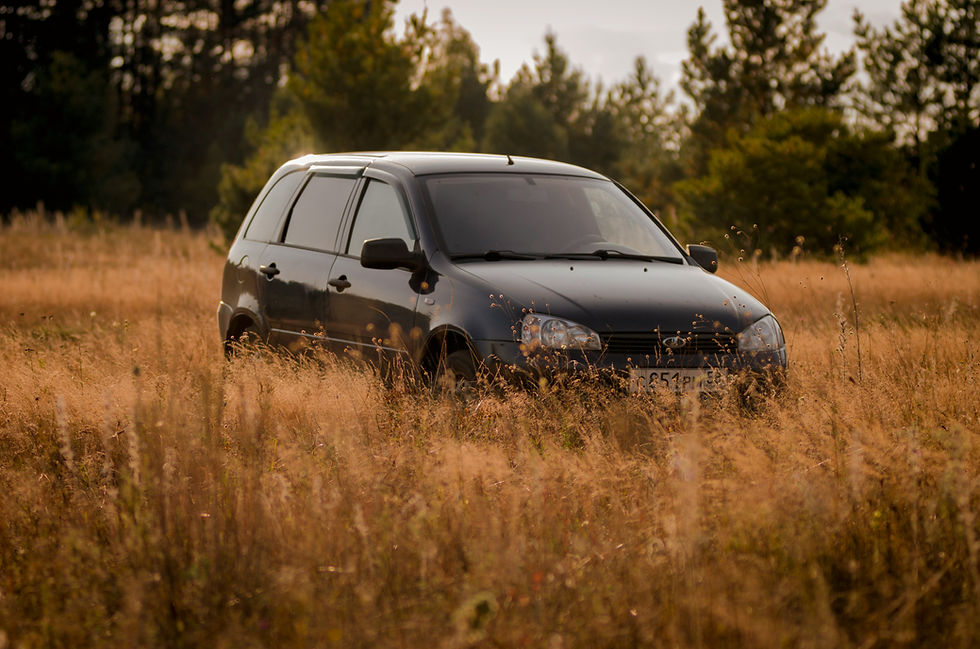
The Best Car for Rural Driving Solves Distance First
Rural-car advice often overweights terrain. Ground clearance matters if your driveway washes out. AWD can matter in snow. Four-wheel drive may be useful on farm tracks, deep mud, steep grades, or unplowed roads.
But many rural owners spend far more time on paved roads than crawling over rocks. Their larger exposure is distance: to work, school, healthcare, groceries, airports, fuel, and service.
Distance changes the economics of a vehicle. A modest efficiency difference matters far more at 20,000 annual miles than at 4,000. A noisy cabin seems acceptable during a short test drive and tiring after hundreds of hours. Sophisticated hardware matters less if qualified service is far away.
If you are still defining the broader decision, our guide on how to find the best car for you explains why mileage, budget, powertrain and lifestyle need to be considered together rather than in isolation.
So ask a better first question: How much of your life depends on this car continuing to work without drama?
For many rural buyers, reliability is not merely desirable. It is logistical independence.
Rural Reliability Is Really Recovery Margin
Reliability discussions online often collapse into rankings: this brand is “good,” that engine is “bad,” this mileage is “too high.” Real ownership is more nuanced.
For rural driving, we care about recovery margin: how much inconvenience does a problem create, and how many alternatives do you have?
A vehicle requiring specialized diagnostics may be entirely reasonable for a city owner surrounded by service centers. Put the same vehicle 90 minutes from appropriate support and a small issue can become towing, missed work, scheduling, and borrowed transportation.
That does not mean rural buyers should reject premium vehicles, advanced hybrids, turbocharged engines, or sophisticated electronics. It means complexity must justify itself.
At WhatCarFitsMe, we favor mature engineering when dependability has unusually high consequences. We prefer proven generations, established powertrains, sensible wheel-and-tire packages, and a service network that matches where the owner lives. Our guide to cars that can reach 200,000 miles goes deeper into why maintenance history, generation maturity and usage matter more than badge mythology.
A first-year redesign may be excellent. But if your household has one car and limited repair alternatives, there is little value in becoming an early adopter unless the benefit meaningfully improves your life.
Rural reliability is not fear of technology. It is respect for inconvenience.
Build the Vehicle Around Your Worst Normal Day
Most buyers shop for an average day. A better rural test is your worst normal day—not a once-in-a-decade emergency, but the difficult day that happens several times a year.
It is January, the road is only partly cleared, and you have children, backpacks, and 28 miles to travel. It has rained for three days and the final half-mile to your property is badly rutted. You work late and return on deer-prone roads with no streetlights. You drive only 6,000 miles annually, but every essential trip is 20 to 40 miles each way.
Choose enough capability to make those days calm, but not so much that you pay every day for a problem you almost never encounter. That balance is where the smartest rural purchase lives.

Ground Clearance: Buy Enough, Not a Costume
Ground clearance is easy to sell because it is easy to see. Higher vehicles can help on rutted lanes, snow, uneven shoulders, and rough unpaved roads. But extra height can also mean a higher step-in, more body movement, larger tires, poorer aerodynamic efficiency, and sometimes greater running cost.
A rural driver on maintained pavement may be better served by a comfortable AWD crossover than a body-on-frame 4x4. Someone regularly crossing washouts, deep snow, or rocky access roads may need something more robust.
Base the decision on actual clearance events. How deep does snow realistically become before you must drive? Are ruts occasional or permanent? Do loose rocks threaten low components? Can you wait for road conditions to improve, or must you travel regardless?
The best car for rural driving is not the one prepared for an expedition. It is the one appropriately prepared for your driveway.
AWD, 4WD and Tires: Buy Traction, Not Identity
Drivetrain is another place where buyers can purchase identity instead of need. AWD is useful for changing surfaces, frequent rain or snow, gravel, and slippery inclines. Traditional 4WD becomes more relevant when the use case includes deeper mud, rough tracks, difficult grades, or low-speed off-pavement work.
If winter conditions are one of your deciding constraints, read our deeper analysis of whether AWD is necessary for snow. The central lesson is important here too: drivetrain helps, but it does not cancel physics.
Tires remain fundamental. Braking, cornering, and control depend heavily on the contact patch between vehicle and road. Advanced AWD on unsuitable tires can create more confidence than actual grip.
For rural owners, tire availability matters too. Common sizes, adequate sidewall, appropriate seasonal choices, and replacements available within a reasonable distance can be more valuable than a dramatic wheel design. Large wheels photograph well. Potholes are less impressed.
High Mileage Changes What Affordable Means
Purchase price is not ownership cost. Imagine two vehicles that both fit your budget. One is larger, heavier, more powerful, and less efficient. The other is smaller but still meets your passenger, traction, cargo, and clearance needs.
At 7,000 miles a year, the fuel-cost gap may be acceptable. At 22,000 miles, recurring differences compound. So do tire replacement, maintenance, and other consumables.
The U.S. Department of Energy notes that properly inflated tires can improve fuel economy by about 0.6% on average and potentially as much as 3%. Small maintenance disciplines matter more when they repeat across tens of thousands of miles.
This is why WhatCarFitsMe weights costs according to exposure. If affordability is a major constraint, compare this logic with how much car you can actually afford rather than allowing the monthly payment alone to define the purchase.
If distance is your dominant use case, seek the smallest, simplest vehicle that comfortably clears your real requirements. Not the smallest possible. Not the largest affordable. The smallest vehicle that solves the life.
Used-Car Mileage Should Be Read Forward
Rural buyers often become overly afraid of odometer numbers. A used vehicle with 90,000 miles may look “high mileage,” but whether it fits depends on what happens next.
Drive 6,000 miles a year for four years and you may add only 24,000 miles. Drive 24,000 annually for seven years and you could add 168,000. Those buyers should not evaluate the same starting mileage in the same way.
For a high-mileage rural driver, we become more conservative about starting mileage, powertrain maturity, service history, wear items, and repair accessibility because the vehicle moves through maintenance stages quickly.
For a low-mileage driver, condition, age, corrosion, tire age, battery health, and maintenance history may matter more than simply chasing the lowest odometer. Before buying used, work through what to check when buying a used car so mileage is interpreted in context.
You are not buying the miles already traveled. You are buying the miles you still need.
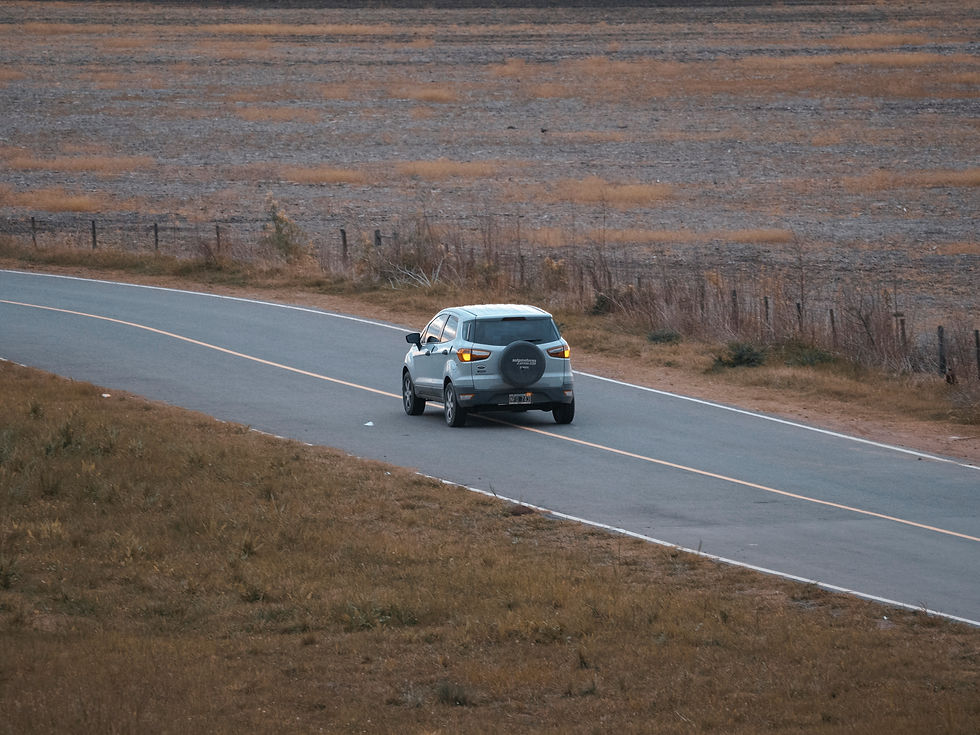
The Best Rural Family Car Is Often the Calmest One
Country living does not automatically require a full-size SUV or pickup. If you tow, carry equipment, transport large animals, or regularly use rough roads, that capability can be rational.
But a family on paved roads, school routes, sports practices, and long highway drives may be happier in a midsize crossover, wagon, minivan, or efficient SUV with the right tires and drivetrain.
The family feels what the brochure cannot show: step-in height, road noise, fuel bills, child-seat access, wet-weather loading, and tire cost. The right family car reduces small frictions repeated every week. Capability matters. So does serenity.
Budget Buyers Should Protect Predictability
When money is tight, “more vehicle for the money” is seductive. A depreciated premium SUV or older large truck can cost the same as a newer mainstream crossover, but purchase price can hide operating complexity.
A budget-conscious rural buyer should prioritize predictable consumables, service availability, mechanical maturity, reasonable fuel use, common tire sizes, and enough reserve to absorb wear without debt.
Do not ask only, “Can I afford the payment?” Ask, “Can I afford the month when it needs tires, service, fuel, and an unexpected repair together?” That is real affordability.
Gas, Hybrid or EV? Follow the Infrastructure
There is no universal rural powertrain winner. Gasoline remains compelling where distances are long, fuel is easy to find, towing is regular, or charging access is uncertain. Hybrids can reduce fuel use without requiring plug-in infrastructure. EVs can fit rural households very well when home charging is dependable and daily distances are predictable.
For high-mileage drivers, our guide on whether a hybrid is worth it helps quantify when the efficiency premium genuinely pays back rather than simply looking attractive on an MPG label.
The critical variable is infrastructure. If recurring routes cross weak fast-charging corridors, winter range margin is tight, towing is frequent, or home charging is impractical, an EV may require more planning than you want. But rejecting one simply because you live outside a city is equally simplistic.
Match the powertrain to the energy access you actually have—not the infrastructure you hope will appear.
Comparison Matrix: Rural Buying Paths
Efficient AWD compact crossover
Best for long paved commutes, moderate winters, gravel driveways and smaller families. Its advantage is efficiency, manageable tires and easier ownership. The compromise is less clearance and towing capacity than larger 4WD vehicles. This is a strong default when distance matters more than extreme terrain.
Midsize AWD SUV
Best for families, mixed roads, snow and larger cargo needs. It balances comfort, space, traction and road presence, but brings higher fuel and tire costs than compact alternatives.
Traditional 4WD SUV or pickup
Best for farms, rough access roads, towing, deep snow and work use. Genuine capability is valuable when the conditions are frequent rather than hypothetical. If towing is part of your life, also calculate how much towing capacity you actually need instead of buying the largest rating available.
Hybrid crossover or SUV
Best for high annual mileage with reliable gasoline access. It can reduce fuel exposure without dependence on charging, but the added drivetrain complexity should still be weighed against local service access and ownership horizon.
EV with dependable home charging
Best for predictable daily routes, home charging and adequate regional fast charging. Home fueling and quiet operation can be excellent advantages, while route planning, cold-weather range and towing deserve conservative margins.
WhatCarFitsMe Finds the Constraint That Can Make a Good Car Wrong
Traditional car shopping begins with aspiration. What do you like? Which brands are you considering? SUV or truck? New or used? WhatCarFitsMe goes one layer deeper.
We look for the constraint with enough force to make an otherwise good vehicle wrong. For one rural buyer, it is a 70-mile daily commute. For another, a steep unpaved driveway. For another, a one-car household with no nearby dealer. For another, a hard monthly budget ceiling. For another, a large dog, children, sports equipment, and winter weather.
Once the constraint is visible, the shortlist becomes more honest. We can then weigh mileage, road surface, climate, passengers, cargo, towing, charging, service geography, budget, maintenance tolerance, ownership duration, starting mileage, generation maturity, and the emotional preferences that still matter.
We are not trying to remove desire. We are preventing desire from disguising a mismatch.
Avoid the Just in Case Tax
One of the most expensive phrases in car buying is “just in case.” Possibility deserves some weight. Frequency deserves more.
If a capability solves a problem twice a decade but raises purchase, fuel, tire, and maintenance costs every week, renting specialized capability for the rare event may be smarter.
The reverse matters too. If you tow monthly, climb an unpaved grade every morning, or repeatedly face deep winter conditions, underbuying creates its own tax in stress and inconvenience. The goal is not minimalism. It is proportionality.

A Rural Vehicle Should Make Your World Feel Smaller
The deepest purpose of a car in a rural setting is not transportation. It is access. To work. Family. Healthcare. School. Community. An airport. A dinner 45 miles away. The ability to say yes without first wondering whether the car will cooperate.
That changes how we define the best car for rural driving. It should not impress mainly through peak capability. It should earn trust through repetition.
It should start. Fit the road. Carry what matters. Stay comfortable when the journey is long. Be maintainable where you live. Leave enough money in your life for the life itself.
And when weather, distance, darkness, imperfect pavement, and a busy week arrive together, it should feel like one less thing to worry about. That is real vehicle fit.
Find the Best Car for Rural Driving for Your Roads
If you are searching for the best car for rural driving, do not begin with somebody else’s top-ten list. Begin with your distances, roads, winters, passengers, budget, annual mileage, repair access, and tolerance for complexity.
Try WhatCarFitsMe to compare options through the reality of how you actually drive—not the lifestyle a brochure assumes you have. The right match is not always the toughest, newest, largest, or most expensive. It is the one that keeps your life moving.
Frequently Asked Questions
What is the best car for rural driving?
The best car for rural driving is the vehicle that matches your actual combination of annual mileage, road quality, climate, ground-clearance needs, cargo requirements, service access, and budget. For many drivers, an efficient AWD crossover is more appropriate than a heavy-duty 4WD vehicle, while regularly demanding terrain may justify greater capability.
Is AWD necessary for rural driving?
Not necessarily. AWD can be valuable where snow, gravel, wet roads, loose surfaces, or steep inclines are common, but appropriate tires remain critical. Drivers on mostly paved roads in mild climates may be well served by a two-wheel-drive vehicle with suitable tires.
Is an SUV or pickup better for rural roads?
It depends on the roads and usage. Pickups and rugged SUVs can make sense for towing, farm work, rough roads, substantial cargo, or difficult winter conditions. For maintained rural roads and long commutes, a crossover, wagon, sedan, hybrid, or conventional SUV may offer better comfort and ownership economics.
Are hybrid cars good for rural driving?
Yes. Hybrids can suit rural drivers particularly well when annual mileage is high and reducing fuel consumption matters. Their value depends on route, climate, purchase price, vehicle class, annual mileage, and local service availability.
Can an electric car work well in a rural area?
Yes. Rural EV ownership can work very well when dependable home charging is available and recurring journeys fit comfortably within real-world range. Buyers should examine fast-charging coverage, winter range, towing requirements, and home-charging feasibility before deciding.
How much ground clearance do I need for rural driving?
There is no universal requirement. Maintained paved roads may require little additional clearance, while ruts, snow, washouts, rocky surfaces, and steep driveway transitions may justify more. Ground clearance should be matched to surfaces the driver actually encounters.


