
Is AWD Necessary for Snow? What Actually Matters

Updated: Sep 18
There is a particular kind of anxiety that arrives with the first serious winter forecast.
Snow starts appearing on the weather map. Temperatures fall. Roads turn gray and wet. And suddenly the car that felt perfectly sensible in September begins to feel questionable.
Is AWD necessary for snow?
For many buyers, the instinctive answer is yes. All-wheel drive sounds safer. More capable. More prepared. And when you are imagining your family driving home through an unexpected storm, paying extra for AWD can feel less like buying a drivetrain and more like buying reassurance.
But reassurance and capability are not always the same thing.
AWD can absolutely be valuable in winter. It can make pulling away on slippery surfaces easier, improve traction when climbing snowy grades, and make certain driving environments dramatically less stressful. But
AWD does not create unlimited grip. It cannot change the friction available between your tires and the road. And it does not automatically make an AWD vehicle better at stopping or cornering on snow and ice.
That distinction matters because the best winter vehicle is rarely determined by one feature.
At WhatCarFitsMe, we think the smarter question is not simply whether a car has AWD.
It is whether the entire vehicle makes sense for the winter you actually live through, the roads you actually drive, and the money you realistically want to spend.
That is where a specification becomes a decision.
And where a better car match begins.
Table of Contents
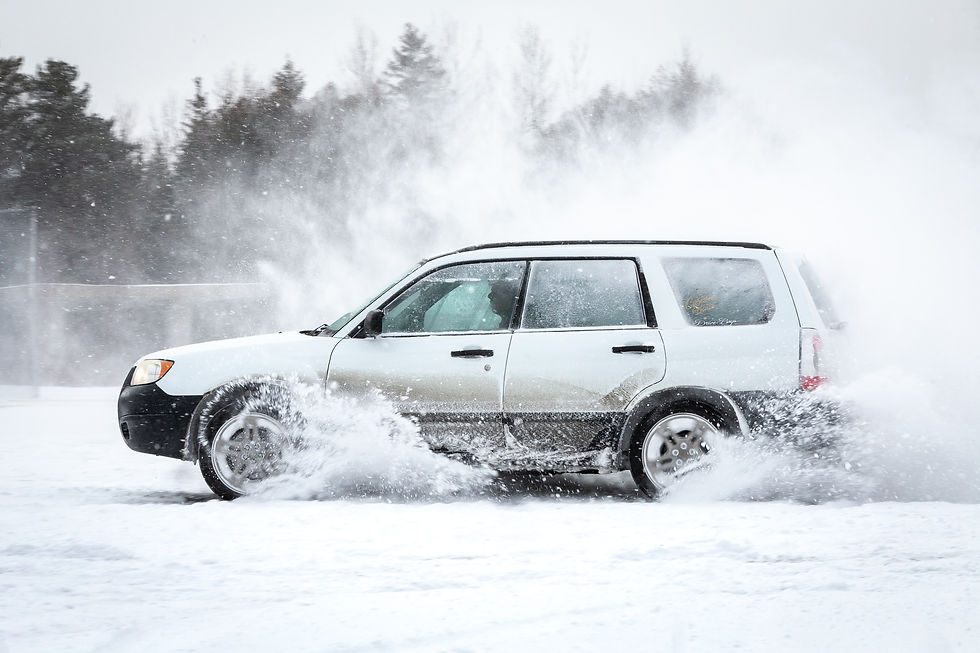
Is AWD Necessary for Snow? Start With the Physics
The first thing to understand is what AWD actually does.
An all-wheel-drive system can send engine or motor torque to more than one axle, allowing additional tires to help move the vehicle forward when traction is limited. That can be extremely useful when accelerating from a snow-covered intersection, climbing a slippery driveway, or pulling away on an untreated road.
But acceleration is only one part of winter driving.
Every vehicle also has to brake.
Every vehicle has to turn.
And when you brake or change direction, your tires become enormously important because they provide the contact between the vehicle and the pavement.
Bridgestone summarizes the distinction clearly: AWD may help a vehicle move through snow, but it offers little advantage for turning and braking compared with a two-wheel-drive vehicle running similar tires. Michelin likewise explains that AWD improves acceleration traction while braking and cornering remain fundamentally dependent on tire grip.
NHTSA also notes that winter tires are more effective than all-season tires in deep snow.
This creates one of the most important winter-car principles:
AWD helps you use available traction to move. Tires determine much of how much traction is available in the first place.
That is why a carefully chosen front-wheel-drive car on appropriate winter tires can sometimes be a more rational winter setup than an AWD vehicle on tires poorly suited to the conditions.
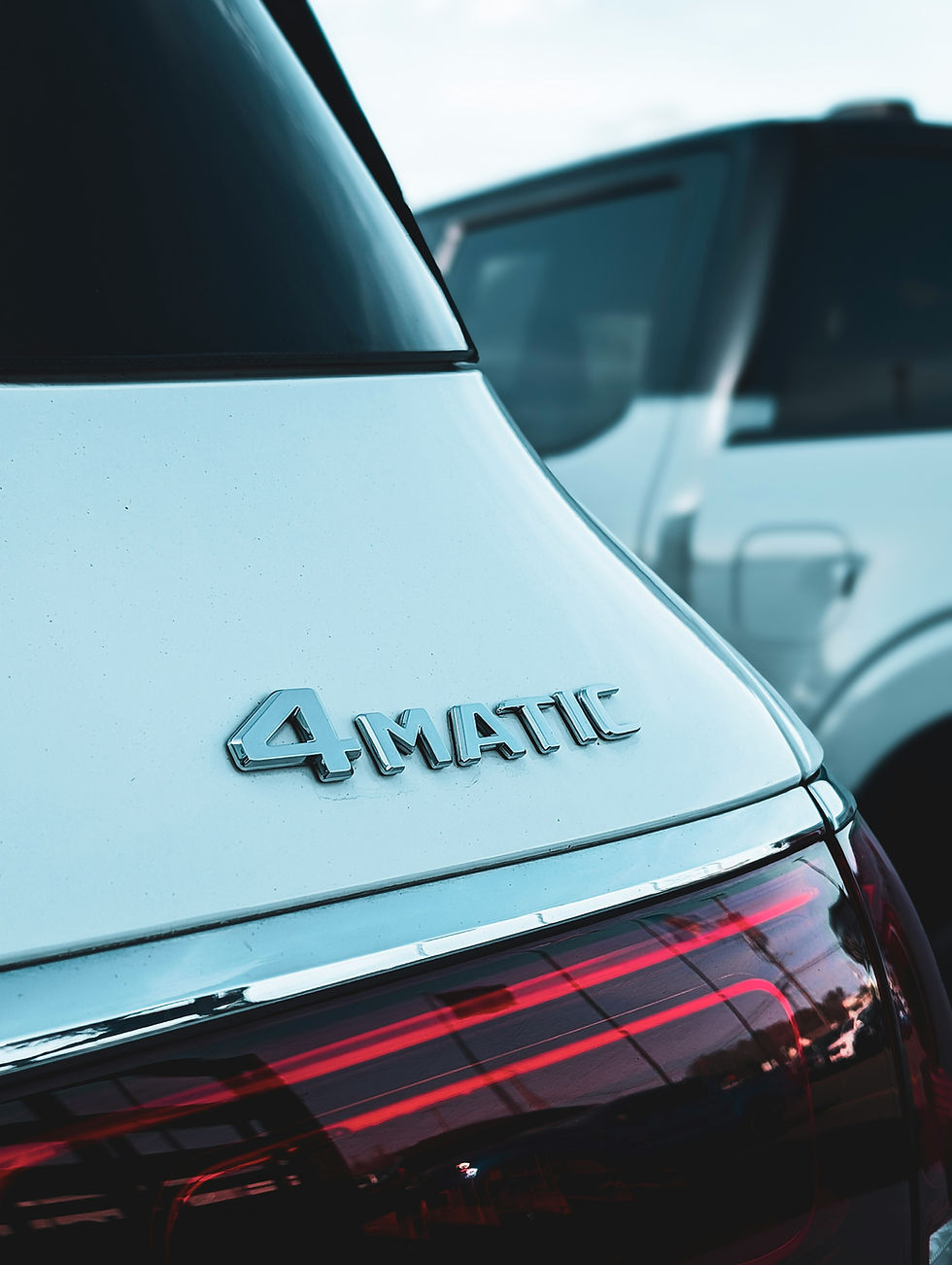
The badge on the trunk tells only part of the story.
The Question Buyers Usually Ask Is Too Simple
Imagine two drivers.
One lives outside Minneapolis. Their commute begins before roads are always fully cleared. They routinely encounter packed snow, freezing temperatures, unplowed residential streets, and a steep driveway.
The other lives in suburban New Jersey. They work remotely during major storms, drive primarily on heavily traveled roads, and encounter meaningful accumulated snow only occasionally.
Both may search:
“Is AWD necessary for snow?”
But they should not necessarily receive the same recommendation.
The Minnesota driver may reasonably prioritize AWD very highly.
For the New Jersey driver, AWD might still be desirable—but perhaps not at the expense of buying a newer vehicle, better tires, lower mileage, or a more affordable trim.
This is the problem with feature-first shopping.
People often decide they “need AWD” before defining what winter actually means in their lives.
At WhatCarFitsMe, we would rather reverse the process.
First understand the life.
Then choose the machine.
AWD Is Most Valuable When Snow Is a Mobility Problem
AWD becomes increasingly compelling when winter weather regularly threatens your ability to get where you need to go, rather than merely making the drive inconvenient.
Think about the situations where getting stuck matters.
A physician who must reach a hospital during a storm has a different mobility requirement from someone who can postpone a grocery run.
A family living at the top of a steep private road has different needs from a family living two blocks from a regularly plowed arterial.
A skier who spends winter weekends reaching mountain trailheads has different needs from someone whose SUV never leaves a metropolitan highway.
AWD begins to make stronger practical sense when several of these conditions overlap:
frequent snowfall or persistent winter weather;
steep roads, hills, or driveways;
rural or secondary roads that may be cleared slowly;
regular mountain travel;
early-morning or late-night driving before road treatment;
work obligations that make staying home unrealistic;
frequent travel through slush, packed snow, or changing road surfaces.
Under those conditions, the additional traction available during acceleration can become genuinely useful rather than merely comforting.
But notice what is absent from that logic.
We did not say, “You live somewhere it snows, therefore buy AWD.”
Geography alone is not enough.
Exposure is what matters.
Sometimes the Better Winter Upgrade Is Four Better Tires
This is where purchasing psychology becomes interesting.
AWD is visible.
It appears on the window sticker. It appears in the vehicle description. A salesperson can point to it. Owners can tell friends their crossover has it.
Tires are less emotionally satisfying.
Few people proudly announce that they selected a carefully researched winter compound.
Yet that less glamorous decision can have enormous consequences.
NHTSA states that winter tires are more effective than all-season tires in deep snow, while Michelin explains that winter-specific compounds and tread designs are intended to remain effective in cold conditions and improve grip on snow and ice.
That means a buyer with a limited budget should avoid thinking of winter preparation as:
AWD or nothing.
The real hierarchy might be:
good tires → adequate tread → appropriate vehicle → appropriate drivetrain → good driving behavior.
The order will vary by use case, but the point remains: winter performance is a system.
A neglected AWD crossover with worn tires is not magically winter-ready because all four wheels can receive power.
The Most Dangerous Thing AWD Can Give You Is Confidence
There is another reason this conversation matters.
AWD can make poor conditions feel less severe than they really are.
You press the accelerator.
The vehicle moves confidently.
There is little wheelspin.
Everything feels composed.
That experience can encourage the driver to believe the road has more grip than it actually does.
Then comes a sharp curve.
Or a stopped vehicle.
Or black ice approaching an intersection.
The AWD system that helped the vehicle accelerate cannot create extra braking friction where the tires do not have it.
Michelin explicitly warns that AWD improves the ability to accelerate in snow but does not itself improve stopping or turning grip.
That does not make AWD dangerous.
It means confidence must remain proportional to conditions.
A winter-capable vehicle should make you more prepared, not more aggressive.
That is a distinction sophisticated buyers understand.
When Front-Wheel Drive May Be Completely Sensible
Front-wheel drive remains one of the most rational configurations for many buyers.
For someone who lives in a city or suburb where major roads are plowed quickly, drives relatively flat routes, can avoid traveling during severe storms, and uses appropriate tires, FWD may provide all the winter capability the lifestyle realistically requires.
Historically, front-drive layouts have also benefited from locating substantial drivetrain mass over the driven wheels, which can assist traction when accelerating. Manufacturer technical material archived by NHTSA has noted this general advantage.
More importantly, choosing FWD can sometimes allow the same budget to purchase a better overall car.
Suppose your realistic vehicle budget is $25,000.
You may face a choice between:
a newer, lower-mileage FWD vehicle with strong service history, or
an older, higher-mileage AWD version selected primarily because AWD feels mandatory.
The second vehicle is not automatically the smarter winter purchase.
Mileage, maintenance history, tire condition, brakes, suspension health, battery condition, and general reliability still matter.
The drivetrain is one variable among many.
This is exactly where WhatCarFitsMe differs from feature filters.
We are not trying to find a car that checks the largest number of boxes.
We are trying to identify the car whose tradeoffs make the most sense together.
AWD Necessary for Snow? Your Budget Gets a Vote
Automotive decisions become worse when buyers treat desired features as independent of financial reality.
They are not.
Every dollar allocated toward one specification is a dollar unavailable somewhere else.
Depending on the vehicle, choosing AWD may mean accepting:
an older model year;
more mileage;
a lower trim;
less remaining warranty;
higher purchase price;
different fuel-efficiency characteristics;
additional drivetrain complexity;
or simply a larger monthly payment.
None of those consequences automatically makes AWD a poor choice.
But they belong in the decision.
Consider a buyer comparing two used vehicles.
Vehicle A is AWD but significantly older and has accumulated substantially more mileage.
Vehicle B is FWD, newer, cleaner, better documented, and leaves enough money in the budget for a dedicated winter tire setup.
If that buyer drives mostly plowed suburban roads and can avoid the worst storms, choosing Vehicle A solely because “you need AWD in snow” may be solving the wrong problem.
A drivetrain should never be evaluated outside the vehicle attached to it.

Comparison Matrix: Which Winter Buying Path Fits?
Buying path | Winter advantage | Main compromise | Best suited to |
FWD + quality all-season tires | Simple, affordable, capable in light winter conditions | Less acceleration traction in deeper snow | Urban/suburban drivers with well-cleared roads |
FWD + winter tires | Strong tire grip for braking, cornering and snow conditions | Seasonal tire cost and storage | Budget-conscious drivers facing meaningful winters |
AWD + all-season tires | Improved ability to accelerate on slippery surfaces | AWD does not replace winter tire grip | Drivers seeing moderate snow and mixed conditions |
AWD + winter tires | Most complete conventional winter setup | Higher purchase and ownership cost | Frequent snow, hills, mountains, essential travel |
AWD SUV/crossover + winter tires | Traction plus useful clearance and winter versatility | Cost, size, efficiency and complexity | Rural roads, deep snow, ski travel, difficult access |
There is no universally correct row.
That is precisely the point.
The correct answer depends on your winter, not someone else's.
Ground Clearance Can Matter Almost as Much as Driven Wheels
There is another variable commonly hidden by the AWD conversation: ground clearance.
A low AWD performance sedan may distribute power to all four wheels beautifully and still struggle when accumulated snow becomes deep enough for the body or undercarriage to push through it.
Meanwhile, a crossover with more clearance may negotiate that same unplowed driveway more comfortably.
This is why serious winter matching requires understanding what kind of snow you encounter.
Are you driving on:
cold but cleared pavement?
a few inches of fresh snow?
packed snow?
deep, unplowed residential roads?
mountain access roads?
The vehicle required for each environment can be very different.
Someone commuting through plowed Chicago streets may benefit more from excellent cold-weather tires than from substantial ride height.
Someone reaching a cabin on an unmaintained road may reasonably prioritize AWD and clearance.
Buying the “best winter car” without defining the road is like buying hiking boots without knowing whether you are walking through Manhattan or the Rockies.
Reliability Still Matters More Than Winter Marketing
Snow capability feels urgent.
Reliability feels abstract.
Until the vehicle does not start at 6:15 on a freezing morning.
Winter exposes weaknesses.
A marginal battery becomes more troublesome.
Worn tires become more obvious.
Poor brakes become less forgiving.
Suspension deficiencies can compromise control.
Deferred maintenance becomes harder to ignore.
NHTSA recommends winter preparation that includes checking tires, tire pressure, battery condition, cooling systems, windshield equipment and other vehicle systems before severe weather arrives.
This reinforces one of our broader vehicle-matching principles:
Condition can matter more than configuration.
When buying used, we would generally rather see a well-maintained vehicle with documented history and sensible mileage than chase a theoretically ideal specification attached to a neglected example.
For mainstream vehicles, higher mileage may be perfectly acceptable when maintenance history, usage patterns, and mechanical condition support it.
For premium and luxury vehicles, however, the financial consequences of age, mileage and deferred maintenance can become more significant because sophisticated drivetrains, electronics, adaptive suspension systems and larger wheels may be more expensive to maintain.
That does not make premium AWD vehicles poor choices.
It means affordability should include ownership, not merely acquisition.
Be Careful Paying Extra for the First Year of Something New
Another WhatCarFitsMe principle is particularly relevant when shopping used:
Do not become so focused on finding AWD that you stop evaluating which version of the vehicle you are buying.
Major redesigns can introduce new powertrains, electronics, chassis systems, transmissions, battery architectures or AWD hardware.
That does not mean the first model year of every redesign is unreliable.
It means uncertainty is naturally greater when a design has less real-world history.
When several comparable options exist, a conservative buyer may prefer a later year within a proven generation rather than paying extra for the newest architecture simply because it looks more modern.
This matters especially when your winter vehicle is something you depend on.
Reliability is itself a form of winter capability.
The best snow vehicle in the world is not particularly useful from the service department.

What About Rear-Wheel Drive in Snow?
Rear-wheel drive deserves more nuance than its reputation usually receives.
Modern stability control, traction control and advanced tires have made contemporary RWD vehicles far more manageable than the old stereotype suggests.
But physics still matters.
A powerful rear-drive vehicle fitted with performance-oriented tires can be poorly matched to serious winter conditions, particularly if temperatures are low and snow or ice is frequent.
A RWD luxury sedan on appropriate winter tires may nevertheless serve a careful urban driver perfectly well.
Again, the answer is not hidden inside the drivetrain label.
You must evaluate:
the tires;
vehicle weight distribution;
power delivery;
ground clearance;
road conditions;
driver behavior;
and the ability to postpone travel during severe weather.
Someone driving from a heated Manhattan garage to another garage via cleared arterial roads lives a very different winter reality from someone commuting across rural Vermont before sunrise.
Same season.
Different problem.
Families Should Think About Predictability, Not Fear
Parents often approach winter vehicle shopping emotionally.
That is understandable.
When children are in the back seat, “probably adequate” feels different.
But fear can push families toward vehicles they do not actually need.
A household may stretch its budget for a large AWD SUV because it feels like the responsible choice, then live with a higher payment, more expensive tires, greater fuel consumption, or an older vehicle than necessary.
The better question is:
What makes our winter transportation reliably predictable?
For one family, that might be AWD and winter tires.
For another, it might be a newer FWD crossover with excellent tires, strong safety equipment, modest mileage, and the flexibility to remain home during major storms.
For another, ground clearance may be decisive because their neighborhood is poorly plowed.
Safety decisions improve when we define the actual failure scenario.
What are you trying to prevent?
Getting stuck?
Sliding while braking?
Failing to climb a driveway?
Being unable to reach work?
Driving through deep snow?
Once that is clear, the correct solution becomes easier to see.
Commuters Should Calculate Winter Exposure, Not Snowfall
Annual snowfall statistics can sound dramatic.
But they do not necessarily describe your driving.
What matters is how often snow remains on the road while you are driving on it.
Someone whose commute begins at 5:00 a.m. may repeatedly encounter untreated roads.
Someone driving the same route at 9:30 a.m. may experience an entirely different surface after plows, salt and traffic have done their work.
Shift workers, emergency personnel, airline employees, healthcare workers and others who cannot choose when they travel should therefore place greater value on winter mobility.
Remote workers may have a different equation.
This is why WhatCarFitsMe looks beyond generic geography.
The decision should reflect actual ownership behavior.
Not just ZIP code.
Luxury Buyers Have a Different Winter Tradeoff
Luxury buyers often encounter another complication.
Many high-performance luxury vehicles are available with AWD, but drivetrain alone does not determine winter suitability.
Wheel and tire packages matter enormously.
A vehicle configured around large wheels and warm-weather performance tires may require an additional seasonal tire strategy even though AWD is standard.
NHTSA distinguishes summer tires from winter and all-season tires, noting that summer tires are not designed for snow, ice or below-freezing operation.
For a premium buyer, therefore, the winter question may not be:
“Does it have AWD?”
It may be:
“What tires are installed?”
“What replacement tires fit these wheels?”
“Would a separate winter wheel set make sense?”
“How much ground clearance does the vehicle have?”
“What will seasonal ownership actually cost?”
This is the kind of detail that turns a luxury purchase into a luxury ownership experience.
A beautiful vehicle that creates anxiety four months of the year is not particularly luxurious.

If You Drive an EV or Hybrid, the Same Physics Still Applies
Electrification does not change the basic traction equation.
An electric or hybrid vehicle may have sophisticated torque management and extremely responsive traction control, and dual-motor EVs can distribute propulsion remarkably quickly.
But braking and cornering still depend heavily on the relationship between tire and road.
Michelin makes the same distinction for electrified vehicles: AWD can improve acceleration traction, while braking and cornering on snow and ice still depend on the tires.
EV buyers should therefore resist another specification trap.
“Dual motor” does not mean “winter solved.”
Tire selection, clearance, winter range expectations, charging routine and driving conditions should all be considered together.
How to Decide Whether AWD Is Worth It for You
Instead of asking whether AWD is objectively good, ask whether it solves a problem you actually experience.
Start with five questions.
How often must I drive before roads are cleared?
If the answer is frequently, AWD becomes more valuable.
Do I regularly face hills, steep driveways or mountain roads?
If yes, additional acceleration traction may justify the cost.
Can I stay home during major storms?
Someone with flexibility has less need to engineer a vehicle around worst-case conditions.
Would buying AWD force me into an older, higher-mileage or less reliable vehicle?
If yes, reconsider the trade.
Am I willing to invest in appropriate tires regardless of drivetrain?
If not, you may be focusing too heavily on the most marketable part of winter capability.
That last question may be the most important.
So, Is AWD Necessary for Snow?
No—not universally.
AWD is useful in snow.
Sometimes extremely useful.
For drivers facing frequent snowfall, steep terrain, poorly maintained roads, mountain travel or unavoidable winter commuting, it may be one of the highest-priority features on the shopping list.
But millions of drivers can operate successfully in winter without it, particularly when driving front-wheel-drive vehicles with appropriate tires on regularly maintained roads.
The mistake is not choosing AWD.
The mistake is believing AWD finishes the winter-safety conversation.
It does not.
A good winter vehicle is the result of a complete match between:
tires + drivetrain + ground clearance + vehicle condition + reliability + road conditions + driver behavior + budget.
Remove enough of those pieces and even an expensive AWD vehicle can become a poor fit.
Combine them intelligently and a seemingly less impressive vehicle can become remarkably capable.
The Best Car for Snow Is the One That Fits the Rest of Your Life
Cars are rarely purchased for one storm.
You will drive your next vehicle on warm spring mornings.
Through summer traffic.
On family trips.
To work.
To restaurants.
Through airport parking garages.
Across school pickup lines.
You will insure it every month.
Fuel or charge it.
Replace its tires.
Maintain it.
Eventually repair it.
Eventually sell it.
That is why optimizing an entire vehicle purchase around the handful of worst driving days of the year can sometimes create compromises during the other 350.
The correct winter decision balances both realities.
You need enough capability for the difficult days without buying unnecessary capability at the expense of the life you live every day.
That principle is central to WhatCarFitsMe.
We do not believe the smartest car is always the vehicle with the most equipment, the largest number of driven wheels, the highest horsepower, or the longest specification sheet.
The smartest car is the one whose compromises align quietly with your reality.
Your budget.
Your mileage.
Your roads.
Your family.
Your tolerance for maintenance.
Your expectations.
Your winter.
Because ultimately, “is AWD necessary for snow” is not really a drivetrain question.
It is a question about you.

Find the Winter Vehicle That Actually Fits You
If you are asking is AWD necessary for snow, do not stop at the AWD filter.
Use WhatCarFitsMe to compare vehicles through the things that matter after the test drive: realistic budget, ownership patterns, powertrain, reliability expectations, mileage, lifestyle requirements and the compromises you are actually willing to make.
Find the car that fits your winter—and the other eleven months of your life.
FAQ
Is AWD necessary for snow?
No. AWD can improve traction when accelerating on slippery surfaces, but it is not universally necessary for winter driving. Road conditions, terrain, tires, ground clearance and how frequently you must drive during storms should all influence the decision. Tires remain critical because braking and cornering depend on available tire grip.
Is FWD or AWD better in snow?
AWD generally provides an advantage when accelerating on snow because more wheels can contribute propulsion. However, a FWD vehicle equipped with appropriate winter tires can be a very effective winter setup. Which is better depends on snowfall frequency, hills, road clearing, tire choice and driving requirements.
Do I need winter tires if I have AWD?
AWD should not be viewed as a substitute for winter tires when severe winter conditions justify them. AWD assists acceleration, whereas tire grip remains fundamental to braking and cornering. Michelin and Bridgestone both emphasize this distinction.
Is AWD better than winter tires?
They solve different problems. AWD primarily helps distribute propulsion during acceleration. Winter tires are designed to improve grip in cold, snowy and icy conditions and affect acceleration, braking and cornering. For serious winter environments, AWD combined with winter tires can provide a more complete solution.
Is an AWD SUV necessary for snow?
Not necessarily. An AWD SUV can be useful when snow is deep, roads are poorly cleared, additional ground clearance is needed, or travel cannot be postponed. Drivers using well-maintained urban or suburban roads may be adequately served by smaller FWD or AWD vehicles with suitable tires.
What matters most when buying a car for winter?
Evaluate tires, drivetrain, ground clearance, reliability, vehicle condition, road-clearing patterns, terrain and how often you must travel during severe weather. The best winter vehicle is the one whose complete configuration matches your real driving environment rather than simply having AWD.


