Best Car for Ski Trips: What Snow Drivers Actually Need

Updated: Sep 21
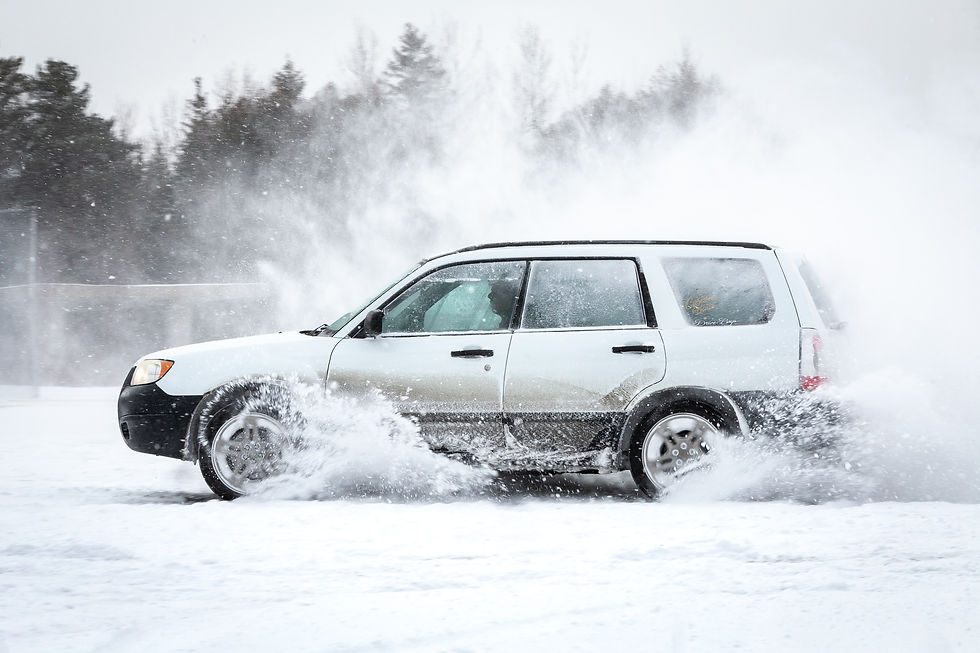
The best car for ski trips is rarely the biggest SUV in the parking lot. It is the vehicle that makes a cold, early, equipment-heavy mountain day feel ordinary: easy to load, secure on the approach road, comfortable when everyone is wearing layers, predictable when the weather turns, and still sensible on a Tuesday in April.
That distinction matters because ski-trip shopping invites emotional overbuying. One memorable drive through falling snow can make a buyer believe they need three rows, aggressive tires, maximum ground clearance and a rugged badge. But most owners spend far more time commuting, parking, fueling, charging, servicing and living with the vehicle than climbing a snow-covered access road.
At WhatCarFitsMe, we would rather solve the whole ownership pattern than optimize for the most dramatic two hours of it. A genuine ski car is not a costume for winter. It is a balanced tool: proper tires, useful traction, enough clearance, intelligently shaped cargo space, dependable cold-weather systems and a purchase price that leaves room for the equipment that actually improves winter capability.
Table of Contents

The Best Car for Ski Trips Starts With the Contact Patch
NHTSA tire guidance confirms that winter tires are more effective than all-season tires in deep snow, while summer tires are not designed for freezing conditions, snow or ice. AAA winter-traction guidance makes a complementary point: AWD and 4WD can help distribute power, but they cannot create grip that the tires do not have, particularly when braking or turning.
This is why we would often prefer a modest AWD crossover on appropriate winter tires over a larger, more expensive SUV wearing tires chosen mainly for quietness, appearance or year-round convenience.
AWD can help you get moving. Tires help determine whether the vehicle can accelerate, steer and stop with confidence. Electronic stability control, ABS and modern traction systems then work with the grip available. The system is only as strong as the part touching the pavement.
For frequent mountain driving, budget for winter capability before spending for winter image.
The Mountain-Day Mismatch: Do Not Buy 365 Days of Car for 12 Days of Snow
The most useful question is not, “What handles snow best?” It is, “How often will snow materially change what this vehicle needs to do?”
A buyer in Denver who skis most weekends has a different requirement from a Manhattan couple making three Vermont trips per season. A family carrying four sets of skis, helmets, boots and luggage has a different problem from a solo skier with a roof rack. Someone driving maintained resort highways has a different risk profile from an owner regularly reaching cabins on steep, unplowed roads.
The expensive mistake is optimizing the purchase around the peak-use moment while ignoring the base-use reality. If 90% of your miles are urban, an oversized body can cost you every day through parking difficulty, fuel or energy consumption, tires, insurance and simple friction. If winter mountain travel is weekly, however, additional clearance, cargo flexibility and a stronger AWD case can be rational rather than indulgent.
WhatCarFitsMe treats trip frequency as a design input. The right answer changes when skiing moves from “occasion” to “lifestyle.”
Ground Clearance: Enough Is a Strategy
Ground clearance matters when snow accumulates, plow berms form at entrances or the final road to a rental house is not well maintained. But more is not automatically better.
Extra height can mean a higher step-in, more body movement, larger tires and a less car-like daily experience. For resort-focused driving, the goal is usually adequate clearance, not maximum clearance. If your routine genuinely includes deep, unplowed access roads, remote trailheads or a steep mountain property, then clearance becomes a primary requirement.

Cargo Shape Matters More Than the Brochure Number
Ski equipment exposes a weakness in conventional cargo measurements: volume does not tell you whether long, awkward, wet objects fit elegantly.
A vehicle can advertise generous cargo capacity and still be inconvenient if the rear seat does not split usefully, the load floor is short, the opening is narrow or folding one seat eliminates a passenger position you need. Skiers should care about length, pass-through flexibility, hatch shape and the ability to isolate wet equipment.
For two people, a wagon or compact crossover with a folding rear section may be enough. For four adults with boots and overnight bags, a midsize crossover can make the loading problem far easier. Families with child seats need to test the exact seating configuration because “fold the rear seat” may not be a practical instruction once the seats are occupied.
A roof box can solve the length problem, but it is not free capacity. DOE fuel-economy guidance explains that rooftop cargo can materially reduce fuel economy at highway speeds because of aerodynamic drag. The exact impact depends on vehicle, carrier and speed, but the direction is clear. That makes internal cargo geometry more valuable than it first appears.
What Snow Drivers Actually Need Inside the Cabin
Winter suitability is also about what happens before the wheels turn. Boots are bulky, windows fog, snow melts onto the floor and everyone wants heat quickly. For the broader seasonal checklist, WCFM's winter preparation guidance is a useful companion to this ski-specific decision framework.
Useful features are often unglamorous: effective defrosting, heated seats and steering wheel, glove-friendly controls, good visibility, durable floor protection and rear doors that remain easy to use in winter clothing.
NHTSA winter-driving guidance notes that tire pressure falls as outside temperature drops and recommends checking tires when cold and before long trips. On a ski morning, practical ease is luxury.
AWD, 4WD or Front-Wheel Drive?
For most ski travelers using paved roads to established resorts, AWD is the easiest all-around solution. It requires little driver intervention and can improve traction while accelerating when conditions vary wheel to wheel.
Traditional 4WD becomes more compelling when the vehicle routinely encounters deeper snow, rough access roads, very steep grades or conditions where low-speed traction is more important than everyday efficiency and refinement.
Front-wheel drive should not be dismissed. For an occasional skier on well-maintained routes, a front-wheel-drive vehicle on proper winter tires can be a more rational ownership choice than buying a larger AWD vehicle solely for a few trips. For a deeper treatment of that tradeoff, see whether AWD is actually necessary for snow. The limitation is not that FWD is automatically unsafe; it is that the full use case may offer less traction margin when climbing, starting on slippery grades or dealing with deeper accumulation.
The correct drivetrain is a frequency decision, not a personality test.
Segment Choices for the Best Car for Ski Trips
A compact AWD crossover is the default for many buyers because it balances traction, clearance, hatchback flexibility and manageable dimensions. An AWD wagon is the underappreciated alternative, often with easier roof access, a lower loading height and excellent long-item practicality.
A midsize AWD SUV earns its footprint when four or five passengers and their luggage use the extra room. A 4WD SUV or pickup is more specialized: excellent when access roads are routinely difficult, unnecessary when rugged capability is mostly aspirational.
An EV can also work for ski travel, but buyers should evaluate the actual resort route, cold-weather range margin and charging availability rather than treating the headline range figure as the whole answer. The U.S. Department of Energy's Alternative Fuels Data Center notes that extreme temperatures, significant inclines and cabin heating can all affect EV energy consumption and driving range.
Comparison Matrix: Which Buying Path Fits?
Buying path | Best for | Winter strengths | Everyday compromise | WhatCarFitsMe view |
Compact AWD crossover | Couples, small families, frequent resort trips | Useful traction, clearance, hatch flexibility | Less room for four adults plus gear | Best default for balanced ownership |
AWD wagon | Highway-focused skiers, urban owners | Low loading height, long cargo floor, stable road manners | Less clearance than many SUVs | Excellent when roads are usually maintained |
Midsize AWD SUV | Families, group trips, luggage-heavy weekends | More cabin and cargo margin | Higher purchase and running costs | Worth it when space is regularly used |
FWD car/crossover + winter tires | Occasional skiers, tighter budgets | Strong tire-led winter performance on maintained roads | Less launch traction and clearance | Smart if snow trips are infrequent |
4WD SUV/pickup | Remote cabins, deep snow, rough access | Clearance and low-speed traction capability | Size, efficiency, cost, daily maneuverability | Buy only when terrain justifies it |
Budget Fit: Leave Money for the Winter System
A buyer with a fixed budget should not spend every available dollar on the vehicle itself.
If winter tires, a second set of wheels, a quality roof box, crossbars, rubber mats, maintenance and a pre-trip inspection are part of the real ownership requirement, those costs belong in the purchase decision from day one.
A less expensive trim with sensible wheel sizes may be a better ski vehicle than the premium appearance package. Large wheels with low-profile tires can look impressive but may reduce sidewall compliance and increase replacement cost. Performance-oriented tires supplied on some upscale trims may also be poorly aligned with cold-weather use.
We would rather see a buyer choose a well-maintained vehicle comfortably inside budget and equip it correctly than stretch for a prestige badge and postpone the tires, service or repairs that make the trip dependable. That is budget-fit reasoning: capability after purchase, not merely affordability at signing.
Used Cars: Reliability Matters More When the Weather Is Bad
A ski-trip car does not need to be new. It does need to be trustworthy.
For a used vehicle, service history should carry more weight than an attractive odometer reading. Mileage must be read alongside age, annual use, maintenance discipline, drivetrain complexity and expected future use. Luxury and performance vehicles can also make deferred maintenance materially more expensive than on simpler mainstream vehicles.
We also favor caution around the first model year of a major redesign when predictability is a priority. A later production year may offer more real-world history. For mountain travel, boring maintenance is a premium feature.
Do Not Let One Snowstorm Choose Your Car
Purchase psychology becomes unusually visible in winter.
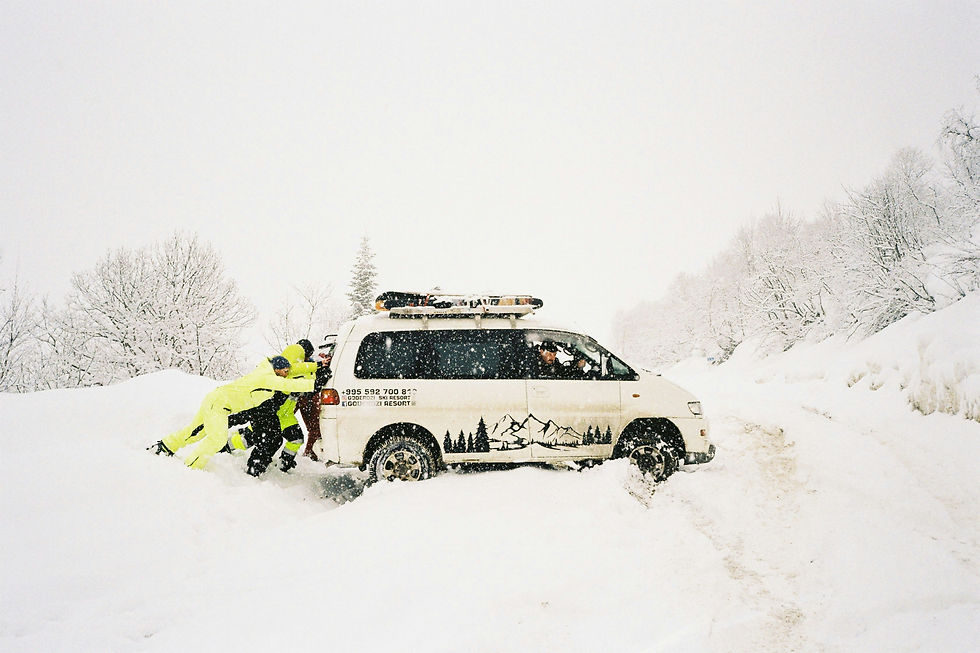
People overweight vivid experiences. A frightening slide, a chain-control delay, a stuck rental car or a stormy weekend can make “never again” feel like a buying strategy. The emotional response is understandable, but the resulting vehicle can be oversized for the next five years.
The opposite bias is just as risky. A driver who has completed ten easy ski trips may conclude that winter conditions are always manageable and underinvest in tires or route flexibility.
The better decision uses scenarios rather than memories. Ask what weather would make you cancel, how often you travel before roads are treated, whether the lodging sits on a steep private road, how many people really travel, and where the skis go with every seat occupied. Those answers reveal how much winter capability you actually need to own.

Match the Car to the Other 95% of Your Life
The best car for ski trips must still fit your commute, garage, family, budget and annual mileage.
If you drive 18,000 highway miles a year and ski six weekends, highway comfort and operating cost deserve more weight than maximum winter capability. If mountain roads are part of every week, reverse that priority. City parking, young-family access and luxury preferences still matter, but only when they remain compatible with the conditions you actually drive.
This is where generic “best ski cars” lists fail. They rank vehicles. They do not rank your constraints. WhatCarFitsMe starts with the constraints.
A Better Ski-Car Test Drive
Do not test only for acceleration and infotainment. Open the hatch in a tight space. Fold the exact seat you would use for skis. Sit in the rear wearing a winter coat. Check whether the roof is easy to reach, whether the tire size is sensible and whether the climate controls work with gloves. Confirm the owner’s-manual rules for chains or other traction devices.
Then imagine arriving after four hours of slush. The best vehicle is the one that still seems easy.
The WhatCarFitsMe Principle: Buy Confidence, Not Excess
Snow driving tempts buyers to shop for maximum capability. We prefer appropriate capability.
The most realistic ski vehicle might be an AWD crossover with dedicated winter tires. It might be a lower wagon that is easier to load. It might be a midsize SUV because four people truly use the space. It might even be a front-wheel-drive car with excellent winter tires because the owner skis twice a year and stays on maintained roads.
There is no prestige hierarchy in a good match. There is only fit.
That is the purpose of WhatCarFitsMe: to connect budget, mileage, reliability expectations, passenger needs, road conditions, cargo behavior and everyday life before a buyer becomes emotionally attached to a body style or badge.
If you are searching for the best car for ski trips, do not start with a list of vehicles built for someone else. Start with your real winter, your real routes and your real life. The same fit-first philosophy is explained more broadly in How to Find the Best Car for You. Compare the vehicles that fit those conditions without oversizing the rest of your year.
Frequently Asked Questions
Do I need AWD for ski trips?
Not necessarily. AWD is useful for accelerating on slippery roads and climbing snow-covered grades, but it does not replace tire grip. For occasional trips on maintained roads, a front-wheel-drive vehicle equipped with appropriate winter tires may be entirely reasonable. Frequent mountain drivers may find AWD worth the additional cost and complexity.
Are winter tires more important than AWD for skiing?
Tires should be treated as fundamental. NHTSA states that winter tires are more effective than all-season tires in deep snow, while AAA emphasizes that AWD cannot compensate for insufficient grip when braking or turning. AWD and proper winter tires work particularly well together, but AWD alone should not be treated as a complete winter solution.
How much ground clearance do I need for ski trips?
There is no universal number. Drivers mainly using plowed highways and resort parking areas typically need reasonable rather than extreme clearance. Greater clearance becomes more valuable when you regularly encounter unplowed roads, deep accumulation, snowbanks, remote trailheads or steep private access roads.
Is an SUV or wagon better for ski trips?
It depends on the ownership pattern. SUVs generally offer more clearance and an elevated seating position. Wagons can provide excellent long-item cargo space, lower loading heights, easier roof access and more car-like road manners. Skiers who primarily use maintained highways should not automatically assume the SUV is the better fit.
Can an electric vehicle be good for ski trips?
Yes, provided the route works for it. Cold temperatures, cabin heating, highway speeds, elevation changes and cargo can affect energy consumption, so buyers should evaluate winter range conservatively and examine charging options along their actual mountain route rather than relying solely on the advertised range.
Should I buy a larger vehicle just because I ski?
Usually not unless passenger, cargo or road-access requirements repeatedly justify the additional size. A vehicle used for ten ski weekends must still serve the rest of the year. WhatCarFitsMe therefore weighs ski-trip frequency alongside commuting, parking, budget, annual mileage, passenger needs and total ownership costs.