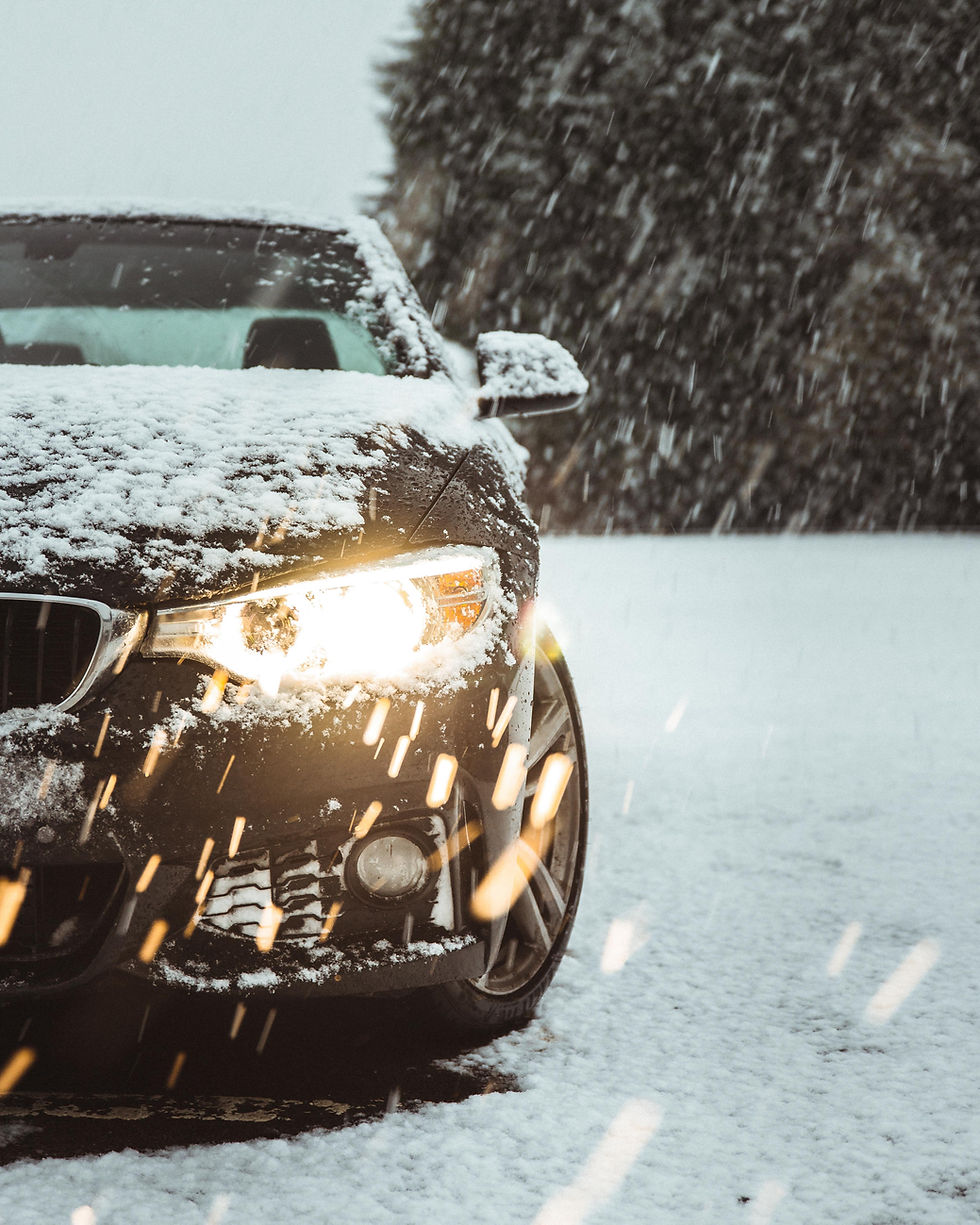
Car Preparation for Winter: Choose a Car That Fits

Updated: Sep 18
The first truly cold morning rarely feels dramatic. You open the door, settle into the driver’s seat, and expect the car to behave exactly as it did yesterday. Then the starter turns more slowly. A tire-pressure warning appears. The windshield washer produces a weak stream—or nothing at all. Your normal commute suddenly feels less predictable.
That moment reveals something important: car preparation for winter is not simply a seasonal maintenance ritual. It is a test of whether your vehicle, your budget, your routines, and your expectations genuinely fit one another.
Many drivers prepare for winter by purchasing an ice scraper, checking the battery, and perhaps installing new tires. Those steps matter. But winter readiness begins earlier, sometimes before the vehicle is even purchased. The right question is not merely, “What should I do to my car before it gets cold?” It is also, “How much winter inconvenience, expense, uncertainty, and compromise am I realistically prepared to own?”
At WhatCarFitsMe, we believe the best vehicle is not the one that performs impressively under ideal conditions. It is the one that remains sensible when life becomes less convenient: when temperatures fall, roads deteriorate, daylight disappears earlier, and a simple trip carries more risk than it did in July.
That is why winter preparation should influence not only how you maintain a vehicle, but how you choose one.
Table of Contents

Car preparation for winter starts with an honest life audit
A generic winter checklist can tell you to test the battery, inspect the tires, replace worn wipers, verify antifreeze protection, and assemble an emergency kit. It cannot tell you whether your current car is fundamentally mismatched with your winter life.
That requires a more personal assessment.
Where is the car parked overnight? How frequently are roads cleared where you live? Do you leave home before municipal plows arrive? Are your trips mostly short urban journeys, long highway commutes, steep rural roads, or school runs with children? Can you delay a journey during severe weather, or does your job require you to travel regardless?
These details matter more than the vehicle image you prefer.
A remote worker with a garage and the freedom to postpone travel may be perfectly comfortable with a front-wheel-drive sedan and a strong set of winter tires. A healthcare worker leaving home at 5:00 a.m. in an area with inconsistent snow removal may reasonably value ground clearance, heated visibility features, predictable traction, and a more conservative ownership strategy.
Neither buyer is inherently more sensible. Their needs are different.
Winter exposes the distance between the life imagined during a test drive and the life actually lived after purchase. A vehicle that feels refined on a dry dealership route may become frustrating when its low-profile tires meet potholes, its door handles freeze, its ground clearance proves inadequate, or its cabin takes too long to become comfortable during repeated short trips.
The purpose of realistic vehicle matching is not to eliminate every inconvenience. It is to choose the inconveniences you can afford, understand, and tolerate.
Winter readiness is more than all-wheel drive
All-wheel drive is one of the most emotionally powerful phrases in winter car shopping. It suggests security, capability, and preparedness. It can absolutely improve a vehicle’s ability to distribute power and move away from a stop on slippery surfaces. But it does not create unlimited grip, shorten every stopping distance, or replace appropriate tires.
Braking, steering, acceleration, and stability all depend heavily on the contact between the tires and the road. A sophisticated drivetrain cannot recover traction that the tires cannot provide.
This is why a modest front-wheel-drive car on suitable winter tires may be more reassuring in many conditions than a heavier all-wheel-drive vehicle on worn or inappropriate tires. The comparison is not universal—vehicle design, road conditions, tire quality, driver behavior, and ground clearance all matter—but it illustrates a crucial principle:
Traction technology should complement good tires, not distract from them.
The National Highway Traffic Safety Administration advises drivers to inspect tire tread and sidewalls, maintain the manufacturer-recommended inflation pressure, and check the spare where one is provided. It notes that tires should have at least 2/32 of an inch of tread, although drivers facing regular snow and slush may reasonably choose a more conservative replacement threshold rather than treating the legal or minimum figure as an ideal target.
Cold weather also affects inflation pressure. AAA guidance explains that tire pressure typically falls by roughly one PSI for every 10°F decline in temperature, which is why a pressure warning often appears after the season’s first major cold front. Pressure should be checked when the tires are cold and adjusted according to the vehicle manufacturer’s specification, normally found on the driver’s door jamb—not according to the maximum pressure printed on the tire sidewall.
For buyers, this creates an ownership question that rarely appears in glossy vehicle comparisons: what will a complete, high-quality set of appropriate tires cost in the size fitted to the car?
Large wheels and wide, low-profile tires can look excellent in a showroom. They can also increase replacement costs, reduce the amount of sidewall protecting the wheel from winter potholes, and make finding a suitable winter package more expensive. The premium trim may therefore carry a seasonal cost that the monthly payment does not reveal.
The realistic buyer prices the tires before falling in love with the wheels.
Tires are not accessories; they are part of the vehicle decision
The phrase “all-season” is often interpreted as meaning equally optimized for every season. In reality, tire choices involve compromises among dry handling, heat resistance, cold-weather flexibility, snow traction, tread life, road noise, comfort, and cost.
Drivers in relatively mild climates may be well served by quality all-season tires, particularly when freezing temperatures and snow are occasional. Drivers facing sustained cold, frequent snow, steep roads, or limited flexibility may benefit from dedicated winter tires or properly certified all-weather alternatives, depending on local conditions and usage.
The correct answer is not determined by aspiration. It is determined by exposure.
Ask:
How many winter days genuinely create difficult driving conditions?
Are those days optional travel days or mandatory ones?
Can a second set of wheels and tires be stored?
Is seasonal installation affordable?
Will the vehicle be retained long enough to justify the investment?
Is the selected wheel size common and reasonably priced?
Does the driver understand that winter tires still require cautious braking and speed?
Winter tires are not permission to drive normally on abnormal roads. They are an additional margin of capability.
For a budget-conscious buyer, spending slightly less on the vehicle and preserving money for good tires, a battery, preventive service, and an emergency reserve may create a more dependable ownership experience than stretching for a more expensive all-wheel-drive trim and then postponing necessary maintenance.
This is the type of trade-off WhatCarFitsMe is designed to clarify. We do not view the purchase price as the complete cost of suitability. We consider what the vehicle asks of the owner after the excitement of purchase has passed.

The battery problem begins before the car refuses to start
A weak battery often gives subtle warnings: slower cranking, dimmer lights during startup, intermittent electronic behavior, or increasingly reluctant starts after cold nights. Many drivers dismiss these symptoms because the car still starts—until it does not.
Cold weather reduces a conventional battery’s available performance while the engine may require more effort to turn. NHTSA therefore recommends having the battery, charging system, belts, and cooling system checked as part of winter preparation.
The ownership lesson is broader than “test the battery.”
A vehicle with uncertain maintenance history, extended periods of inactivity, many short trips, or a heavily accessorized electrical system may demand more attention. Short journeys can be especially relevant because the battery may not always recover fully from repeated starts, particularly when lights, heated seats, window defrosters, blowers, and other electrical systems are operating.
For used-car buyers, the battery’s age and condition should be part of the pre-purchase discussion, but it should not be treated in isolation. Ask whether the car starts cleanly from cold, whether warning lights are present, whether the charging system has been tested, and whether service records indicate recurring electrical complaints.
Avoid becoming overly reassured by a newly installed battery. Sometimes it represents sensible maintenance. Sometimes it was installed shortly before sale because the previous battery repeatedly discharged. The surrounding evidence matters.
Real automotive advice does not turn one component into a verdict. It evaluates patterns.
Fluids, visibility, and the ordinary systems that become critical
Winter rarely creates entirely new mechanical weaknesses. More often, it exposes neglected ones.
A cooling system leak that seemed minor in warm weather may become more consequential when reliable freeze protection is essential. Washer fluid that is unsuitable for low temperatures may freeze. Old wiper blades may smear salt and grime across the windshield. A weak defroster may turn a damp morning into a visibility problem.
NHTSA recommends checking coolant levels and using coolant that meets the vehicle manufacturer’s specifications. It also advises filling the windshield-washer reservoir with winter-grade fluid containing de-icer and confirming that front and rear defrosters function correctly.
These are not glamorous considerations. That is precisely why they deserve attention.
The luxury of a winter-ready car is not primarily leather, ambient lighting, or horsepower. It is the quiet confidence that the windshield will clear, the washer jets will work, the lights will illuminate a dark road, the doors will open, and the car will start when the temperature falls.
A buyer who prioritizes winter usability may reasonably value:
effective heated mirrors;
a strong rear defroster;
intuitive climate controls;
heated seats or a heated steering wheel;
headlamps that provide good real-world visibility;
remote or scheduled cabin preconditioning;
accessible recovery points;
durable, commonly available tire sizes;
sufficient ground clearance for local conditions;
a practical cargo area for winter equipment.
Not every buyer needs all these features. The goal is to distinguish genuine daily value from attractive specification-sheet excess.
Car preparation for winter depends on where the car sleeps
Parking conditions significantly influence winter ownership.
A heated private garage reduces exposure to snow accumulation, frozen glass, extreme battery temperatures, and the discomfort of entering a deeply cold cabin. An unheated garage still provides valuable shelter. A covered communal structure may protect the car while introducing different constraints, such as narrow spaces or restrictions on charging. Outdoor street parking creates another reality entirely.
A car parked outdoors may need:
more frequent snow and ice removal;
careful door-seal maintenance;
more attention to battery condition;
winter washer fluid readily available;
protection against snow being pushed around it by plows;
additional time before every trip;
a strategy for alternate-side parking or municipal snow rules;
corrosion-conscious washing after exposure to road salt.
This has direct implications for vehicle choice.
A very large SUV may appear ideal for winter, yet become exhausting to excavate from a tight curbside space. A low luxury sedan may be beautifully composed once moving, but less practical when repeatedly climbing over frozen ridges left by a plow. An EV may suit a garage owner with reliable home charging far better than an otherwise identical driver who relies on outdoor public chargers and cannot precondition while plugged in.
The same vehicle can be an excellent fit for one household and a poor fit for another because the parking arrangement changes the ownership equation.
Electric vehicles require winter planning, not winter fear
Electric vehicles can offer excellent cold-weather comfort, smooth traction control, rapid cabin heating, and the convenience of scheduled preconditioning. But cold temperatures and cabin heating can reduce driving range, meaning the buyer must evaluate winter needs rather than rely solely on the advertised or warm-weather figure.
The U.S. Department of Energy recommends preconditioning the cabin and battery while an EV remains connected to charging. Doing so allows energy from the grid to perform some of the heating work before departure, preserving more battery energy for driving.
DOE analysis has also shown that cold-weather efficiency reductions can be significant. One government summary reported that, in the studied conditions, gasoline-vehicle fuel economy at 20°F in city driving was about 15% lower than at 77°F, while hybrid efficiency fell around 30% and all-electric efficiency nearly 40%. Actual results vary according to vehicle, trip length, speed, heating use, battery temperature, and weather, but the direction is clear: winter must be included in range planning.
This does not mean EVs are unsuitable for cold climates. It means suitability depends on:
reliable home or workplace charging;
typical daily mileage;
the availability of preconditioning;
overnight parking conditions;
the distance and reliability of public charging;
tolerance for seasonal range variation;
whether long winter journeys are common;
the ability to maintain a reasonable charging reserve.
A commuter who drives 30 miles per day, charges in a garage, and preconditions before departure may find an EV exceptionally convenient. A renter who parks outdoors, travels irregularly across rural areas, and depends on a small number of public chargers may face more friction.
The powertrain is not the whole answer. The charging life around it is.

The hidden winter cost of buying too much car
Winter often persuades people to overbuy.
A buyer imagines the most difficult storm of the decade and purchases a vehicle around that single scenario: three-row size despite rarely carrying passengers, aggressive off-road capability despite remaining on maintained roads, or a luxury performance SUV with expensive tires despite a limited maintenance reserve.
This response feels responsible because it is framed as safety. Yet excess size, weight, complexity, fuel consumption, insurance cost, and tire expense can create financial strain throughout the entire year.
A car does not become a good fit simply because it can handle an extreme situation. It must also remain proportionate to the ordinary 95% of ownership.
Consider the annual consequences:
A heavier, more powerful vehicle may consume more fuel. Larger tires can be more expensive to replace. Premium suspension systems and advanced driveline components may increase long-term repair exposure. A wider body can be harder to park. A higher roof can complicate cargo access. A third row may reduce efficiency without providing meaningful daily value.
Winter capability should be purchased in layers:
Appropriate tires.
Sound maintenance.
Sensible driver behavior.
Useful visibility and comfort features.
Adequate—not theatrical—ground clearance.
Drivetrain capability matched to actual roads.
A financial reserve for the parts winter consumes.
Buying more vehicle is not always buying more security.
Comparison matrix: which winter ownership path fits?
Vehicle or buying path | Best suited to | Winter strengths | Ownership compromises | WhatCarFitsMe perspective |
Front-wheel-drive sedan or hatchback with winter tires | Urban and suburban drivers on regularly maintained roads | Efficient, affordable, predictable, often inexpensive to service | Lower clearance; cargo and deep-snow ability may be limited | Frequently the most rational value choice when roads are cleared and travel is flexible |
Compact all-wheel-drive crossover | Commuters, couples, and small families facing mixed winter conditions | Useful traction, moderate clearance, easy everyday packaging | Higher purchase and operating costs than a comparable car | A balanced option when AWD solves a recurring need rather than an occasional fear |
Midsize or three-row SUV | Larger families, heavy cargo users, rural households | Space, clearance, available AWD, substantial road presence | Higher fuel, tire, insurance, and purchase costs | Appropriate when passenger and cargo needs exist year-round—not merely during storms |
Hybrid | High-mileage drivers with reliable access to fuel and moderate winter routes | Lower fuel use in many conditions; familiar refueling pattern | Cold weather can reduce efficiency; complex packaging varies by vehicle | Strong fit when annual mileage justifies the premium and winter expectations remain realistic |
Electric vehicle with home charging | Predictable commuters able to precondition while plugged in | Quiet operation, rapid cabin comfort, scheduled preconditioning | Seasonal range reduction; public-charging dependence can add uncertainty | Excellent when charging access and daily range create a generous winter buffer |
The matrix is deliberately not a ranking. Winter suitability is conditional. A front-wheel-drive car may be the intelligent choice for one driver, while an all-wheel-drive crossover or EV may be the better match for another.
The best choice is the one whose compromises remain acceptable after the weather becomes inconvenient.
Reliability in winter is a history, not a badge
Buyers often ask which brand is most reliable in winter. The more useful question is whether a particular vehicle has been maintained, whether its design is mature, whether its tires are appropriate, and whether the owner can afford the expected upkeep.
Brand reputation matters at a high level, but it does not erase age, mileage, neglect, accident history, corrosion, or poor-quality repairs. A supposedly dependable vehicle with an aging battery, worn tires, overdue fluids, and unknown service history can be a greater winter risk than a less celebrated vehicle that has been carefully maintained.
Mileage should also be interpreted intelligently.
A higher-mileage vehicle with consistent long-distance use and thorough records may be preferable to a lower-mileage car that completed endless short trips, sat outside for extended periods, or received irregular maintenance. Winter places stress on batteries, seals, fluids, tires, and starting systems, so usage pattern matters alongside the odometer.
For shoppers considering a recently redesigned vehicle, conservative buyers may prefer to avoid the earliest production period when a new platform, powertrain, electrical architecture, or software system has not yet accumulated substantial real-world history. This does not mean every first-year redesign is problematic. It means uncertainty should be acknowledged rather than marketed away.
A trustworthy recommendation does not promise that a car will never fail. It seeks to reduce avoidable uncertainty.
Build a winter budget before building a wish list
A vehicle may fit the purchase budget and still fail the winter budget.
Before buying, estimate the cost of:
a complete set of suitable tires;
optional wheels and seasonal installation;
battery replacement;
scheduled maintenance;
winter-grade washer fluid and wipers;
insurance deductibles;
roadside assistance;
car washing and corrosion prevention;
parking;
charging or fuel;
unexpected repairs;
emergency transportation if the vehicle is unavailable.
This is particularly important with used premium vehicles. The purchase price may have depreciated substantially, but replacement tires, suspension components, advanced lighting, sensors, and electrical systems do not become inexpensive simply because the car is older.
The buyer who uses every available dollar for the down payment may technically acquire the car but lack the resilience to own it properly.
At WhatCarFitsMe, we favor a conservative affordability principle: preserve enough financial room to maintain the vehicle at the standard its design requires. A less prestigious car with excellent tires, complete maintenance, and an emergency reserve is often a more luxurious ownership experience than a premium badge accompanied by postponed service and constant anxiety.

The emergency kit should reflect your route, not the internet
Generic winter-kit advice tends to produce either too little or too much. Some drivers carry only a scraper. Others fill half the cargo area with equipment they do not know how to use.
Build the kit around realistic exposure.
For ordinary urban travel, useful items may include:
an ice scraper and snow brush;
gloves and a warm layer;
a phone charging cable or power bank;
a flashlight;
basic first-aid supplies;
reflective warning equipment;
windshield-washer fluid;
a compact shovel;
traction material;
water and shelf-stable snacks;
necessary medication;
roadside-assistance information.
Long-distance, rural, mountainous, or isolated travel may justify additional supplies, including blankets, more substantial recovery equipment, and a more conservative fuel or battery reserve.
NHTSA recommends carrying items such as a snow shovel, broom, ice scraper, abrasive material, jumper cables, flashlight, blankets, food, water, medicine, and a charged phone. It also advises keeping the fuel tank close to full where practical and planning routes around weather and road conditions.
The most important part of the kit is not the object. It is knowing when not to continue the journey.
No vehicle feature can repeal physics. No emergency kit transforms an unnecessary trip into a wise one.
Families should prepare the passenger, not only the car
Winter preparation changes when children, older adults, or medically vulnerable passengers are involved.
Cabin temperature, waiting time, access height, door opening, seat usability, and cargo space for winter clothing become part of the vehicle-fit discussion. A car that works well for a single commuter may become difficult when a parent must secure a child while standing beside a snowbank.
There is also an important child-seat consideration. NHTSA warns that bulky winter coats can interfere with a car-seat harness by preventing a sufficiently snug fit. It recommends using thin, warm layers and placing coats or blankets around the child after the harness is properly secured.
Families should test the real sequence:
Can the door open far enough in the normal parking space? Can the child be placed into the seat without striking the roofline? Is the rear footwell large enough for wet boots? Can a stroller, emergency supplies, and winter clothing fit without blocking rear visibility? Does the climate system warm the rear cabin effectively?
These questions are not minor. They define the repeated ownership experience.
Luxury users should separate comfort from complexity
Luxury vehicles can make winter deeply pleasant. Heated surfaces, sophisticated climate systems, acoustic insulation, advanced headlights, all-wheel drive, remote conditioning, and excellent seating can reduce daily friction.
But every added system carries a potential ownership obligation.
Large performance wheels may require costly winter replacements. Flush door handles may behave differently when coated in ice. Air suspension can improve comfort and clearance but increase long-term complexity. Advanced lighting and sensor systems may be expensive to repair after minor winter damage. High-output engines may provide effortless performance while consuming more fuel during cold, short-trip operation.
The correct approach is not to avoid luxury. It is to purchase luxury deliberately.
A true luxury match should improve the owner’s life without placing maintenance costs outside the owner’s comfort zone. The most suitable specification may be a restrained trim with smaller wheels, conventional suspension, heated essentials, and proven mechanical architecture—not the most visually dramatic configuration.
Elegance in vehicle selection often comes from what the buyer has the confidence not to add.
Your pre-winter inspection should produce decisions
A meaningful inspection is not a ceremonial visit to a repair shop. It should produce clear answers.
Ask the technician to evaluate:
tire tread, age, damage, inflation, and wear pattern;
battery health and charging performance;
coolant condition and freeze protection;
leaks;
belts and hoses where applicable;
brakes;
exterior lights;
wipers and washer operation;
heater and defroster performance;
warning lights and diagnostic concerns;
the spare tire or inflation kit;
overdue maintenance relevant to the vehicle.
Then request prioritization.
What is safety-critical now? What should be completed before sustained cold? What can be monitored? What cost may reasonably arise later in the season?
This distinction protects buyers and owners from two opposite mistakes: ignoring genuine risk and approving every suggested service without understanding its urgency.
The strongest car owner is not the person who knows every mechanical term. It is the person who asks calm, specific questions and makes financially prepared decisions.
The final winter test: does the vehicle still fit when conditions worsen?
A vehicle match should survive a difficult thought experiment.
Imagine the temperature is 15°F. The car has been parked outside overnight. Snow has accumulated. You are running late. A child needs to be secured in the rear seat. The tire-pressure warning has appeared. The fuel tank is low, or the EV is not fully charged. Visibility is poor. Traffic is moving slowly.
Does the vehicle still feel manageable?
Can you clear it safely? Can you enter and load it comfortably? Do you have enough range? Are the tires suitable? Can you afford an unexpected battery or tire replacement this month? Are you confident in the vehicle’s service history? Do you understand its controls? Is the car helping—or adding complexity to an already difficult morning?
This is the new angle winter preparation deserves.
Preparing a car for winter is not simply preparing machinery for cold. It is preparing a relationship between a person and a machine for stress.
The right car will not make winter disappear. It will make winter more predictable.

Choose with clarity before the temperature falls
Car preparation for winter should begin with maintenance, but it should lead to something deeper: an honest evaluation of fit.
Your tires should match the road. Your drivetrain should match the frequency of difficult conditions. Your ground clearance should match the routes you actually travel. Your powertrain should match your charging or fueling reality. Your vehicle size should match your year-round life. And your budget should cover ownership after the first payment—not merely access to the keys.
WhatCarFitsMe helps translate those realities into a more dependable vehicle decision. We consider how you commute, where you park, what you carry, how much you drive, what you can comfortably spend, and which compromises are likely to matter after the novelty fades.
Do not choose a car for the person you imagine driving through a cinematic snowstorm.
Choose it for the person who must wake up on a dark Tuesday morning, clear the windshield, carry the people who depend on them, and arrive without unnecessary uncertainty.
Start your car preparation for winter with the most important question of all:
Does your car truly fit your life when the easy season ends?
FAQ section
1. What is the most important part of car preparation for winter?
Tires are among the most important considerations because acceleration, braking, and steering all depend on available traction. Battery condition, coolant protection, visibility systems, brakes, and winter washer fluid should also be inspected before sustained cold weather arrives.
2. Do I need all-wheel drive for winter?
Not necessarily. All-wheel drive can improve acceleration on slippery roads, but it does not replace suitable tires or cautious driving. Many drivers on regularly cleared roads can be well served by a front-wheel-drive vehicle equipped with appropriate tires.
3. When should I have my car inspected for winter?
Schedule the inspection before temperatures consistently fall below freezing or before the first expected snow. Early preparation provides time to order tires, address battery concerns, repair leaks, and resolve maintenance needs before shops become especially busy.
4. Are winter tires worth the cost?
They may be worthwhile when a driver regularly encounters sustained cold, snow, ice, steep roads, or mandatory travel during poor weather. Their value depends on climate, road maintenance, annual mileage, storage options, and whether the driver can postpone travel during severe conditions.
5. How does cold weather affect an electric vehicle?
Cold temperatures and cabin heating can reduce available driving range. Owners can limit some inconvenience by preconditioning the vehicle while it remains connected to a charger, maintaining a reasonable battery reserve, and planning long winter journeys conservatively.
6. What should I keep in my car during winter?
A practical kit may include an ice scraper, snow brush, gloves, warm clothing, flashlight, phone charger, first-aid supplies, water, snacks, reflective warning equipment, a small shovel, traction material, and any essential medication. The kit should be expanded for rural, mountainous, or long-distance travel.