Used Luxury Car vs New Mainstream Car: Which Is Smarter?

There is a moment in car shopping when logic becomes vulnerable. You sit in a three-year-old luxury car, close a heavy door, touch materials that still feel expensive, and realize it costs about the same as a brand-new mainstream model nearby. One says, “You can have more car for your money.” The other says, “You can have fewer surprises.”
That is why the used luxury car vs new mainstream car decision is not really about leather versus warranty, badge versus practicality, or old versus new. It is about your ownership margin for error.
How much room do you have for an unexpected repair? How disruptive would two days without your car be? Are you financing, and at what rate? Do you care more about cabin quality or the newest driver-assistance technology? Will premium refinement still feel rewarding after the first expensive wear item, or will predictable ownership make you happier than prestige?
This is not the generic new-versus-used question. It is specifically a choice between depreciated premium complexity and new mainstream predictability.
At WhatCarFitsMe, we treat this as a fit problem, not a status contest. The smarter buy is the one whose costs, compromises and risks still make sense after the excitement of purchase day disappears.
Table of Contents

The Wrong Question Is “Which Car Is Better?”
A used luxury car may be quieter, more powerful and better trimmed than a similarly priced new mainstream car. A new mainstream vehicle may offer warranty coverage, newer technology and easier ownership. Neither is automatically the better purchase.
The useful question is: which car asks less of you than you are realistically willing to give?
Every vehicle consumes more than money. It consumes attention, maintenance tolerance, schedule flexibility and emotional energy. A buyer with another car, a trusted independent specialist and a healthy repair reserve can absorb a very different ownership experience from a family whose only vehicle must start every morning, carry children and never create a financial surprise.
Most car comparisons compare vehicles. We compare the vehicle to the owner.
Used Luxury Car vs New Mainstream Car: Compare Your Risk Budget
Most buyers have a purchase budget. Fewer have a risk budget.
Your purchase budget is what you can pay today. Your risk budget is what you can comfortably absorb later without panic, debt or resentment. If the purchase itself would consume most of your financial margin, it is worth first asking how much car you can comfortably afford before deciding which badge or ownership path feels more attractive.
A used premium vehicle may cost far less than new, but its engineering complexity did not depreciate with its sticker price. Larger wheels, adaptive suspension, complex lighting and additional electronics can still make maintenance more expensive.
A new mainstream car reverses that equation. You may sacrifice some refinement, but gain a known starting point: no prior owner, fresh wear items, full maintenance control and factory warranty coverage.
The question is whether you prefer to pay more for predictability now or accept more uncertainty for refinement and depreciation savings.
AAA’s 2025 Your Driving Costs study estimated average annual ownership and operating costs for a new vehicle at $11,577 under its standardized assumptions. Depreciation remained the largest ownership cost, averaging $4,334 per year. Those numbers are not a forecast for your individual car, but they are a useful reminder that the purchase price is only one part of the ownership equation.
Depreciation Helps — but It Does Not Make Luxury Cheap
The attraction of used luxury is obvious: somebody else has absorbed much of the early depreciation.
That can create genuine value. A well-maintained premium vehicle may become attainable while retaining what made it desirable: better seats, lower cabin noise, stronger materials and confident highway manners.
But depreciation is not free money. Sometimes it is the market repricing future ownership risk. Understanding how car depreciation changes the real cost of ownership helps separate a genuinely attractive used purchase from a vehicle that merely looks cheap beside its original MSRP.
“It was $70,000 new and now it is $32,000” is not a value argument by itself. The relevant question is whether the next several years of ownership make sense for the person paying $32,000 today.
A bargain is not the gap between original MSRP and today’s asking price. A bargain is a car whose future costs and usefulness are attractive at today’s price.
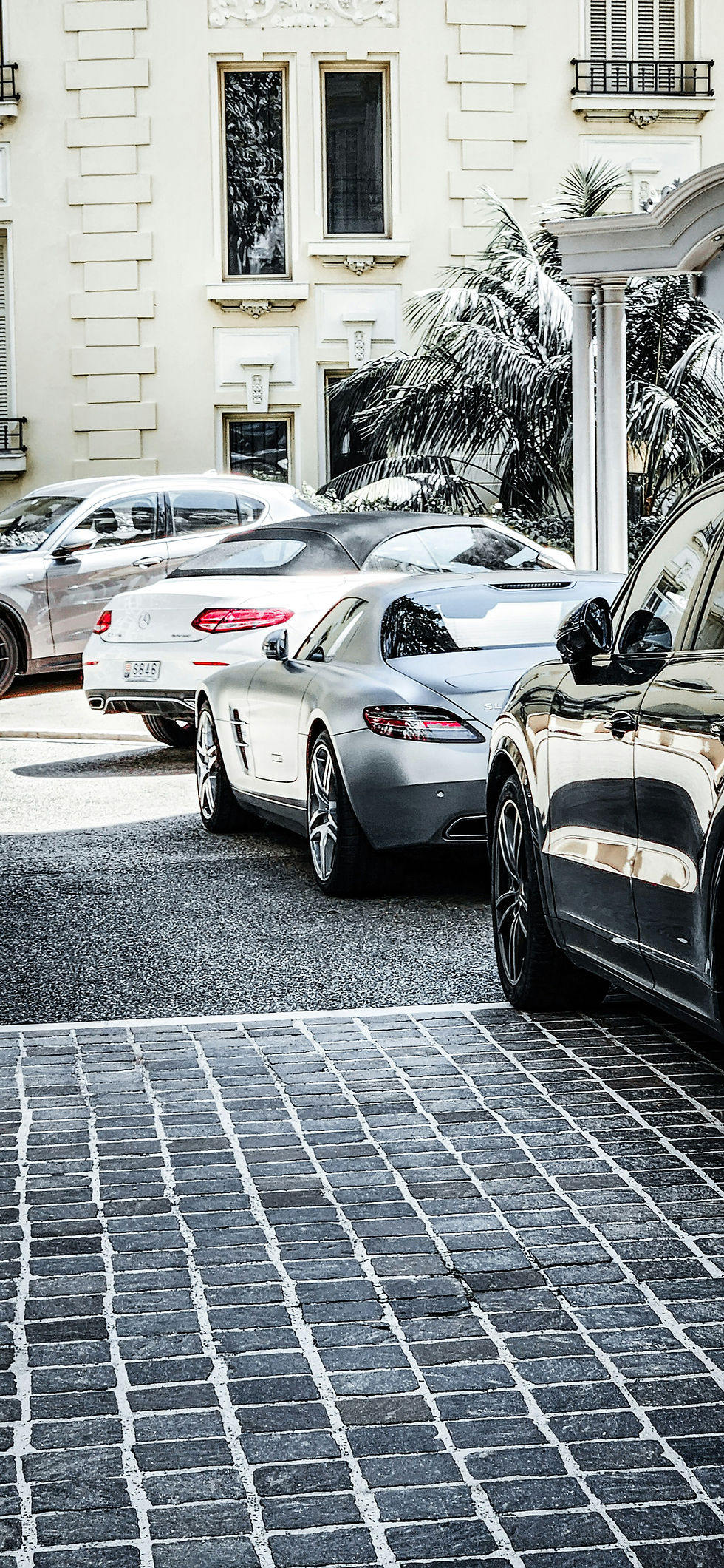
New Mainstream Buys Predictability, Not Perfection
The strongest argument for a new mainstream car is control. You choose the vehicle before anyone else has worn the brakes, delayed a service, hit a pothole or ignored a warning light. You begin the maintenance history yourself, and factory coverage reduces the financial impact of many early defects.
Financing can also change the comparison. Experian’s Q1 2026 data reported average auto-loan interest rates of 6.39% for new cars and 11.43% for used cars, although an individual borrower’s rate can differ substantially. That gap can erode part of a used vehicle’s sticker-price advantage.
But “new” does not mean risk-free. An all-new model can introduce a new platform, powertrain, electronics architecture and software stack at once. Consumer Reports’ 2026 reliability reporting continues to advise reliability-focused shoppers to be cautious with the initial model year of newly introduced or redesigned vehicles because aggressive redesigns and new technologies can create early reliability setbacks.
If reliability is your highest priority, a mature model several years into production can be a more conservative choice than the newest shape on the showroom floor.
Mileage Is a Clue, Not a Verdict
Mileage is one of the most abused numbers in used-car shopping.
A 35,000-mile luxury car can be a worse purchase than a 55,000-mile example if the lower-mileage car lived on short trips, missed services or accumulated neglected wear. A higher-mileage vehicle with consistent highway use, complete records and responsible ownership may present a clearer risk picture.
The odometer matters. It simply does not speak alone. When evaluating any premium used vehicle, use a disciplined used-car inspection checklist rather than allowing a low mileage figure to substitute for evidence.
Read mileage with age, service history, prior use and the condition of wear items such as brakes, tires, fluids and suspension.
There is no universal “safe mileage” for luxury brands. The better question is whether the vehicle’s likely remaining life matches your intended ownership period without requiring you to gamble on deferred maintenance.
S&P Global Mobility reported that the average age of U.S. light vehicles reached 12.8 years in 2025. That does not prove every older vehicle is dependable, but it does challenge the idea that a four- or five-year-old car is automatically old. Age is not the same as condition. A vehicle can age well, or simply age.
Complexity Has a Carrying Cost
Luxury cars often create their advantage through more sophisticated hardware, comfort systems and electronics.
The right conclusion is not “luxury cars break.” That is simplistic.
The useful conclusion is that when a premium component needs service, the part, labor, diagnostic time or calibration may cost more because the vehicle contains more expensive systems to begin with.
That is why a pre-purchase inspection matters. The Federal Trade Commission advises used-car buyers that a vehicle-history report is not a substitute for an independent mechanical inspection—even when a vehicle has been certified and inspected by a dealer.
For a used luxury car, the inspection should be treated as part of the purchase process, not an optional reassurance exercise.
Your Lifestyle Can Overrule the Spreadsheet
Imagine three buyers.
The first has a long daily commute. Seat comfort, low cabin noise and stable highway behavior materially affect daily life. A carefully chosen used luxury sedan may provide more value than a new mainstream crossover selected only because it is newer.
The second buyer has one household vehicle, two children and a tightly scheduled week. Unexpected workshop time would disrupt work and childcare. For a one-car household, warranty coverage, broad dealer support and predictable downtime may be worth more than premium materials.
The third works from home, drives modest mileage and has another car available. That buyer may accept more maintenance exposure because downtime has little consequence.
The same vehicle can be wise for one buyer and irresponsible for another. That is why generic rankings fail.

Beware the Badge — and Beware “Peace of Mind”
There is nothing wrong with wanting luxury. Cars are personal spaces, design objects and, for many people, rewards. Emotion matters.
The danger begins when the badge becomes a justification engine and the buyer rationalizes incomplete records, worn tires, deferred maintenance or a repair reserve that does not really exist.
A useful question is: Would I still choose this exact car if nobody else could see the badge?
If the answer is yes because you value the seats, ride, materials or long-distance comfort, the premium choice may be authentic. If the answer disappears with the emblem, pause.
Mainstream buyers can rationalize too. “New” feels safe, so some accept a larger payment or longer loan simply because the vehicle comes with a warranty. Eliminating mechanical uncertainty while creating financial stress is not conservative ownership.
The Four-Budget Test We Use at WhatCarFitsMe
Before choosing between used luxury and new mainstream, score yourself across four budgets.
Purchase budget: What can you spend without draining savings or depending on an artificially long loan?
Repair budget: Could you absorb an unexpected four-figure repair without using revolving debt?
Time budget: If the car needed service for several days, would that create a serious work, childcare or mobility problem?
Attention budget: Do you enjoy managing maintenance, researching service history and finding a specialist, or do you want the car to demand as little thought as possible?
Used luxury becomes more rational as your repair, time and attention budgets increase. New mainstream becomes more compelling as predictability becomes more valuable than refinement.
This framework does not assume the luxury car will fail, and it does not assume the new car will be trouble-free. It asks which uncertainty you are better equipped to carry.
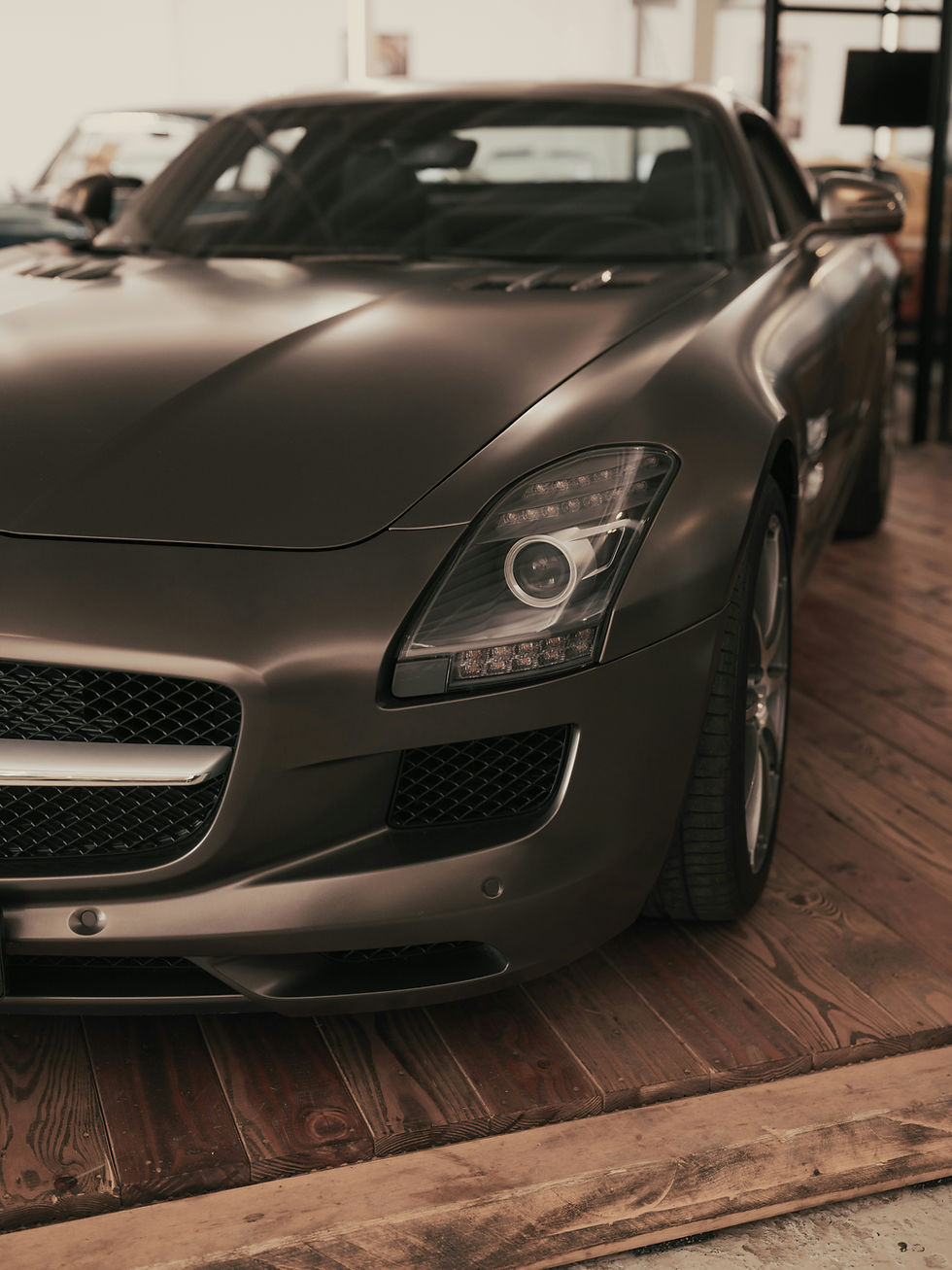
Choose a Buying Path Before a Badge
A lightly used certified pre-owned vehicle can suit someone who wants refinement but still values warranty protection. An older non-certified luxury vehicle can deliver tremendous experience per dollar, but it asks for inspection discipline and financial headroom. A new upper-mainstream vehicle can offer many comfort and technology features with simpler ownership. A straightforward new mainstream car may be the cleanest fit for a household that values transportation certainty above everything else.
The right category should be selected before the badge.
Comparison Matrix: Four Buying Paths
Buying path | What you gain | What you accept | Financial profile | Best fit |
|---|---|---|---|---|
2–4-year certified luxury | Premium comfort, early depreciation already absorbed, some warranty protection | Higher consumable and service costs than mainstream | Moderate-to-strong budget with repair reserve | Buyer who values refinement but wants to reduce used-car uncertainty |
4–7-year non-certified luxury | Highest luxury experience per purchase dollar | Greater inspection, maintenance and downtime exposure | Strong cash buffer; low dependence on warranty | Informed buyer with specialist access and flexibility |
New upper-mainstream | Modern technology, warranty, strong comfort and predictable ownership | Less prestige and sometimes less cabin refinement | Buyer prioritizing balanced total cost | Family, commuter or professional wanting near-premium comfort without premium complexity |
New mainstream value-focused trim | Maximum predictability, fresh wear items, warranty and simpler ownership | Fewer luxury finishes or high-end features | Conservative budget; low tolerance for surprises | One-car households and buyers prioritizing reliability, cash-flow stability and ease |
Used luxury is usually strongest when you have cash reserves after purchase, value refinement every day, can verify service history, have access to competent service and are willing to walk away from a questionable example. The best used luxury purchase is rarely the cheapest one; it is often the one with the clearest history and the fewest unanswered questions.
New mainstream is usually strongest when the car is essential infrastructure in your life, when surprise repair costs would be disruptive, or when you prioritize current technology, simple phone integration, efficiency and warranty-backed ownership from mile one.

Buy the Ownership Experience, Not the Parking-Lot Moment
A used luxury car can be a wonderfully intelligent purchase. So can a new mainstream car.
The mistake is deciding from the parking lot.
What you are buying is years of payments, maintenance, insurance, depreciation, fuel, comfort, downtime and emotion. The vehicle is only the container.
At WhatCarFitsMe, we compare budget, annual mileage, commute, passengers, ownership horizon, reliability tolerance and lifestyle priorities before deciding which category deserves your money. We do not start with a badge and work backward.
If you are weighing a used luxury car vs new mainstream car, use WhatCarFitsMe before you fall in love with a listing. Compare the options through the life you actually live, the costs you can realistically carry and the compromises you will still accept several years from now.
The smartest car is not the one that looks like a move up.
It is the one that still feels smart after the novelty wears off.
Frequently Asked Questions
Is a used luxury car better than a new mainstream car?
Not automatically. A used luxury car can provide better materials, comfort, performance and refinement for the purchase price, while a new mainstream car usually offers greater cost predictability, full warranty coverage and a known maintenance history. The smarter choice depends on your repair reserve, financing, mileage, dependence on the vehicle and tolerance for ownership uncertainty.
Why can used luxury cars become so inexpensive?
Luxury vehicles can experience substantial depreciation as they age because buyers increasingly price in future maintenance, repair complexity, warranty expiration and the cost of premium consumables. A large reduction from the original MSRP can represent genuine value, but the original price should never be used alone to judge whether a used luxury car is a bargain.
How many miles is too many for a used luxury car?
There is no universal mileage cutoff. Service history, age, ownership pattern, mechanical condition and how the miles were accumulated matter alongside the odometer. A properly maintained higher-mileage car can sometimes be a better purchase than a lower-mileage example with incomplete records or deferred maintenance.
Is a certified pre-owned luxury car worth paying more for?
It can be. Certified pre-owned vehicles may provide warranty protection, inspection requirements and a clearer purchasing structure that reduce some of the uncertainty of buying used. The value depends on the specific certification program, remaining coverage, price premium and condition of the individual vehicle.
What costs should I compare between a used luxury car and a new car?
Compare purchase price, financing, depreciation, insurance, fuel, scheduled maintenance, tires, brakes, likely repairs, warranty coverage and expected resale value. Also consider non-financial costs such as downtime and how difficult losing access to the vehicle temporarily would be for your household.
Which is better for long-term ownership: used luxury or new mainstream?
For buyers prioritizing predictable costs and minimal disruption, a proven new mainstream vehicle is often the safer long-term path. A carefully selected used luxury vehicle can still be an excellent long-term purchase when it has strong service history, mature engineering, a clean inspection and an owner with sufficient maintenance and repair reserves.