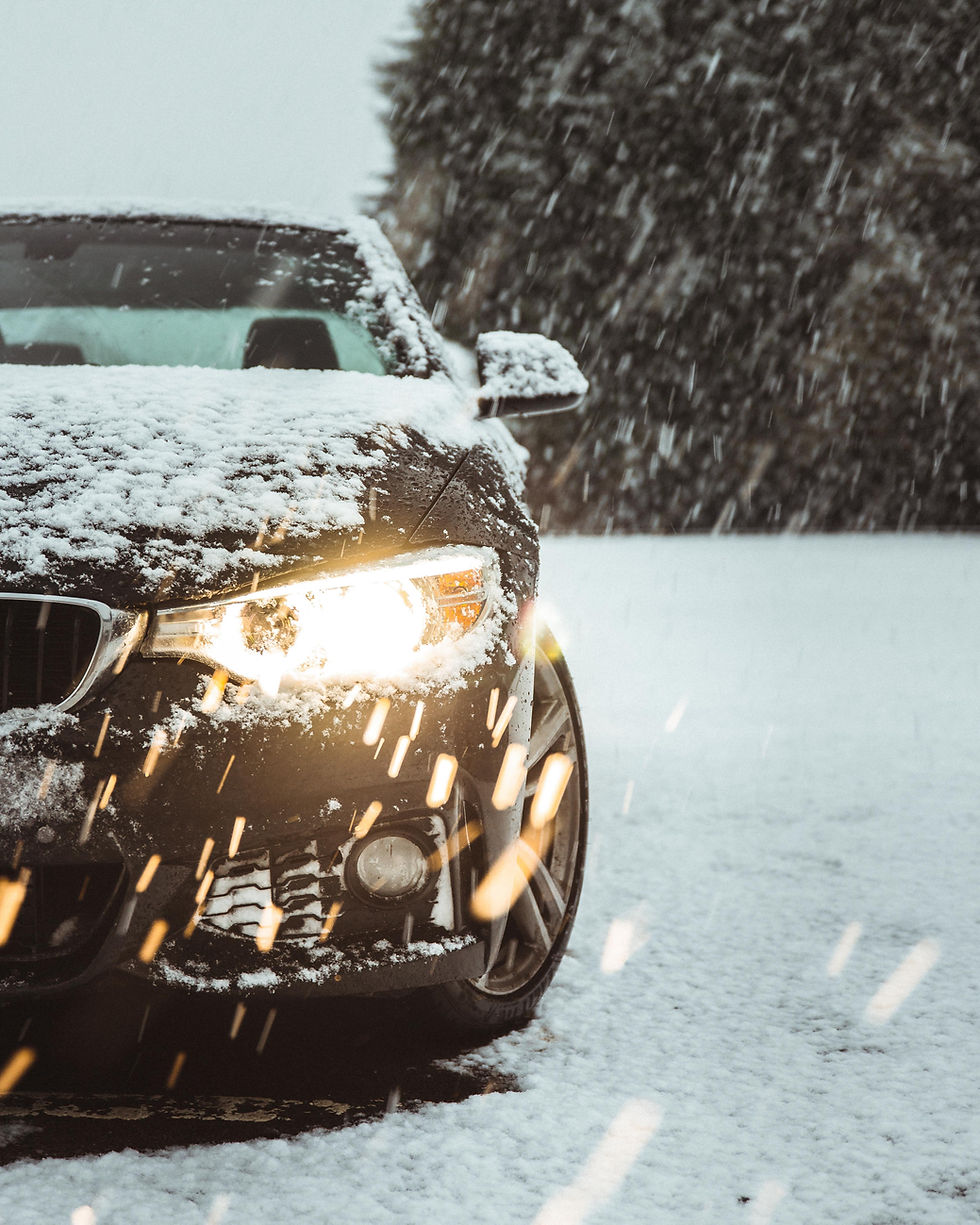
Best Drivetrain for Snow: What Actually Fits Your Winter?

There is a particular kind of confidence that comes with seeing “AWD” on the tailgate. Snow starts falling, the road turns white, and suddenly those three letters feel like insurance.
But confidence can become expensive when it replaces a more important question: what do you actually need your car to do in winter?
The best drivetrain for snow is not automatically all-wheel drive. It is the drivetrain that fits your roads, climate, tires, budget, driving habits, and the consequences of being wrong.
For a suburban commuter who sees a few meaningful snow days each year, front-wheel drive on excellent winter tires may be the smarter ownership decision. For a mountain resident climbing steep, untreated roads before sunrise, AWD with dedicated winter tires may be justified. For someone towing, working on unplowed property, or regularly dealing with deep snow, 4WD may be the right tool.
That distinction is where most AWD-vs.-FWD-vs.-4WD advice becomes too simplistic.
At WhatCarFitsMe, we do not start with the badge on the liftgate. We start with your life.
Table of Contents

The best drivetrain for snow starts with one truth
A drivetrain determines which wheels receive propulsion. It does not repeal physics.
AWD can help a vehicle accelerate when traction is limited because power can be distributed across more than two wheels. Four-wheel drive can add deliberate traction capability in difficult, low-speed conditions. Front-wheel drive can also be surprisingly effective because the driven wheels carry meaningful vehicle weight in many passenger cars.
But none of these systems can create grip that the tires do not have.
NHTSA says winter tires are more effective than all-season tires in deep snow. AAA also warns that AWD and 4WD can improve traction in many situations without providing substantially greater traction on ice.
That matters because winter driving is not simply about getting moving. It is about stopping, turning, changing lanes through slush, correcting a slide, and maintaining control when the road surface changes unexpectedly.
The first principle is simple:
Drivetrain helps you go. Tires help determine how much grip you have to go, stop and turn.
AWD is valuable. It is simply part of a system, not a magic answer.
AWD, FWD, RWD and 4WD in the real world
Front-wheel drive: the rational value choice
Front-wheel drive sends power to the front wheels. For drivers in cities, suburbs, or areas where roads are plowed quickly, FWD can be one of the most rational winter setups available, especially with proper winter tires.
Its advantages are not glamorous. That is precisely why buyers overlook them. FWD vehicles are often less expensive than comparable AWD versions, may be lighter, can have fewer drivetrain components, and frequently deliver better efficiency.
The limitation appears when roads become steep, deeply covered, or inconsistently maintained. With only the front wheels powered, there is less ability to redistribute propulsion when those tires run out of traction.
For the right buyer, however, FWD is not “settling.” It can mean avoiding hardware you rarely use and redirecting money toward better tires, a newer vehicle, fresher brakes, or a healthier repair reserve.
All-wheel drive: the best all-around answer for many snow-belt buyers
AWD is usually the easiest winter drivetrain to live with because modern systems typically work automatically. Depending on design, the vehicle may drive one axle during normal conditions and send torque to the other when needed, or continuously manage torque distribution.
The benefit is effortless traction support. You leave a snowy parking space, climb a slick neighborhood hill, merge through slush, or encounter alternating dry and snow-covered pavement without manually selecting a different mode.
That makes AWD compelling for families, commuters with inflexible schedules, people in hilly areas, and drivers who cannot simply stay home whenever the forecast turns bad.
Yet AWD creates a psychological trap: because the car accelerates confidently, the driver may assume it will stop with the same authority.
Bridgestone notes that AWD does little to aid turning and braking on snow and ice compared with a two-wheel-drive vehicle on the same type of all-season tire.
AWD is most valuable when you buy it for the situations where it adds traction—not for a feeling of invulnerability.
Rear-wheel drive: viable, but more demanding
Rear-wheel drive remains common in performance and luxury vehicles. Modern stability control and excellent winter tires make it far more usable in cold climates than its old reputation suggests, but it generally asks more of the driver when traction is low.
RWD can be rational for someone with winter tires, flexible travel, and confidence in low-grip conditions. For a driver who must travel regardless of the forecast, AWD is usually the easier fit.
Four-wheel drive: for genuine terrain
Traditional 4WD systems are common in trucks and body-on-frame SUVs, often with driver-selectable modes and sometimes low-range gearing.
That capability is valuable when winter means unplowed rural roads, deep snow, steep access, work sites, towing, or repeated travel beyond normal pavement maintenance.
But snow capability is not the same as off-road capability. A driver using salted highways and plowed suburban streets may gain little from the extra weight, cost, fuel use, and complexity of a heavy-duty 4WD vehicle.
The best winter vehicle prepares for the hardest condition you encounter often enough to justify paying for it.

Best drivetrain for snow: compare complete ownership paths
Buying path | Best for | Snow-start traction | Braking/turning potential | Ownership cost | WhatCarFitsMe view |
FWD + quality winter tires | Plowed cities, suburbs, budget-conscious commuters | Good | Excellent with proper tires | Lower | Often the smartest value |
AWD + all-weather/all-season tires | Light-to-moderate winter, convenience-first buyers | Very good | Tire-dependent | Medium | Sensible when storms are occasional |
AWD + dedicated winter tires | Frequent snow, hills, family duty, must-go commuters | Excellent | Excellent | Medium-high | Best severe-winter balance for many |
4WD + winter-capable tires | Deep snow, rural roads, towing, unplowed access | Excellent | Tire-dependent | High | Worth it when terrain truly demands it |
RWD + dedicated winter tires | Enthusiasts, luxury users, manageable winter exposure | Fair-to-good | Very good with proper tires | Varies | Viable when limitations are accepted |
The crucial point is that these are systems, not badges.
An AWD vehicle on worn tires is not automatically a stronger winter purchase than a FWD vehicle on excellent winter tires. Likewise, buying a large 4WD SUV for a few snowstorms a year may make less sense than buying a more efficient crossover and funding a dedicated winter-tire setup.
“Snow” is not one use case
“Do you drive in snow?” sounds like a simple questionnaire item. It is not.
Two inches of snow on a flat road plowed within an hour is not the same problem as freezing rain on an untreated bridge. Six inches on a steep driveway is different from urban slush. A weekend ski trip you can cancel is different from a hospital shift that begins before sunrise.
This is where a vehicle matcher should become more intelligent than a specification filter.
At WhatCarFitsMe, the questions are behavioral: How often must you drive before roads are cleared? Can you delay a trip? Do you live on a hill? Can you store winter tires? Will the vehicle carry children? Are you choosing AWD because you need it—or because it makes you feel safer?
People buy reassurance as well as capability. Our role is to separate useful reassurance from expensive symbolism.
Tires can reverse the expected hierarchy
Imagine two vehicles.
Vehicle A is an AWD crossover with worn all-season tires.
Vehicle B is a FWD sedan with a fresh set of quality winter tires.
Most shoppers instinctively call Vehicle A the “snow car” because AWD is visible on the specification sheet. Yet Vehicle B can hold a meaningful advantage in the areas that become critical once both cars are moving: braking, cornering, and cold-weather grip.
NHTSA explicitly states that winter tires are more effective than all-season tires in deep snow. Guidance also recommends using winter tires as a set of four rather than only on the driven axle so grip remains balanced.
This changes the budget conversation.
If AWD pushes the purchase price upward but choosing FWD allows you to afford a newer vehicle, better tires, fresher brakes, and a maintenance reserve, the less fashionable drivetrain may produce the stronger total ownership package.
The useful question is therefore not simply “AWD or FWD?”
It is:
What combination of drivetrain, tires, condition, and budget gives me the best control over the winter I actually experience?
When AWD is worth paying for
AWD tends to earn its cost when winter is frequent rather than occasional; your route includes steep grades; you regularly travel before plows clear the roads; missing work, school, medical appointments, or flights has meaningful consequences; or you frequently visit ski areas, mountain towns, rural property, or secondary roads.
In those situations, AWD stops being a lifestyle accessory and becomes practical equipment.
But when winters are mild, roads are aggressively treated, work is flexible, and serious storms are rare, AWD can become a recurring ownership expense attached to an infrequent event.
Those buyers should compare the price difference between FWD and AWD with the cost of a dedicated winter-tire setup. The right answer is not always the cheaper drivetrain, but the tradeoff should be explicit.

Reliability: winter exposes deferred maintenance
Winter is ruthless toward a vehicle that has been “mostly fine.”
A weak battery, marginal tires, aging wipers, neglected brakes, old fluids, or an intermittent warning light that felt tolerable in September can become a major inconvenience when temperatures fall.
Drivetrain complexity also matters when buying used.
An AWD vehicle adds hardware beyond a comparable two-wheel-drive vehicle. Depending on design, that can include additional differentials, driveshafts, couplings, transfer components, electronics, and control systems. These systems can be durable, but they still require inspection and proper maintenance.
Tire matching matters too. Bridgestone notes that evenly worn tires on AWD vehicles can reduce stresses on drivetrain components.
For a budget-conscious buyer, an older AWD luxury SUV with deferred service is not automatically a better snow purchase than a newer mainstream FWD or AWD crossover with complete records.
The badge cannot compensate for poor condition.
Mileage logic: context beats a magic number
There is no universal mileage at which an AWD system becomes “too old.” Mileage becomes useful only when combined with maintenance history, previous use, design complexity, and vehicle category.
For mainstream vehicles, we care less about whether the odometer crossed an emotionally significant number and more about whether tires, brakes, suspension, fluids, and drivetrain service were handled consistently.
For premium and luxury vehicles, higher mileage can have a different financial implication. Larger wheels, more sophisticated suspension, higher-output powertrains, electronic chassis systems, and premium parts can make winter ownership materially more expensive even when the drivetrain remains sound.
For trucks and traditional 4WD SUVs, mileage does not reveal how hard the vehicle worked. Towing, off-road use, plowing, oversized tires, and repeated difficult-terrain operation may matter more than the odometer alone.
WhatCarFitsMe therefore treats mileage as context, not a verdict.
We also become more conservative around the earliest model years of a major redesign or new drivetrain architecture when buying used. A first-year redesign is not automatically unreliable, but later production years often provide more evidence about durability, service campaigns, software updates, and ownership patterns.
Winter buyers should prioritize proven condition over novelty.
Different buyers deserve different answers
Families
Parents often feel pressure to maximize AWD, ground clearance, vehicle size, and every safety feature. But protecting children does not require buying the biggest solution.
On treated suburban roads, an AWD compact or midsize crossover with excellent tires may be more sensible than a large truck-based SUV. For families at elevation, on steep roads, or making frequent winter mountain trips, AWD plus dedicated winter tires becomes more compelling.
The goal is capability in proportion to exposure.
Must-go commuters
A daily commuter cannot judge winter needs by annual snowfall alone. Obligation matters.
If a storm arrives before sunrise and your job still requires you on-site, AWD has more economic value than it does for someone who can work remotely. We would still prioritize tires, mechanical condition, brakes, and visibility first—then drivetrain.
Luxury buyers
Luxury buyers often ask a different question: does AWD make the vehicle more usable year-round?
For a high-powered luxury sedan or crossover, AWD can make power delivery feel calmer and more accessible in cold or wet conditions. But tire specification deserves special attention.
A sophisticated AWD system paired with summer performance tires is not a winter setup. NHTSA states that summer tires are not designed to operate on snow and ice or in below-freezing conditions.
The premium recommendation is not simply “get AWD.” It is “design the entire cold-weather setup.”
Budget-conscious buyers
For a shopper with a strict ceiling, AWD can quietly distort the search.
If choosing AWD pushes you toward an older model year, higher mileage, worse tires, incomplete service history, or deferred maintenance, the trade may be backwards.
A newer FWD car with excellent winter tires and strong records may produce a better ownership outcome than an older AWD car purchased mainly for the badge.
Your budget must absorb the vehicle, taxes, insurance, scheduled maintenance, unexpected repairs, tires, and energy costs. A drivetrain that consumes so much of the budget that you cannot properly maintain the rest of the car is not the best drivetrain for you.
What the best drivetrain for snow cannot solve
No drivetrain defeats every winter hazard. AWD cannot guarantee shorter stops, 4WD cannot manufacture grip on glare ice, and winter tires cannot make excessive speed safe.
AAA recommends reducing speed on snow and ice, accelerating and decelerating gradually, and avoiding cruise control on slippery surfaces.
A well-matched vehicle should make good decisions easier—not create false confidence.
How WhatCarFitsMe makes the recommendation differently
Most car-shopping tools begin with inventory.
We begin with constraints.
Our winter recommendation is shaped by questions conventional filters often ignore: how frequently snow changes your schedule; how quickly roads are cleared; whether your commute includes elevation; whether you can store winter tires; whether you carry children; whether you are buying new or used; how long you plan to keep the car; and how much maintenance uncertainty your budget can tolerate.
Then we balance snow capability against the rest of ownership.
Because the best snow vehicle that ruins your budget is not a good match.
The most reliable winter vehicle that cannot fit your family is not a good match.
The most capable 4WD truck that spends nearly every day commuting through downtown traffic may not be a good match.
A recommendation only becomes intelligent when it understands the life surrounding the specification.

So, what is the best drivetrain for snow?
For most drivers who face frequent meaningful snow, AWD is the best all-around drivetrain choice—provided it is paired with appropriate tires and fits comfortably inside the ownership budget.
For budget-conscious drivers in well-plowed areas, FWD with dedicated winter tires can be exceptionally sensible and should not be treated as an automatic compromise.
For severe terrain, deep snow, rural access, towing, or repeated off-pavement use, 4WD may be the correct tool.
For enthusiasts or luxury buyers willing to treat tires and driving technique seriously, RWD can remain viable when winter exposure is manageable.
That answer is less dramatic than “AWD wins,” but buying a car is not a trivia question.
You are choosing a vehicle that must start on your driveway, fit your family, survive your commute, stay within your repair budget, handle your trips, and still feel like the right decision three winters from now.
That is why the best drivetrain for snow is ultimately personal.
And that is exactly where WhatCarFitsMe is most useful.
Choose for your winter—not someone else’s
Do not begin your search with “AWD only.”
Begin with your roads. Your schedule. Your budget. Your tire strategy. Your family. Your actual worst day—not the most dramatic scenario you can imagine.
Then let the drivetrain follow the need.
Try WhatCarFitsMe to find the best drivetrain for snow for your real-world driving, budget, ownership expectations, and lifestyle—and compare the vehicle paths that genuinely fit.
FAQ
Is AWD really the best drivetrain for snow?
AWD is the best all-around choice for many drivers who regularly encounter snow, hills, slush, or partially cleared roads because it can distribute propulsion across both axles. However, AWD does not replace winter tires and does not automatically improve braking or cornering on ice. The best setup depends on the complete combination of drivetrain, tires, road conditions, and driving needs.
Is FWD or AWD better in snow?
AWD generally provides better initial traction because it can send power to four wheels rather than only the front wheels. However, a FWD vehicle equipped with quality winter tires can be an excellent winter choice, particularly on regularly plowed roads. For budget-conscious buyers, FWD plus winter tires can sometimes be smarter than stretching the budget for an older or poorly maintained AWD vehicle.
Do I need winter tires if I have AWD?
If you regularly drive in meaningful snow, ice, or prolonged cold conditions, winter tires can substantially improve the complete winter setup. AWD mainly helps distribute propulsion; it does not eliminate the importance of tire grip when braking or turning. NHTSA notes that winter tires are more effective than all-season tires in deep snow.
Is 4WD better than AWD for snow?
Not necessarily. 4WD is especially useful for deep snow, unplowed roads, difficult terrain, towing, rural access, and situations where low-range gearing may be beneficial. AWD is usually easier and more appropriate for everyday paved-road winter driving because the system typically operates automatically. The better choice depends on whether your winter challenge is slippery pavement or genuinely difficult terrain.
Can a rear-wheel-drive car be good in snow?
Yes. A modern RWD vehicle with electronic stability control and proper winter tires can be usable in snow, particularly when the driver can avoid the most severe conditions. However, RWD generally requires more careful throttle control and may struggle sooner than AWD on steep or deeply covered roads.
Should I buy an older AWD car or a newer FWD car for winter?
Do not evaluate the drivetrain in isolation. A newer FWD vehicle with excellent tires, good brakes, strong service history, and a healthy repair reserve may be a better winter purchase than an older AWD vehicle with worn tires or deferred maintenance. Vehicle condition and tire quality should remain part of the decision.